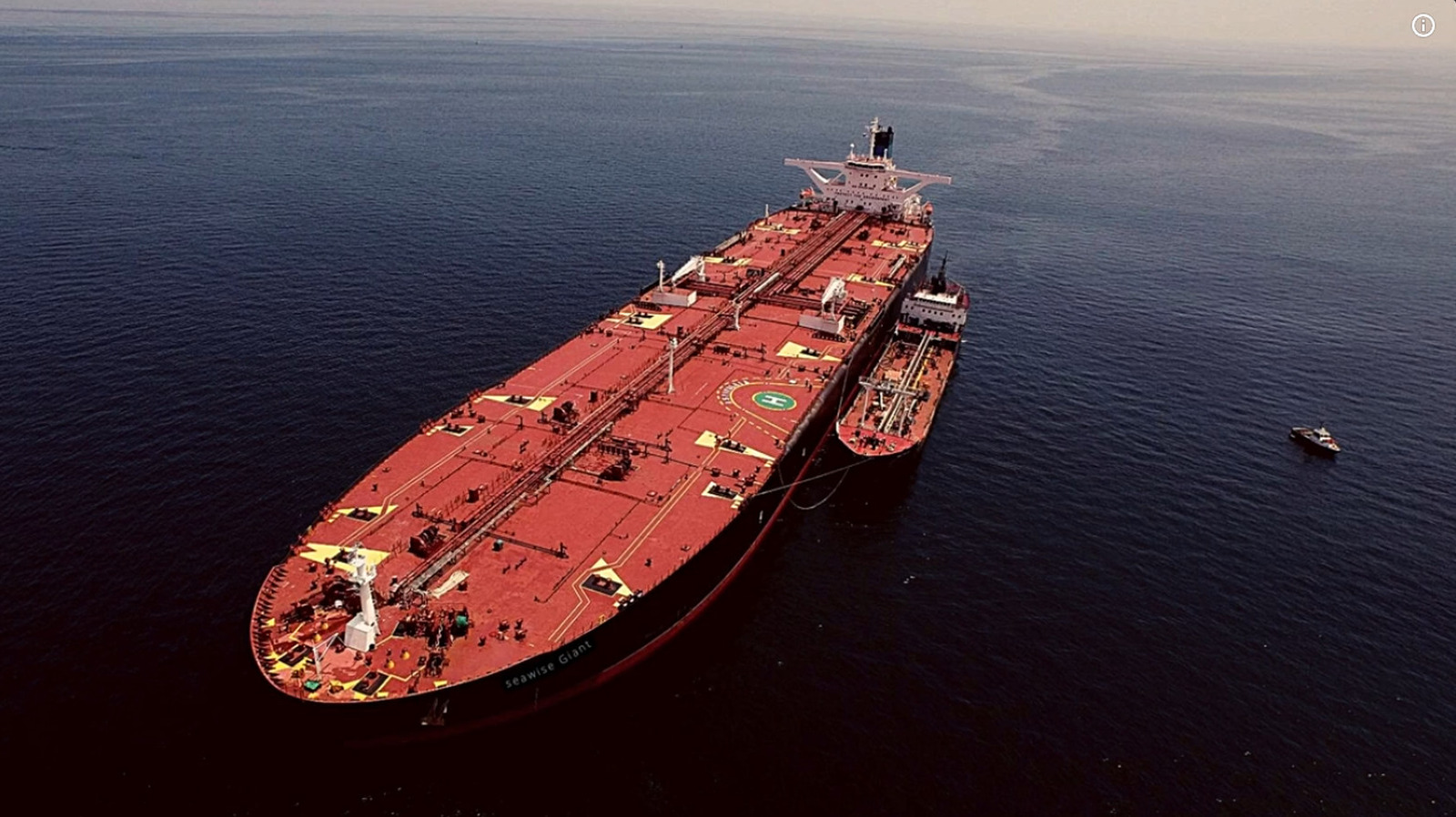
The Seawise Giant, once the largest man-made moving object in the world, was a remarkable oil tanker that left an indelible mark on maritime history. Constructed by Japanese shipbuilder Sumitomo Heavy Industries, the vessel was launched in 1981 and measured an astounding 1,504 feet in length, making it longer than both the Petronas Towers and the Empire State Building when positioned vertically. Despite its impressive dimensions, the Seawise Giant faced numerous challenges throughout its operational life, ultimately leading to its decommissioning in 2009.
In the 1970s, Greek billionaire and shipping magnate Stavros Niarchos envisioned a colossal ultra-large crude carrier (ULCC) to expand his shipping fleet. The ship, initially named after the Oppama shipyard where it was built, became embroiled in financial disputes. Some sources indicate that Niarchos may have faced bankruptcy, while others suggest he walked away from the project due to vibration issues or a downturn in the shipping market. Regardless of the circumstances, the vessel was sold to Hong Kong-based shipping mogul C.Y. Tung in 1979, who further enhanced its capacity.
The Seawise Giant officially launched in 1981 and soon became a key player in the global oil trade. Its immense size allowed it to carry over 4 million barrels of crude oil, dwarfing other vessels such as the USS Enterprise, which was approximately 1,119 feet long. The ship’s deck spanned 339,500 square feet, allowing crew members to use bicycles to navigate from one end to the other.
Despite its impressive capabilities, the Seawise Giant was limited by its size, unable to navigate critical waterways like the English Channel, Suez Canal, and Panama Canal. This forced the vessel to take longer routes around the Cape of Good Hope, where it maintained a top speed of only 16 knots (about 18 mph). Nevertheless, its role in transporting vast quantities of oil made it vital to the industry.
In 1988, the Seawise Giant became a casualty of war when it was struck by Iraqi missiles while navigating the Strait of Hormuz. The damage was severe enough that Orient Overseas Container Line (OOCL) deemed it a total loss. However, Normal International, a Norwegian salvage company, invested millions to recover and refurbish the ship, reintroducing it as the Happy Giant.
Under its new name, the vessel quickly changed hands again. It was sold to Norwegian shipping magnate Jørgen Jahre, who renamed it Jahre Viking. The ship continued to operate in the oil trade for another decade. However, by the early 2000s, advances in technology prompted oil companies to favor smaller, faster vessels. In 2004, Jahre sold the aging ship to Singapore-based First Olsen Tankers, which converted it into a floating storage and offloading unit, renaming it Knock Nevis.
The Seawise Giant’s operational life came to an end in 2009 when it was sold for scrap to a ship-breaking company in Gujarat, India. Dismantling such a massive vessel presented challenges, requiring it to be broken down into manageable parts. The process involved over 18,000 workers and lasted more than a year. The only remnant of the Seawise Giant that remains intact today is its 36-ton anchor, which is now displayed at the Hong Kong Maritime Museum.
Throughout its storied existence, the Seawise Giant exemplified human ambition and engineering prowess. Its legacy serves as a testament to the extraordinary lengths to which humanity will go to conquer the seas.