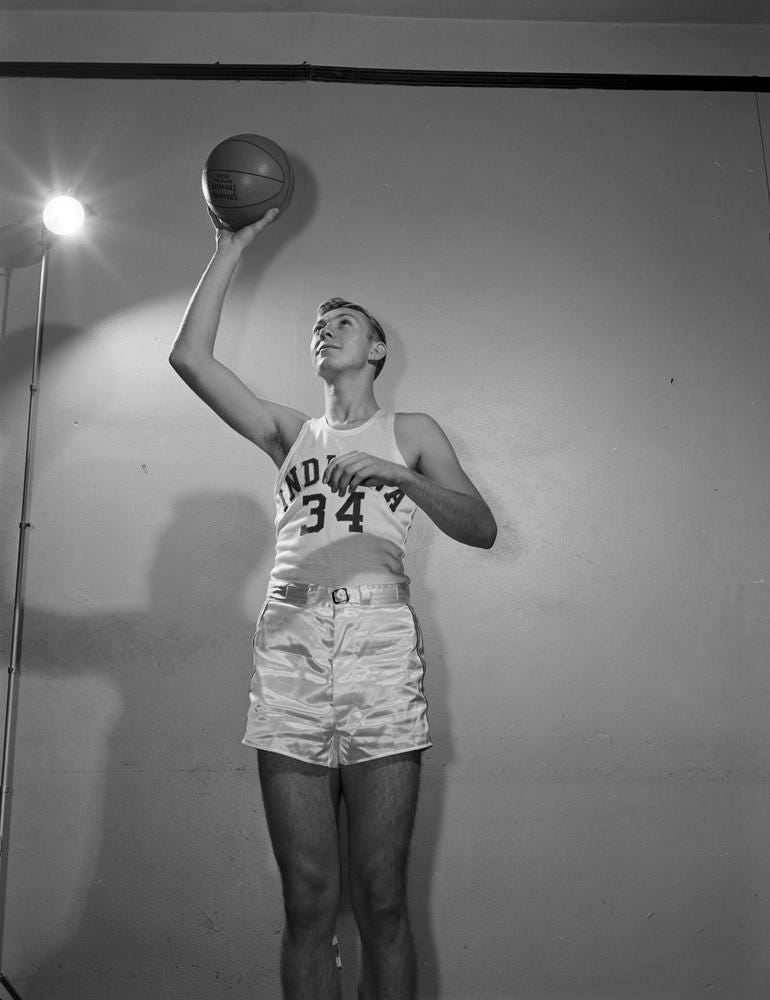
UPDATE: The legacy of Indiana basketball star Don “Ox” Schlundt is receiving renewed attention as fans and historians reflect on the impact he made on the sport over sixty years ago. Known for leading Indiana University to its first NCAA national championship in 1953, Schlundt’s remarkable achievements are being highlighted amid a growing conversation about his place in basketball history.
Schlundt, who was a towering presence at 6-9 or 6-10, dominated the court, scoring 41 points in an NCAA regional final at Chicago Stadium, setting a record that stood for years. His career, which included scoring 47 points in his final college game and leading Indiana to two undisputed Big Ten championships, has sparked interest in why he remains less recognized today.
Despite his incredible accomplishments, including being named to the National Association of Basketball Coaches’ All-America team in 1954, Schlundt never made it to the NBA, turning down a $5,500 offer from the Syracuse Nationals to pursue a career in insurance instead. His widow, Gloria Gary, revealed that he was disenchanted with the travel demands of professional basketball, stating, “He was just as happy to retire and sell insurance.”
While Schlundt’s name may not be commonly known outside of dedicated basketball circles, he has been recognized in various rankings, including being placed 75th in Bleacher Report’s list of top college players and 50th in Sports Illustrated’s top NCAA tournament players. Yet, questions remain about his omission from the Naismith Memorial Basketball Hall of Fame. His son, Mark Schlundt, expressed curiosity over whether his father’s name was ever considered, acknowledging that “he never chased the game of basketball.”
The conversation around Schlundt’s legacy raises important questions about recognition in sports history, particularly for players who excelled before the modern era of basketball. Notably, he played in a time when college basketball faced significant changes, including a six-foot foul lane and a different structure for the NCAA tournament.
Schlundt’s journey began in March 15, 1933, in St. Joseph County, Indiana. He faced early challenges, including doubts about making his high school varsity team. However, a remarkable growth spurt saw him increase from 5-9 to 6-4 within a year, igniting his basketball career.
In his time at IU, he showcased versatility rarely seen in players of his size, demonstrating an ability to shoot from long range, which was revolutionary for the era. Teammate Bob Leonard noted, “Don was a great college basketball player and could have been an outstanding pro basketball player, had he so desired.”
As the debate around his legacy continues, the basketball community is beginning to reassess not only Schlundt’s contributions but also the broader historical context of players from his era. Investigations into the Naismith Hall of Fame’s selection process reveal that a direct-elect veterans committee was established to honor those who have been retired for over 35 years, but Schlundt’s name has yet to emerge in discussions.
Basketball fans and historians alike are called to take a deeper look at figures like Schlundt, who have shaped the game significantly yet remain unsung heroes in the sport’s narrative. His story is not just about stats and records but also about the human element—his quiet demeanor, dedication to the community, and the impact he had on those who knew him.
As this reexamination unfolds, expect more discussions and possibly a renewed push for recognition of Don Schlundt’s legacy in the annals of basketball history. His contributions to Indiana basketball are undeniable, and as interest grows, so too does the hope that his accomplishments will finally receive the acknowledgment they deserve.