BREAKING: The town of Bolton, Vermont has swiftly adapted to a critical road salt shortage by implementing a new solution: magnesium chloride. As severe winter weather persists across the Northeast, communities are facing dwindling supplies of traditional rock salt, prompting Bolton to take decisive action.
In response to the ongoing shortage, Bolton’s road crew has equipped their plows with innovative canisters of liquid magnesium chloride and specialized blades designed to navigate the town’s snowy and icy roads more effectively. This change, made last fall, aims to ensure safer travel for residents during the harsh winter months.
The shortage of road salt has left many communities rationing their supplies, but Bolton’s proactive measures mean they are now using magnesium chloride, a mineral salt derived from seawater or brine. The Environmental Protection Agency (EPA) has noted that this alternative is less corrosive and more environmentally friendly compared to traditional rock salt.
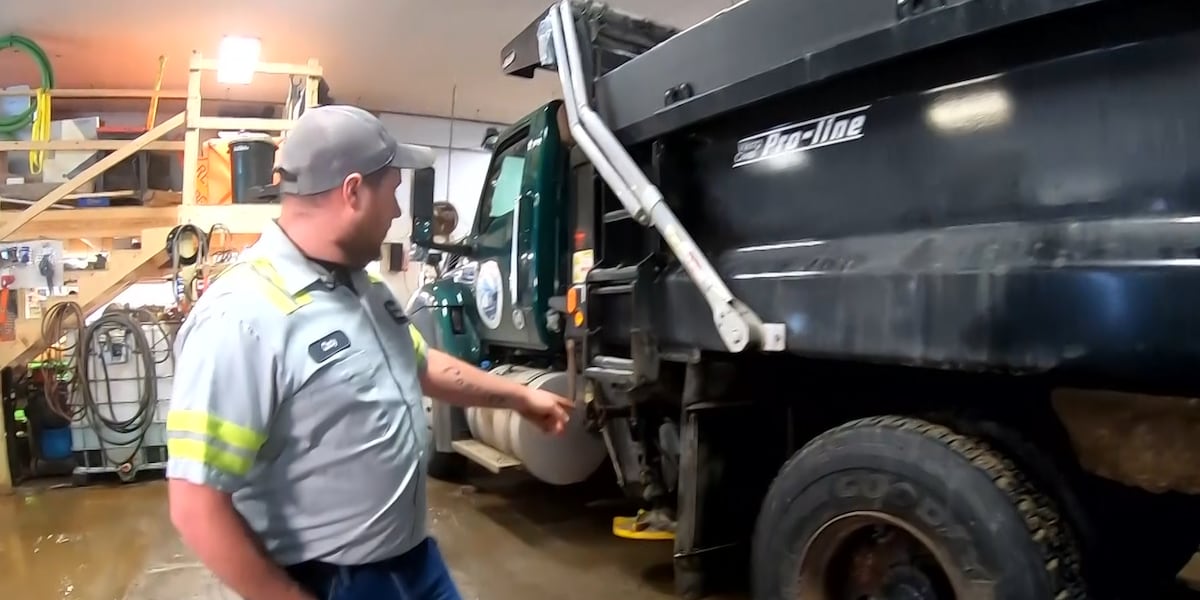
Cody Quenneville from Bolton’s road crew explained the new system: “That’s the tank that we got installed that pre-treats the salt at the spinner. It pumps it from there, and there’s a hose line that comes up through under the body up here to our chute that goes to our spinner, and it applies the liquid at a very, very low rate.”
Although magnesium chloride is approximately twice as expensive as rock salt, officials believe the investment is justified. Road crew leader Putnam noted, “It was a pretty high cost to start but it pays off in the long run. Our salt budget roughly is cut in half. Last year they used 1,200 tons of salt, and now we’re at 577 tons, and we’re at the downside of the season.”
The magnesium chloride enhances the effectiveness of the rock salt by releasing heat, enabling the crew to use significantly less, particularly in frigid conditions. Quenneville emphasized the benefits: “With the huge savings, time, a lot less stress on the drivers, and it just creates safer roads for everyone.”
Residents of Bolton have already noticed improvements. “They don’t see the truck as much, but the roads are in better shape,” Putnam stated. Quenneville added, “A lot more thumbs up from people.”
While some communities still rely heavily on rock salt, the Vermont Agency of Transportation (VTrans) confirms that magnesium chloride is utilized when temperatures drop significantly. As Bolton showcases this innovative solution, officials believe other towns should consider similar approaches to enhance road safety during winter.
This urgent development in Bolton serves as a model for communities grappling with road maintenance challenges amid supply shortages. As the winter season progresses, the town’s proactive measures are not only improving road conditions but also fostering community support and satisfaction.
Stay tuned for further updates on how other regions may respond to the ongoing road salt crisis.