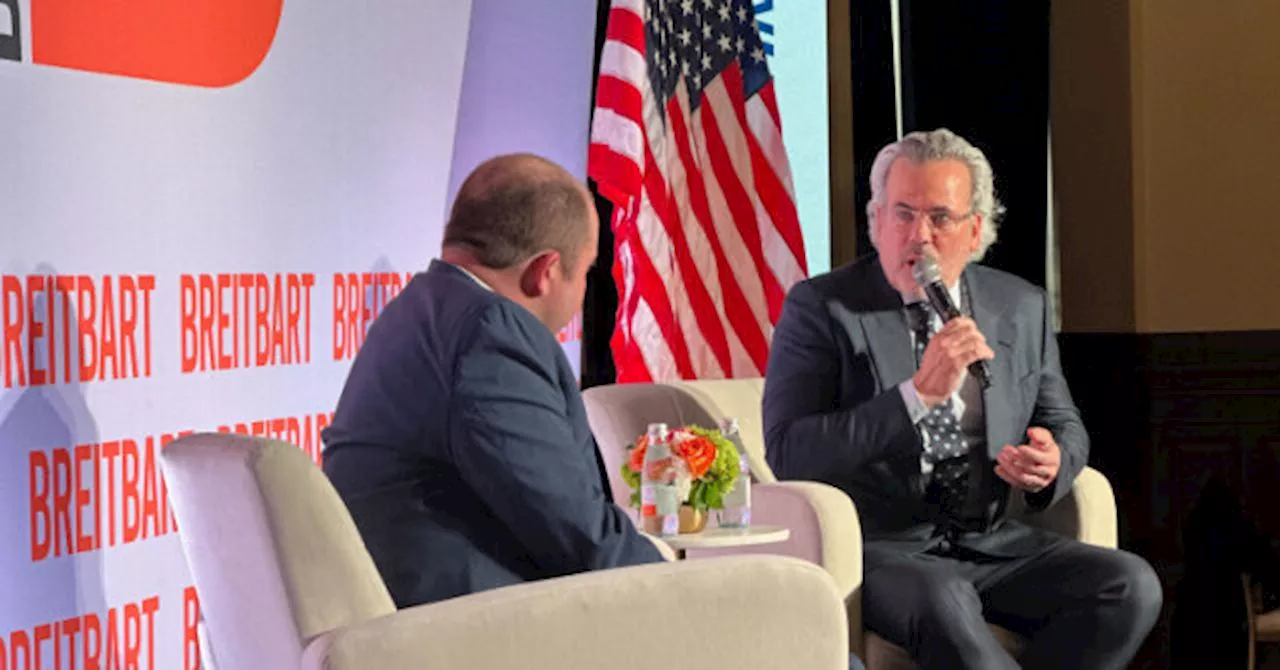
At a policy forum hosted by Breitbart News, Dan Barcelo, the CEO of T1 Energy, expressed strong support for the economic strategies of the Trump administration. He identified tariffs and incentives as critical factors in the resurgence of American manufacturing, particularly in the solar energy sector. Barcelo emphasized the necessity for domestic investment and the establishment of U.S.-based production facilities to effectively compete against countries like China.
The event, which took place on March 13, 2024, featured notable figures including Commerce Secretary Howard Lutnick, and was moderated by Editor-in-Chief Alex Marlow and Finance and Economics Editor John Carney. Barcelo’s positive evaluation of the administration’s economic agenda mirrored Lutnick’s views on the strategic use of tariffs to combat perceived unfair trade practices by foreign nations.
Barcelo outlined the administration’s approach, which combines incentives and disincentives to create a competitive environment for U.S. manufacturers. He pointed out that tariffs serve to increase costs for foreign companies, thereby allowing American manufacturers to gain a crucial competitive edge in the marketplace. According to Barcelo, these policies are essential for revitalizing the American manufacturing sector.
He highlighted the importance of capital formation and the creation of domestic production capabilities, arguing that investor confidence is vital for stimulating economic growth. Barcelo stated that once initial capital investments are made, U.S. manufacturing facilities can operate at highly competitive costs, especially in states with favorable energy prices, such as Texas.
T1 Energy’s expansion of solar energy production in Texas serves as a practical example of how these policies are fostering domestic manufacturing. Barcelo noted that the company’s investments in new facilities directly result from the current policies, which aim to capitalize on lower operational costs within the state.
The conversation at the forum extended beyond immediate economic impacts to consider the broader implications of these strategies. Secretary Lutnick stressed that the United States plays a significant role in the global economy as a major consumer market, which provides leverage in trade negotiations. He asserted that ending unfair trade practices is essential to protect American industries and workers.
Barcelo reiterated that sustaining trade barriers is vital for maintaining the competitiveness of American manufacturing in the global arena. He expressed confidence that the U.S. could not only compete effectively but also emerge as a major exporter in key sectors once manufacturing facilities are fully operational.
The discussion encompassed the interconnectedness of tariffs, incentives, and the establishment of a supportive ecosystem for American businesses. Barcelo contended that the combination of strategic trade barriers and incentives for domestic production is crucial for the ongoing growth of American manufacturing in a competitive global market.
The forum provided a valuable platform for assessing the practical implications of the Trump administration’s economic policies. Barcelo’s insights reinforced the notion that a robust combination of incentives and tariffs is essential for enhancing the competitiveness of U.S. manufacturers, promoting domestic investment, and fortifying the nation’s economic strength.