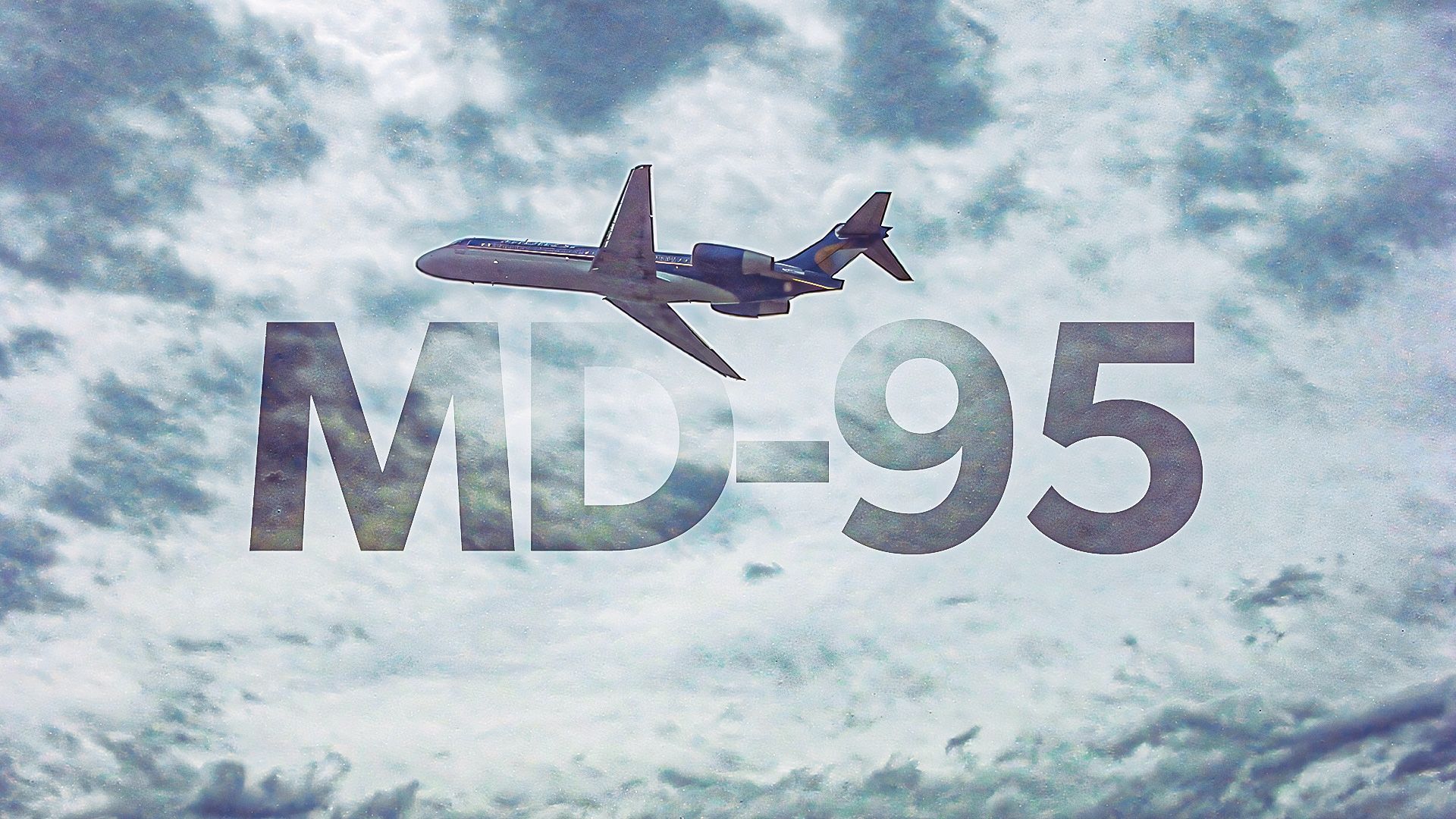
In the early 1990s, McDonnell Douglas set out to create a modern successor to its renowned DC-9 family, leading to the development of the MD-95. This aircraft was designed specifically for the 100-seat short-haul market, targeting a niche that larger jets like the Boeing 737 and Airbus A320 could not adequately serve. By the time the MD-95 was ready for its inaugural flight, the aviation landscape had shifted drastically. Following the merger of McDonnell Douglas with Boeing on August 1, 1997, the MD-95 was rebranded as the Boeing 717, leaving a legacy that remains significant despite its limited production run.
A Vision for the Future of Short-Haul Aviation
The MD-95 originated from a long-standing initiative to introduce a new version of the Douglas DC-9, aimed at the 100-seat category. Initially conceived in the early 1980s as the DC-9-90, the project was shelved in favor of the more efficient MD-87. In 1992, McDonnell Douglas revived the idea and showcased the MD-95 at the Paris Air Show, marketing it as a modern alternative to aging DC-9 aircraft.
The program gained momentum in October 1995 when ValuJet placed an order for 50 aircraft, valued at over $1 billion, with options for an additional 50. The carrier chose the MD-95 over competitors like the Airbus A319, partly due to concerns about the latter’s break-even load-factor guarantees. Despite this initial success, the number of orders remained low, and full-scale production had not yet commenced when Boeing announced its acquisition of McDonnell Douglas.
The Merger That Changed the Industry
The merger between Boeing and McDonnell Douglas was a landmark event in the aerospace sector. Officially completed on August 1, 1997, the deal was structured as an all-stock transaction, integrating McDonnell Douglas as a subsidiary of Boeing while maintaining the latter’s name and leadership structure. This merger positioned Boeing as a dominant force in both commercial and military aircraft development.
With McDonnell Douglas’ extensive military programs, including the F-15 Eagle and F/A-18 Hornet, the merger allowed Boeing to consolidate its market share in large jets, notably the Boeing 737, 747, 767, and 777. In a rapidly changing industry, characterized by increasing competition from Airbus, this consolidation was perceived as essential. Regulators scrutinized the merger, particularly in Europe, but ultimately cleared it.
Following the merger, the MD-95 was rebranded as the Boeing 717. Boeing aimed to fill a gap in the 100-seat market that even the smaller 737-600 could not address. The aircraft took its first flight in 1998, with FAA certification and deliveries beginning in 1999 to AirTran Airways.
The 717 quickly gained a reputation as a reliable regional jet, noted for its quiet Rolls-Royce BR715 engines and efficient turnaround times. However, the tragic events of September 11, 2001, led to a significant downturn in the aviation industry, which, combined with Boeing’s reluctance to market the aircraft as a competitor to its flagship 737, resulted in limited orders. Ultimately, only 156 units were produced before production ceased in 2006.
The Boeing 717 has continued to operate with a handful of airlines, most notably Delta Air Lines, which acquired the aircraft after the absorption of AirTran. Delta’s first flight with the Boeing 717 occurred in October 2013, and the aircraft became instrumental in replacing smaller regional jets on domestic routes. As of January 2026, there are 91 active Boeing 717 models, with Hawaiian Airlines also operating a fleet of 19 for inter-island flights.
Looking ahead, the future of the Boeing 717’s role in the aviation market appears to be shifting. Delta has already begun integrating the Airbus A220 into its fleet, which is seen as a natural successor to the 717 due to its similar capacity and operational efficiency. Meanwhile, Hawaiian Airlines is considering various options for replacing its 717s, with models like the A220 and Embraer E2 emerging as potential candidates.
The legacy of the Boeing 717 will endure, particularly among aviation enthusiasts and analysts who recognize its reliability and performance in the short-haul market. Despite its commercial challenges, the aircraft’s story reflects a significant chapter in aviation history, highlighting the impact of corporate mergers and shifting market dynamics. The Boeing 717 remains a testament to McDonnell Douglas’ ambition and resilience, even as the industry continues to evolve.