Innovative advancements in battery technology are on the horizon, particularly with the development of custom 3D printed batteries. This new process allows for the creation of batteries tailored to fit unique spaces, enabling more efficient energy use in various applications. Traditional commercial batteries, generally cylindrical or rectangular, often leave underutilized space in devices. The new approach aims to change that.
At the forefront of this innovation is engineer Gabe Elias, who has developed a method to print all components of a battery, including anodes, cathodes, separators, and casings, without the need for expensive tooling. This was highlighted in a recent discussion by Lawrence Ulrich on Spectrum, showcasing the potential for creating batteries that can fill unconventional spaces effectively.
Applications in Unmanned Aerial Vehicles
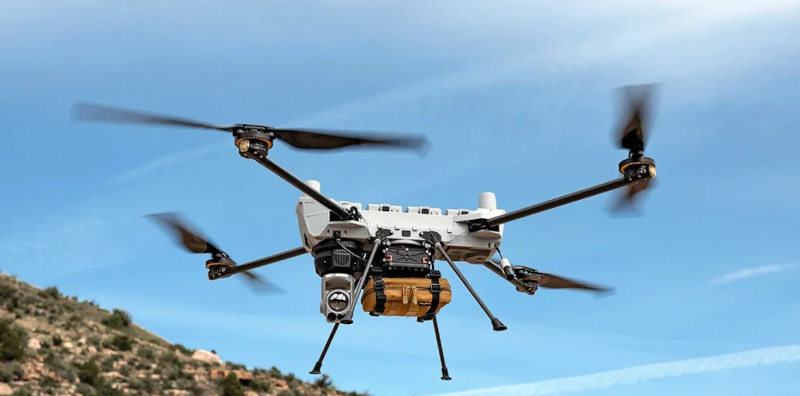
Consider the example of an unmanned aerial vehicle (UAV) packed with avionics. Traditionally, off-the-shelf batteries may fit in the wings but often waste valuable interior space. A custom 3D printed battery could be designed to maximize this area, ultimately enhancing the UAV’s efficiency and performance.
The technology is not limited to UAVs. Prototypes have already shown promising results, such as a battery designed to fit the contours of smart glasses. This design reportedly utilizes 35% more of the available volume compared to conventional cylindrical cells, providing a substantial 50% boost in energy density. Such advancements could significantly improve the functionality of compact devices that require reliable power sources.
Challenges and Future Prospects
While the prospect of creating your own custom battery is enticing, it comes with challenges. The current process demands a liquid electrolyte and the ability to produce thin layers of specialized materials, which may not be easily accessible for individual users. Still, the potential applications for this technology are vast, suggesting a future where gadgets and devices can be powered more efficiently.
As industries explore the possibilities of 3D printed batteries, the question remains: what innovative designs could emerge? A uniformly distributed battery for laptops, for instance, could eliminate the imbalance created by traditional battery placements. As research and development continue, the impact of this technology on energy storage solutions may reshape the way consumers and industries approach power needs.
Overall, the introduction of custom 3D printed batteries marks a significant step forward in energy storage technology. By optimizing space and enhancing energy density, this innovation could lead to more efficient and versatile devices across various sectors.