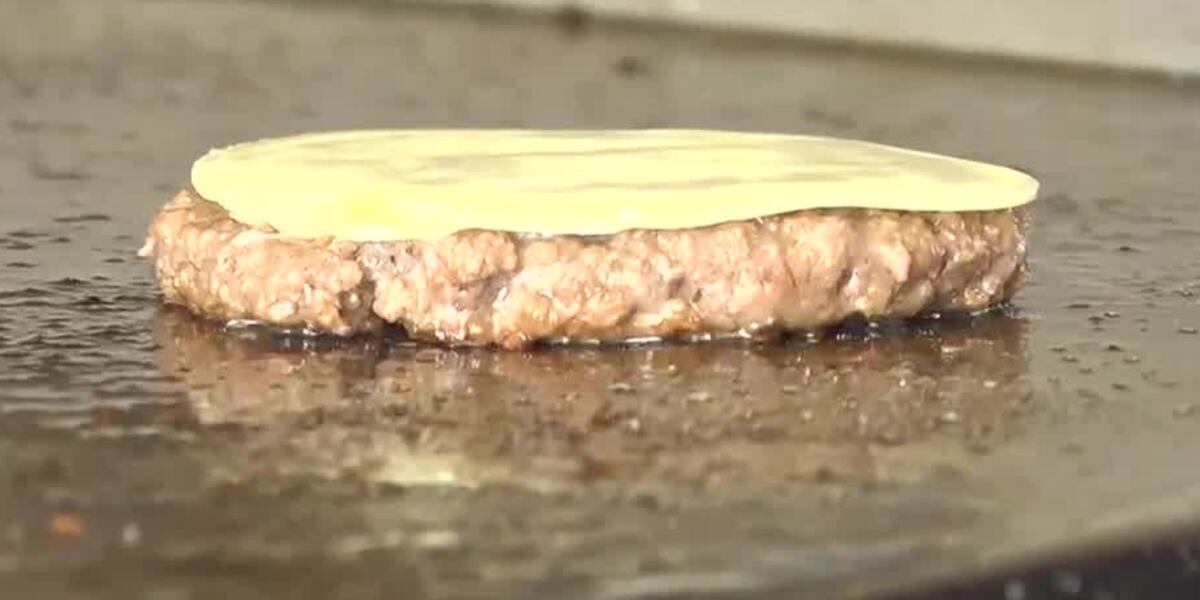
BREAKING: The University of Vermont (UVM) has just debuted a revolutionary new dining option — the “Better Burger” — at its Davis Center cafeteria, aiming to provide a more sustainable meat alternative for students. This innovative burger, made from 70% local Vermont beef and 30% roasted mycelium, is designed to significantly reduce the environmental impact of meat consumption.
UVM Executive Chef Dan Miele emphasized the environmental benefits of using mycelium, stating, “They grow fast, they don’t require a lot, they just keep producing.” This commitment to sustainability is not only about flavor but about maximizing resources to lower the cafeteria’s carbon footprint.
The “Better Burger” concept emerged from UVM chefs’ training at the Culinary Institute of America, where they encountered 50cut, a company specializing in hybrid meat patties. Miele noted, “When we saw this product, it was really important to still incorporate our local beef program into it,” leading to the unique beef-to-mycelium ratio.
Since its launch in January 2026, the “Better Burger” has been the default option at the Davis Center. Initial reactions from students have been mixed, with some praising its flavor and juiciness, while others continue to prefer the traditional ground beef option. Approximately 70% of burger sales at the cafeteria now come from the new creation.
UVM freshman Avery Schunk shared her perspective, noting, “I don’t really know what beef tastes like, so for me there’s no impact.” This highlights the burger’s potential to appeal to a broader audience, particularly those looking for alternatives to traditional beef.
While the cafeteria still offers 100% ground beef burgers, students must specify their preference, as the “Better Burger” has quickly become a popular choice. Chef Miele reported a surge in sales, showcasing a positive shift in student dining habits toward more sustainable options.
As UVM leads the charge in sustainable dining, the “Better Burger” serves as a model for other institutions looking to make environmentally conscious choices. This development is not just a culinary shift; it’s a significant step toward redefining how we approach food sustainability on campus.
Stay tuned for more updates as the response to this initiative unfolds and shapes the future of dining at UVM and beyond.