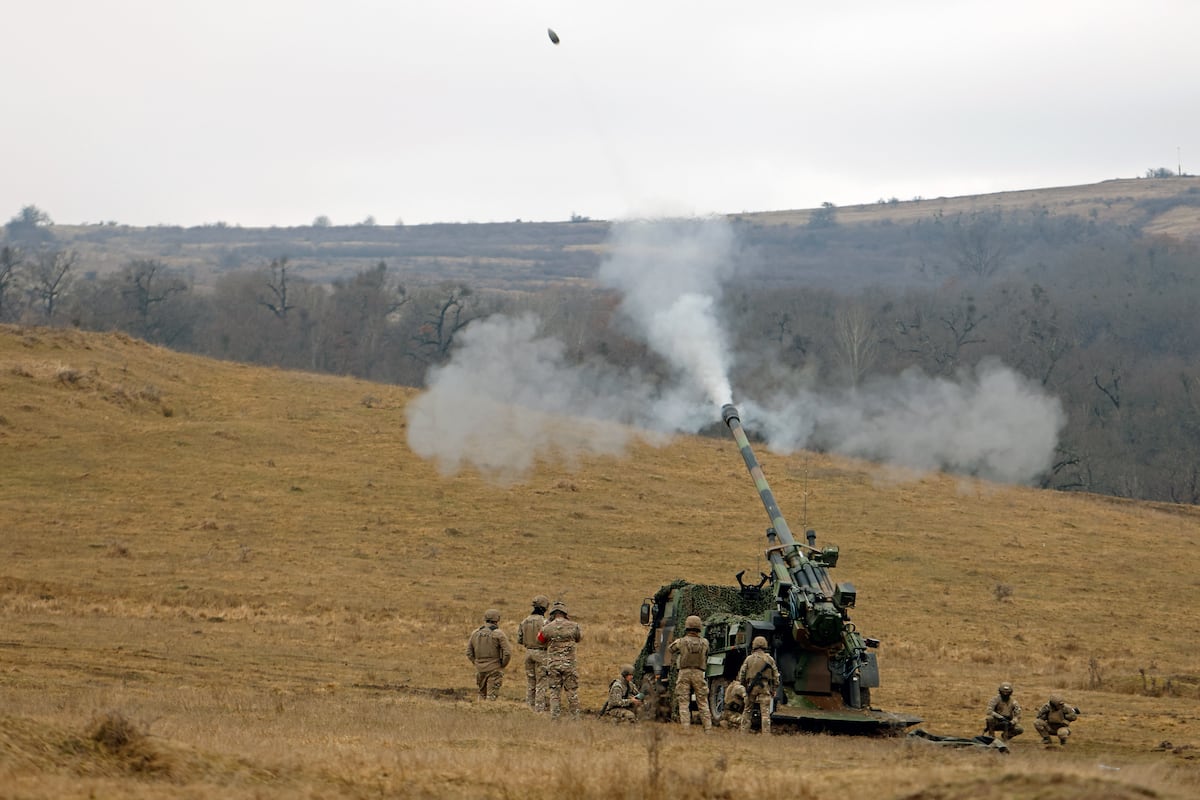
In a significant display of military cooperation, NATO artillery units conducted a large-scale drill across European training grounds, simulating combat scenarios similar to those currently unfolding in Ukraine. The exercise, known as Dynamic Front, took place from January 26 to February 13, 2024, involving 23 nations across five countries and nine training areas. The focus was on validating artillery interoperability, which is crucial for effective coordination during multinational operations.
Enhancing Artillery Interoperability
The drill aimed to assess how quickly different countries could integrate their artillery systems and share vital targeting data for long-range strikes. Participants were challenged to execute 1,500 strikes daily while simultaneously intercepting between 600 and 1,200 aerial threats. This level of operational intensity was designed to mirror the complexities of modern warfare facing troops in Ukraine.
Brig. Gen. Steven Carpenter, commander of the 56th Multi-Domain Command Europe, emphasized the importance of these coordinated efforts. In a press briefing reported by Stars and Stripes, he stated that the objective of massed artillery fire is to create a deterrent effect, asserting that strikes would be “so unrelenting” that potential adversaries would think twice before launching an attack.
According to U.S. Army officials, the exercise demonstrated a significant improvement in efficiency. Participating units established command systems capable of coordinating strikes in one-sixth of the time required in previous exercises. This marked a notable advancement in NATO’s collective military capabilities.
Key Technological Advancements
A critical component of the exercise was the Artillery Systems Cooperation Activities (ASCA), an encrypted software suite that facilitates connectivity among different national artillery and command-and-control systems. ASCA provides live targeting data to troops stationed across various countries, enhancing operational effectiveness.
U.S. officers have indicated that the ASCA system is continuously refined based on feedback from exercises like Dynamic Front. Over a dozen NATO nations have integrated this system into their military frameworks, further solidifying the alliance’s commitment to improving joint operational capabilities.
The outcomes of this extensive drill not only reflect NATO’s readiness to respond to evolving threats but also underscore the importance of international cooperation in maintaining security across Europe. As military dynamics shift globally, exercises like Dynamic Front serve as a testament to the alliance’s determination to enhance its collective defense strategies.