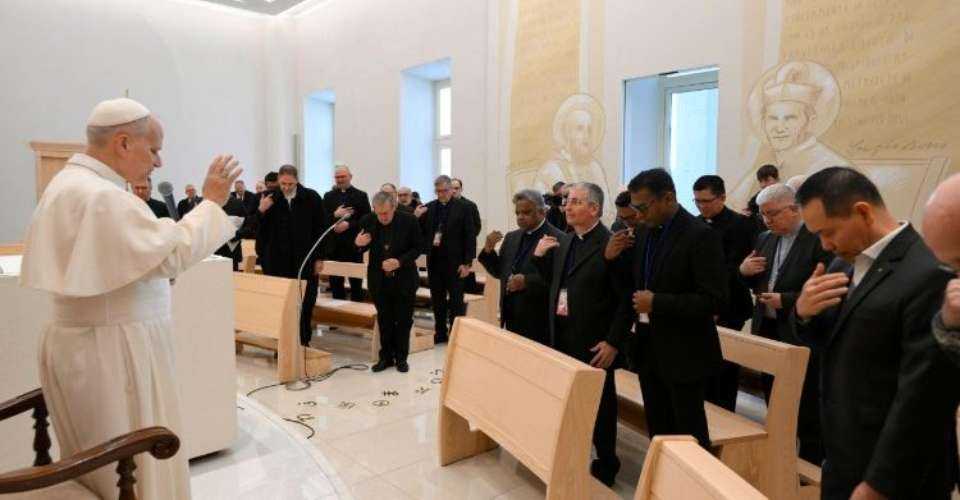
During a morning Mass on February 22, 2024, at the Basilica of the Sacred Heart of Jesus in Rome, Pope Leo XIV delivered a powerful homily emphasizing the distinction between the temptations of evil and the freedom offered by God. Drawing from the story of Adam and Eve in the Garden of Eden, he highlighted the “age-old dilemma” faced by humanity: whether true fulfillment comes from embracing God or pursuing independence from Him.
The Pope articulated that Jesus, as the incarnate Son of God, embodies the essence of a “new man” and a “free man,” demonstrating that genuine freedom is achieved by saying “yes” to God and resisting the “snares” of the devil. This message resonated with the gathered faithful, as Pope Leo encouraged them to actively cultivate their spiritual lives.
In a call for deeper connection with God, the Pope urged attendees to disconnect from technology during certain times of the day. He stated, “Let us create space for silence by turning off televisions, radios, and cell phones for a while.” This practice, he suggested, would allow for prayer, reflection, and engagement with the sacraments. He also emphasized the importance of dedicating time to the marginalized, particularly the elderly and the sick, stating, “By giving up what is superfluous, we can share what we save with those in need.”
Earlier that day, the Pope visited a Salesian-run basilica located near Rome’s main train station, where over 450,000 people pass daily. Father Javier Ortiz Rodríguez, the parish priest, described the area as a “full river in a storm” during the day, which transforms into a landscape of “landslides” marked by violence and exploitation at night. The priest expressed gratitude for the Pope’s visit, describing it as “a healing ointment” for the community, which includes numerous students, immigrants, and those facing homelessness.
This Mass was part of Pope Leo’s second pastoral visit in the Diocese of Rome leading up to Easter on April 5. These visits include private meetings with local priests, volunteers, and parish members, reinforcing his commitment to community engagement during the Lenten season.
In his homily, the Pope reflected on the significance of Baptism as a grace that enhances, rather than negates, human freedom. He explained that the Genesis narrative serves as a reminder of humanity’s potential for a relationship with the Creator. “Human beings are free to recognize and welcome the otherness of the Creator,” he asserted. He cautioned against the devil’s temptation, which lured Adam and Eve with the illusion of becoming like God, suggesting that such pursuits only lead to discontent.
Pope Leo emphasized that true freedom and fulfillment come from loving God and one another. He described the transformation that occurs through Baptism as a dynamic journey, inviting individuals to build a personal relationship with Jesus. This relationship fosters authentic connections with others, leading to a community defined by love rather than power.
Addressing the challenges faced by the neighborhood, the Pope commended the efforts of the Salesians and other organizations dedicated to serving the vulnerable. He recognized the basilica’s historical significance, noting that it was established at the request of Pope Leo XIII through St. John Bosco, who built it to serve the community near the then-new railway station.
Before concluding his address with the Angelus, Pope Leo XIV once again reflected on the day’s Gospel reading, which detailed Jesus’ fast in the desert and His resistance to temptation. He stated, “By means of prayer, fasting, and almsgiving, we can renew our cooperation with the Lord in the crafting of our lives as a unique masterpiece.”
The Pope acknowledged that this spiritual journey is demanding, particularly when faced with enticing but empty promises of wealth and fame. He reiterated that true happiness cannot be found in such pursuits, which ultimately leave individuals feeling dissatisfied. Instead, he encouraged a commitment to penance, which he believes enriches the human experience by fostering a deeper communion with God and one another.
As he concluded, Pope Leo XIV prayed for the strength to resist temptation, expressing hope that “Mary, Help of Christians, always support our journey” toward the freedom and fraternity inherent to being children of God.