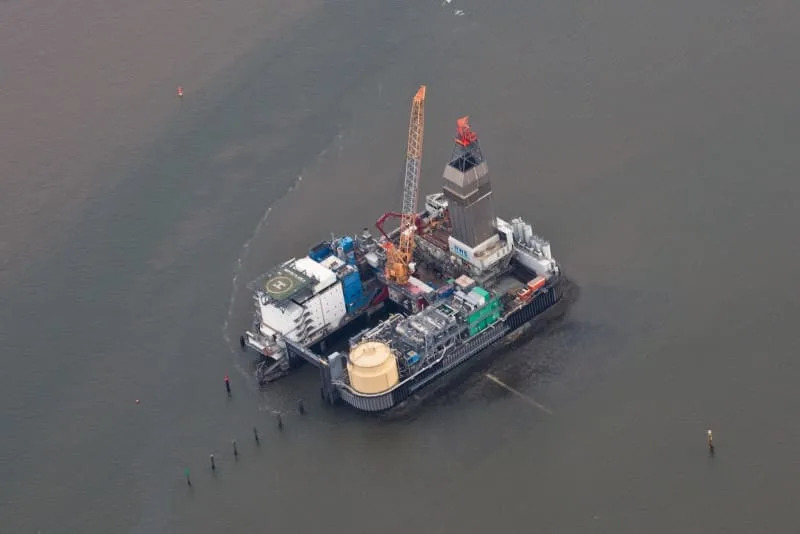
A state court in Germany has halted oil drilling operations in the northeastern Wadden Sea, responding to a lawsuit filed by an environmental organization. The Schleswig-Holstein Administrative Court found that an essential nature impact assessment had not been conducted, leading to the suspension of activities at the Mittelplate drilling platform.
The court’s ruling stems from a legal challenge brought forth by the German Environmental Aid Association (DUH). According to a court spokeswoman, the platform does not possess an enforceable production permit. The court emphasized that an inventory check is mandated every two years, but the required impact assessment under the Flora-Fauna-Habitat Directive (FFH) was not completed. As a result, the court has prohibited production on the site until further notice.
The operator of the drilling platform, Wintershall Dea Deutschland, has indicated that an appeal against the ruling will not have a suspensive effect on the court’s decision. A representative for the company stated that they intend to thoroughly review the court’s ruling. “We are convinced that the main operating plan for the Mittelplate drilling and production platform was approved in compliance with all applicable legal requirements,” the spokesman remarked. He added that the facility has been operated under close government supervision and has safely produced over 40 million tons of oil since it began operations in 1987.
The DUH hailed the court’s decision as a significant victory for environmental protection in the Wadden Sea, which is recognized as Germany’s largest World Heritage Site. Sascha Müller-Kräner, the Federal Executive Director of DUH, stated, “Germany’s largest World Heritage Site must not be exploited without a thorough assessment of the nature conservation implications of oil production.” He further criticized the platform as outdated and raised concerns about the increasing risk of potential accidents.
The ruling highlights the ongoing tension between industrial activities and environmental conservation in sensitive ecosystems. The Wadden Sea is a unique coastal area known for its rich biodiversity and ecological significance. The court’s decision not only affects oil production but also underscores the importance of adhering to environmental regulations designed to protect such vital habitats.
As the situation unfolds, both the environmental group and the operator will be closely monitoring the developments. The outcome may set a precedent for future cases involving energy production in environmentally sensitive regions, reinforcing the importance of comprehensive assessments before granting operational permits.