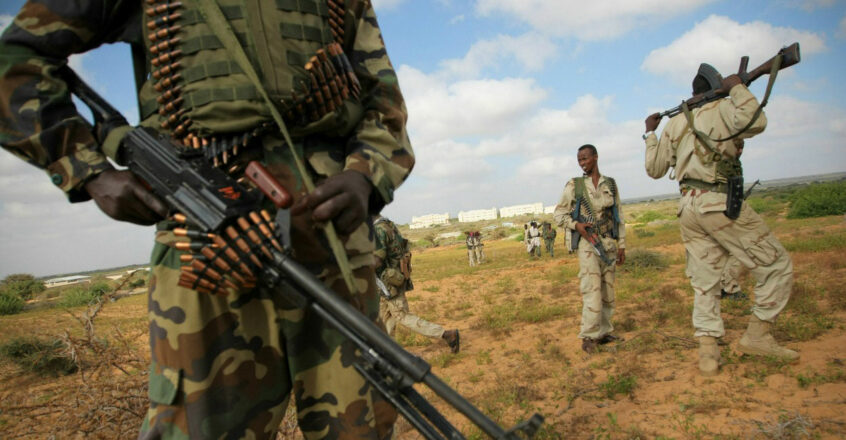
UPDATE: New reports confirm that Sudan’s military, the Sudanese Armed Forces (SAF), is increasingly aligned with the **Muslim Brotherhood**, raising urgent concerns over the ongoing civil war and peace negotiations. The **U.S.** is facing a critical policy contradiction as the SAF, led by **General Abdel Fattah al-Burhan**, continues to operate under the influence of the very ideological networks that the U.S. has designated as terrorist organizations.
As of now, the conflict in Sudan has escalated, with the SAF and the **Rapid Support Forces (RSF)** at the forefront of a violent struggle that has resulted in widespread humanitarian crises. The SAF’s connection to the **Muslim Brotherhood** complicates international responses, especially given the Brotherhood’s historical role in undermining democratic efforts in Sudan.
The **Muslim Brotherhood**, which infiltrated Sudan’s state institutions following the **1989 coup** led by **Omar al-Bashir**, has embedded itself deeply within the military and civil services. This infiltration has allowed the Brotherhood to maintain significant control over the SAF, even after Bashir’s removal in **2019**. Reports indicate that figures such as **Ali Karti**, a former minister and leader within the Brotherhood, play pivotal roles in perpetuating the Islamist agenda within the military.
The current situation is dire. **Humanitarian violations** have surged, with reports from **CNN** citing atrocities committed by the SAF against non-Arab ethnicities. Disturbingly, the **SAF** has been accused of using starvation as a weapon, blocking vital aid to those in need.
The **U.S. Treasury** has already imposed sanctions on the **El Baraa Ibn Malik Brigade (BBMB)**, affiliated with Karti, due to its involvement in human rights abuses. This raises urgent questions: How can the international community continue to engage with the SAF, a force increasingly intertwined with Islamist militias, without undermining efforts for democracy?
The current turmoil has mobilized various political movements in Sudan. The **Civil Democratic Alliance for Revolutionary Forces (Somoud)** is calling for international support for a civilian transition, emphasizing the need to counter the military’s Islamist dominance. Meanwhile, the **Sudan Founding Alliance (Tasis)** advocates for a secular, democratic state that prioritizes freedom, justice, and equality.
With the **SAF’s** growing reliance on Islamist factions, international partners face a critical dilemma: engaging with SAF leadership may inadvertently empower those obstructing peace and democratic reforms. The presence of entrenched Islamist figures such as Karti, **Ahmed Haroun**, and others poses significant challenges for the future of Sudan’s political landscape.
As this situation develops, the implications for Sudan and its diverse communities are severe. The international community must reassess its strategies to ensure that support for democratic forces does not inadvertently legitimize the very actors perpetuating conflict and suffering.
Next Steps: Global leaders and organizations must urgently reconsider their approach to Sudan, focusing on empowering civilian political movements while addressing the complexities introduced by the SAF’s Islamist affiliations. The time for decisive action is now, as the future of Sudan hangs in the balance.