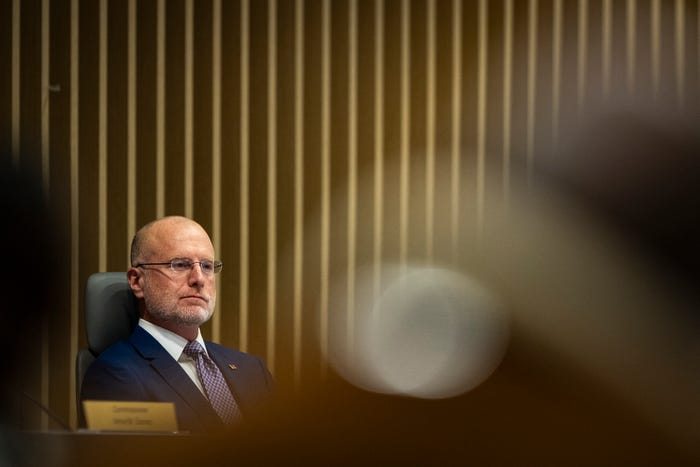
Federal Communications Commission (FCC) Chair Brendan Carr issued a stark warning on March 16, 2024, to broadcasters regarding their coverage of the ongoing conflict involving Iran. Carr stated that news outlets disseminating what he termed “distortions” could face the revocation of their broadcast licenses.
In a post on X, Carr emphasized the necessity for broadcasters to ensure their reporting aligns with the public interest, particularly as they approach license renewal periods. He stated, “Broadcasters that are running hoaxes and news distortions — also known as the fake news — have a chance now to correct course before their license renewals come up.” He underscored the legal obligation for broadcasters to operate in the public interest, warning that failure to do so could lead to significant repercussions.
While Carr did not name specific networks, his comments were spurred by a post from former President Donald Trump. Trump criticized major news outlets such as The New York Times and The Wall Street Journal for what he described as misleading reports about the Iran war, particularly regarding Iranian strikes on military targets. Trump accused these publications of misrepresenting facts, stating that headlines claiming destruction of aircraft were “intentionally misleading.”
Regulatory Implications and Broader Context
The FCC’s role involves regulating broadcast television and radio stations, which must secure licenses to use public airwaves. These licenses are subject to periodic renewal, during which compliance with public interest standards is evaluated. Carr’s warning reflects an evolving approach by the FCC under his leadership, showcasing a more aggressive stance toward content scrutiny.
This approach has already influenced programming decisions within major networks. Earlier this year, CBS opted not to air a scheduled interview with Texas state Representative James Talarico on “The Late Show with Stephen Colbert.” Legal counsel advised the network that the appearance could trigger the FCC’s “equal time” rule, which mandates equal airtime for political candidates. Recent signals from the commission indicate that late-night talk shows may no longer qualify for an exemption to this rule, increasing scrutiny on political content.
Critics have expressed concern that the FCC’s tactics may pressure news organizations to alter their editorial decisions. Former FCC officials have raised alarms that such actions could undermine journalistic integrity. Carr, however, maintains that enforcing compliance with the public interest standard is crucial for ensuring broadcasters meet their legal obligations.
Contradictory Statements and Future Consequences
Carr’s current stance contrasts sharply with his earlier views. In a 2019 post on X, he remarked that the FCC does not possess a “roving mandate to police speech in the name of the ‘public interest.'” This earlier assertion has resurfaced as critics challenge his recent emphasis on this standard to evaluate broadcasters.
As tensions between the FCC and broadcasters continue to escalate, Carr’s latest warning may have significant implications for media coverage of politically sensitive topics, including international conflicts. If broadcasters do not heed these warnings, they could face not only the loss of their licenses but also a chilling effect on the independent reporting required for a healthy democracy. The evolving landscape suggests that the dialogue surrounding media regulation and journalistic freedom will remain contentious in the months ahead.