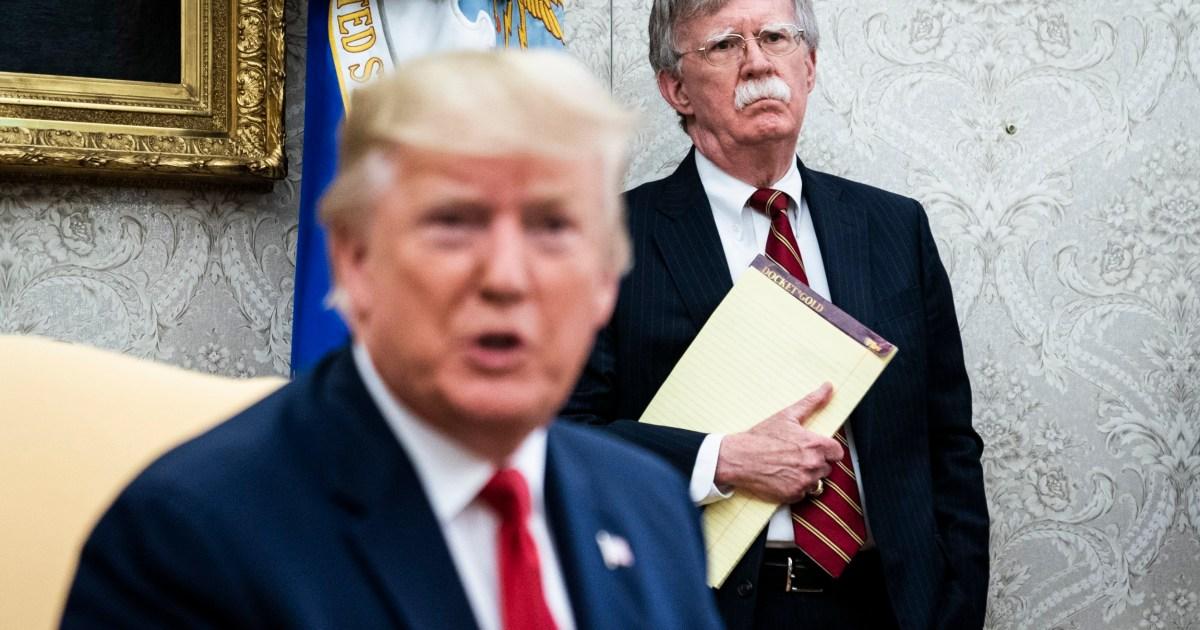
Former White House National Security Advisor John Bolton has warned that President Donald Trump finds himself in a “vulnerable position” regarding the ongoing conflict in Iran. In an interview with Metro, Bolton emphasized that the President must clarify his strategy to the American public amidst escalating tensions and casualties since the US began joint military strikes with Israel on February 28, 2024.
In the aftermath of the initial strikes, aimed at Iran’s missile infrastructure and military leadership, the situation in the region has deteriorated. The conflict has resulted in the deaths of at least 13 US soldiers and has left the oil industry in disarray. Neighboring countries have also suffered missile attacks, raising concerns over regional stability.
Public Support and Strategic Clarity Lacking
Since the conflict’s onset, public approval for military intervention remains low, with only 41% of Americans supporting the action. Bolton pointed out that Trump has not effectively communicated the rationale behind the intervention, which may hinder his administration’s ability to garner wider support.
“By failing to make the case, he has put himself in a vulnerable position,” Bolton stated. “He knows he’s in a difficult place, and he doesn’t know how to get out of it.”
Bolton argued that the President’s inability to articulate the benefits of taking action against Iran could have long-lasting repercussions. He believes there is a strong case for regime change in Iran, particularly given the nation’s pursuit of weapons of mass destruction and its history of supporting international terrorism.
Addressing the Threat of Nuclear Proliferation
While Bolton acknowledged that Iran does not currently pose an “imminent threat,” he warned that its nuclear program is progressing too close for comfort. He characterized the conflict as a “preventive war,” aimed at averting a more significant threat in the future.
Reflecting on historical precedents, he compared the current situation with that of Saddam Hussein in Iraq, suggesting that past inaction can lead to more severe consequences later. Bolton cautioned against waiting too long to deal with nations pursuing nuclear capabilities.
“If a proliferator has enough patience and gets nuclear weapons, it becomes difficult, if not impossible, to take its program out without grave risk,” he noted. He further suggested that had the US acted decisively against Iran two decades ago, it could have prevented much of the current turmoil in the region.
Potential for Change Within Iran
The former ambassador to the United Nations also pointed to the existing opposition movement in Iran, which he believes could support Trump’s goals for regime change. He observed that dissatisfaction with the Iranian government is at an all-time high, particularly among the younger population.
The death of Mahsa Amini in 2022, a Kurdish woman who died after being detained by police, sparked widespread protests and highlighted the growing discontent among Iranians. Bolton emphasized that this moment represents a critical opportunity to challenge the legitimacy of the current regime.
“Dissatisfaction has never been higher. The regime is weaker than at any point since it took power in 1979,” he stated. He noted that the youth of Iran, who make up a significant portion of the population, are increasingly aware of alternatives to their current reality.
Regional Implications and International Response
The conflict’s ramifications extend beyond Iran, with Gulf states continuing to face missile and drone attacks. These assaults have resulted in civilian casualties, escalating fears regarding security in the region. In response to the ongoing threats, President Trump has called for allies, including China, France, Japan, the UK, and South Korea, to send naval support to secure the Strait of Hormuz.
Despite Iran claiming its strikes are aimed at US assets, many incidents have affected civilian infrastructure, further complicating the situation. As global oil prices remain volatile, the international community is increasingly concerned about the potential for further escalation.
Bolton’s insights underscore the complexity of the current geopolitical landscape, particularly for the Trump administration. As the situation develops, the focus will remain on how the US addresses the challenges posed by Iran, both domestically and internationally.