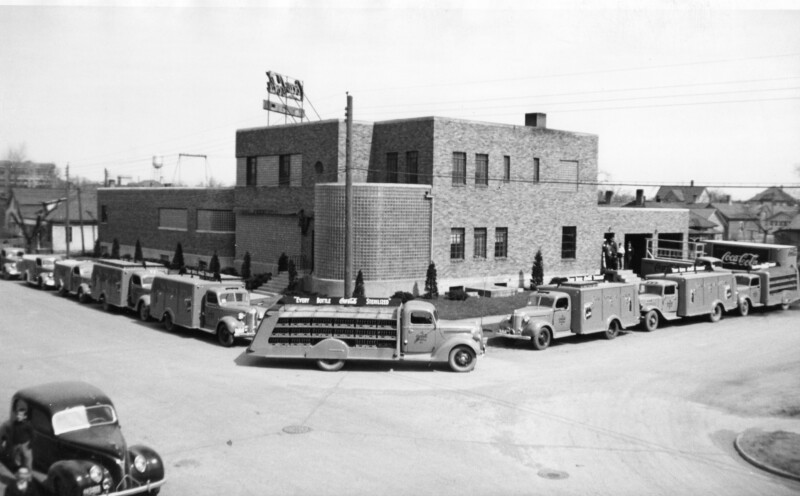
In a significant development for the local community, the historic Coca-Cola Bottling Plant, originally built in 1936, was demolished in 2016 after a fire in 2015 rendered it beyond repair. The building, located at the corner of Kimball and Hanson, was a notable fixture in the area and represented a key chapter in the history of bottling operations in the United States.
The Coca-Cola Bottling Company began its journey in 1905 when founders Andrew Ellwien, F.J. Prezler, and James Brown acquired the Schubert Bottling Company and renamed it Mitchell Bottling Works. Over time, the name evolved to reflect its partnership with the Coca-Cola brand. The plant constructed in 1936 cost approximately $26,000 and was considered state-of-the-art for its time.
Architectural Significance and Innovative Features
Designed by architect Floyd F. Kings, the building showcased advanced materials such as brick, glass, tile, and reinforced concrete. It was particularly noteworthy for its air conditioning and summer cooling systems, making it the only bottling plant of its kind in the United States at the time. The construction was managed by contractor Peter Kuipers, while the heating and plumbing systems were installed by the Gus Swanson Company.
The plant not only served as a bottling facility but also became a local landmark, representing the growth and modernization of the beverage industry. Its innovative design and technology reflected the advancements in manufacturing processes during that era.
The unexpected fire in 2015 marked a tragic end to the plant’s legacy. Despite efforts to salvage the structure, the damage was extensive, leading to its demolition in 2016.
New Beginnings for Coca-Cola Operations
Following the loss of the historic building, the Coca-Cola Bottling Company initiated construction on a new facility in 2016. The new location is situated on Commerce Street, conveniently near the Highway 37 bypass. This move signifies a new chapter for the company, which aims to continue its operations and serve the community with modernized infrastructure.
Researcher Pam Range has documented the historical significance of the Coca-Cola Bottling Plant, emphasizing its role in the development of the local economy and community identity. The transition to a new facility reflects both a respect for the past and a commitment to future growth in the beverage industry.
As the community reflects on the loss of its historic bottling plant, the establishment of the new facility offers hope for revitalization and continued service in the region. The Coca-Cola Bottling Company’s evolution underscores the importance of innovation and adaptability in the face of change.