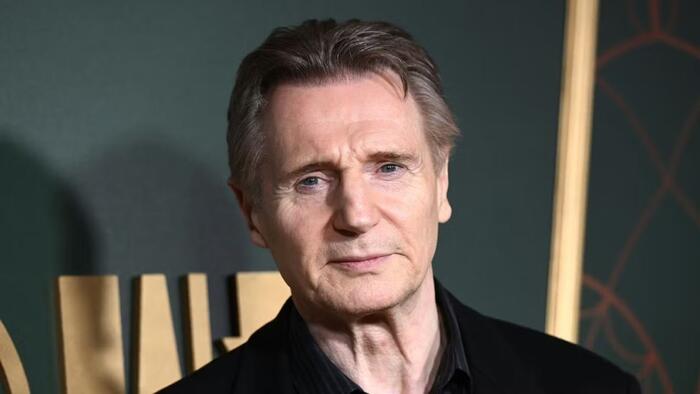
Liam Neeson has taken a controversial step by narrating a documentary titled Plague of Corruption: 80 Years of Pharmaceutical Corruption Exposed. This film, adapted from Dr. Judy Mikovits’ book and supported by Robert F. Kennedy Jr.’s Children’s Health Defense, sharply criticizes lockdown measures and the COVID-19 vaccination campaign. Neeson’s involvement marks a notable shift from his previous support for global vaccination efforts, raising eyebrows within the pharmaceutical community.
The documentary, which will be screened on November 16, 2025, argues that the lockdowns imposed during the pandemic caused significant harm without effectively saving lives. It emphasizes the psychological toll of these policies, with Neeson stating, “Thousands of lives were lost, not to the virus, but to the mental anguish brought on by these harsh restrictions.” The narrative suggests that the pharmaceutical industry’s practices have been questionable and calls for “transparency and accountability for the future.”
Neeson, who has long been associated with public health initiatives through his role with UNICEF, now aligns himself with the Make America Healthy Again (MAHA) movement. His comments in the documentary describe mRNA vaccines as “dangerous experiments” and criticize the scientists involved as “fanatics.” This shift in tone has prompted backlash from critics in the media and the pharmaceutical sector, who are eager to dispute his claims.
In response to the criticism, Neeson’s representatives clarified that he does not oppose vaccines, asserting, “We all recognize that corruption can exist within the pharmaceutical industry, but that should never be conflated with opposition to vaccines.” They further emphasized that Neeson did not influence the documentary’s editorial content and directed inquiries about its claims to the producers.
Despite his previous praise for vaccines, including those for COVID-19, Neeson’s current stance reflects a growing skepticism about government policies during the pandemic. In a 2022 UNICEF campaign, he described vaccines as a “remarkable human success story,” acknowledging the contributions of scientists and health workers in saving lives.
The documentary aims to expose what its creators term the “deep state’s health cartel.” Mikovits, who has faced significant criticism from mainstream health authorities, collaborates with attorney Kent Heckenlively to scrutinize agencies like the Centers for Disease Control and Prevention (CDC) for allegedly suppressing evidence related to vaccine safety.
While the film takes a firm stance against COVID-19 mandates, it remains to be seen how audiences will receive Neeson’s narration. With the pharmaceutical industry facing increasing scrutiny, Neeson’s shift in perspective might resonate with segments of the public questioning the motivations behind pandemic policies.
As the film’s release approaches, it is clear that Neeson’s participation is not merely a voiceover; it represents a significant commentary on the intersection of health policy and personal freedoms. The documentary is positioned not just as a critique but as a rallying call for greater accountability in public health governance.