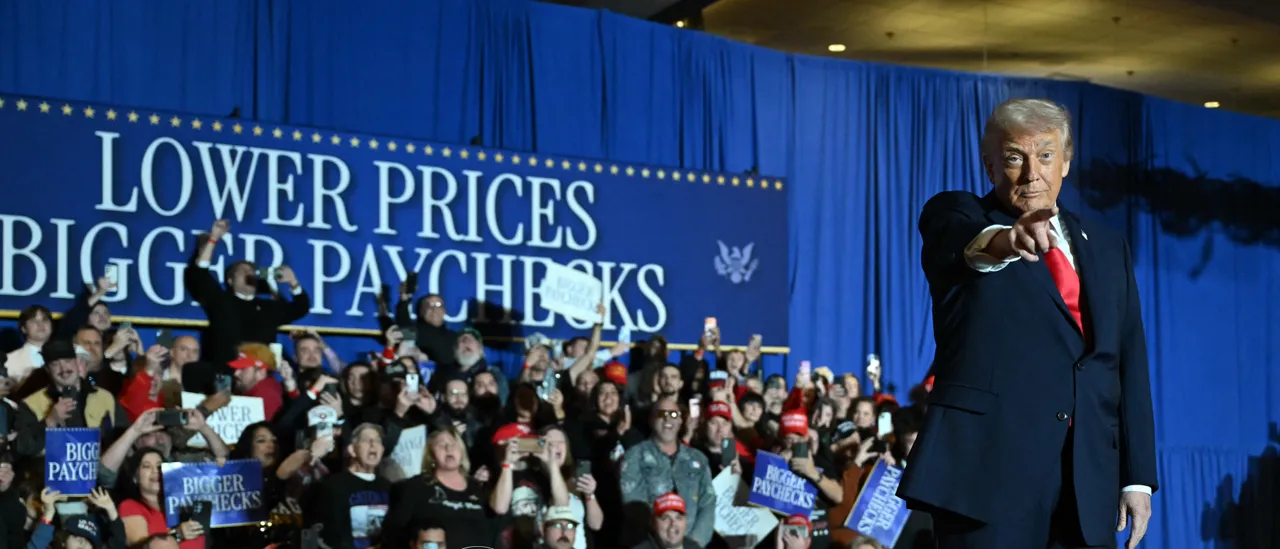
As the 2026 midterm elections approach, the Republican Party is unveiling a comprehensive affordability agenda aimed at addressing economic concerns among voters. Following the passage of significant tax cuts earlier this year, GOP leaders are optimistic that a combination of new legislation and policy changes will yield tangible benefits for American families by the time voters head to the polls.
Affordability has emerged as a key political issue in the upcoming elections, with Republicans facing challenges in their economic messaging despite holding unified control of Washington. A recent NPR/PBS News/Marist poll revealed that while 74% of Republicans express optimism about the economic outlook for the next year, a majority of the public—57%—anticipates worsening economic conditions.
Central to the party’s optimism is the recently enacted Working Families Tax Cuts Act, dubbed the “One Big Beautiful Bill.” This legislation, signed into law earlier in 2025, extends lower tax rates and higher standard deductions first introduced under the 2017 Trump tax cuts. It also introduces new write-offs aimed at various worker groups, including tip earners and Social Security recipients. Scott Bessent, the U.S. Treasury Secretary, indicated that while the immediate impact on household finances may not yet be apparent, significant tax refunds could be expected in early 2026, with estimates ranging from $1,000 to $2,000 per household.
The law further permits businesses to immediately write off capital expenditures, a measure Republicans argue will stimulate hiring and increase wages. Donald Trump, during a prime-time address on December 18, 2025, proclaimed that the country is on the verge of an economic boom.
Despite this optimism, the administration’s approval ratings regarding economic management have taken a hit. In response, Republicans are adopting a proactive stance on affordability issues, particularly in healthcare. Democrats have consistently framed GOP efforts to reduce waste and fraud in programs such as Medicaid as detrimental cuts, drawing criticism for new work requirements imposed by the One Big Beautiful Bill. They argue that these changes could lead to millions losing health coverage and have condemned the Republicans for not extending enhanced Obamacare subsidies, which are set to expire at the end of this year.
In December, House Democrats initiated a discharge petition to secure a vote on extending these subsidies, which received support from several moderate Republicans. While a vote is anticipated in January, the proposal faces significant hurdles in the Senate where previous attempts have been blocked by Republicans. The GOP argues that these subsidies, introduced during the Biden administration without any Republican input, merely mask deeper systemic issues within the healthcare sector.
Data shows that premiums in Obamacare exchanges have escalated at nearly double the rate of employer-based plans, underscoring the need for comprehensive reforms. In light of these concerns, 54% of adults surveyed expressed worries about their ability to afford necessary healthcare services in the coming year. In December, Senate Republicans proposed a bill backed by Trump that aims to allocate approximately $1,000 to $1,500 into Health Savings Accounts for individuals enrolled in Bronze or Catastrophic plans on the ACA exchanges. However, Democrats swiftly blocked this initiative as well.
Meanwhile, housing affordability has also surfaced as a pressing issue for voters. National Economic Council Director Kevin Hassett announced that the administration is preparing a significant housing proposal intended to alleviate financial burdens for homebuyers, with details expected early in 2026. Hassett stated, “We are going to have a plan, a big plan, to announce sometime soon in the new year that’s going to be very good news for the American people who feel like it’s not affordable to buy a home anymore.”
The administration’s previous proposals, including a controversial 50-year mortgage, have faced backlash even from traditional allies of Trump, being deemed impractical. Some legislators are advocating for another reconciliation bill in 2026 to tackle affordability issues. Senator John Kennedy of Louisiana has been vocal in promoting the reconciliation process, which would allow Republicans to bypass a Democratic filibuster.
While House Speaker Mike Johnson has indicated some openness to the idea, others, such as Rep. Jason Smith, chair of the House Ways and Means Committee, have expressed skepticism regarding the feasibility of passing another reconciliation bill. In December, Trump remarked that Republicans “don’t need” another major reconciliation effort, asserting that the significant tax cut and spending legislation passed earlier this year encompasses their agenda.
Interest rates also represent another potential lever for improving affordability ahead of the elections. With Federal Reserve Chair Jerome Powell’s term concluding in May, Trump has the opportunity to appoint a new leader aligned with his calls for lower rates. The president has frequently criticized the Fed for maintaining high rates that impede economic growth and is anticipated to announce his selection early in the new year.
As the party focuses on these affordability issues, political analysts underscore the importance of effective messaging. Hayden Dublois, data and analytics director at the Foundation for Government Accountability, noted, “Whoever messages and wins on the affordability issue is going to be in a winning position for the midterms.” Republicans are urged to concentrate on the root causes of these problems, asserting that they arise from policies they seek to amend, while Democrats are accused of offering only temporary fixes that exacerbate budget deficits.