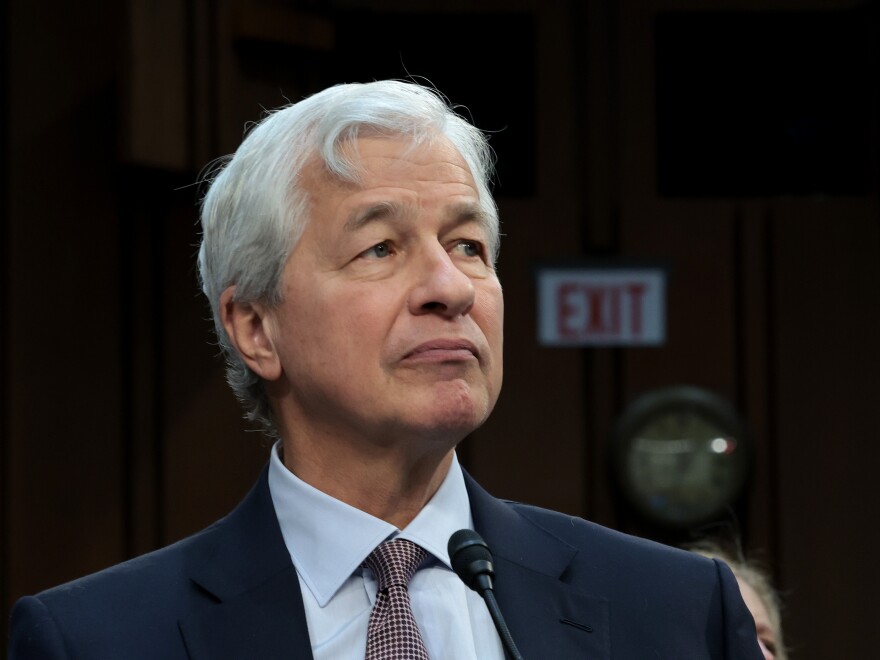
Former President Donald Trump has initiated legal action against JPMorgan Chase and its CEO Jamie Dimon, seeking at least $5 billion in damages. The lawsuit, filed in a Miami-Dade state court on Thursday, alleges that the bank closed Trump’s accounts due to political motivations following the events of January 6, 2021.
The lawsuit reflects a culmination of tensions between Trump and Dimon, particularly concerning the treatment of accounts associated with conservative figures. Trump claims that JPMorgan Chase’s decision to close his accounts was influenced by “unsubstantiated, ‘woke’ beliefs” aimed at distancing the bank from his conservative viewpoints. These allegations echo Trump’s previous claims against various financial institutions, which he accuses of targeting conservatives.
In a statement to NPR, a spokesperson for JPMorgan Chase characterized the lawsuit as lacking merit. The bank maintains that it does not close accounts for political or religious reasons but does so to mitigate legal and regulatory risks. The spokesperson noted, “We regret having to do so but often rules and regulatory expectations lead us to do so.” The bank has urged both current and previous administrations to reform the regulatory framework that governs banking practices.
Background of the Dispute
Trump’s legal battle with banks is not new. He has publicly criticized several major financial institutions, including JPMorgan Chase and Bank of America, alleging they are engaging in “debanking” practices against conservatives. Last year, he filed a lawsuit against Capital One under similar claims. His concerns have escalated to the point where he issued an executive order in August, targeting what he described as “politicized or unlawful debanking.”
The legal action against JPMorgan Chase also follows a backdrop of escalating tensions between Trump and Dimon. The CEO’s public statements have occasionally diverged from Trump’s policies. Recently, Dimon expressed support for an independent Federal Reserve, firmly opposing Trump’s attempts to exert more control over the institution. During an interview at the World Economic Forum in Davos, Switzerland, Dimon described Trump’s proposed cap on credit card interest rates as “an economic disaster.”
As the lawsuit unfolds, it remains to be seen how the legal arguments will be developed and whether the case will impact the ongoing relationship between Trump and the banking sector. The outcome could have implications for how financial institutions navigate political affiliations and the risks associated with account management.