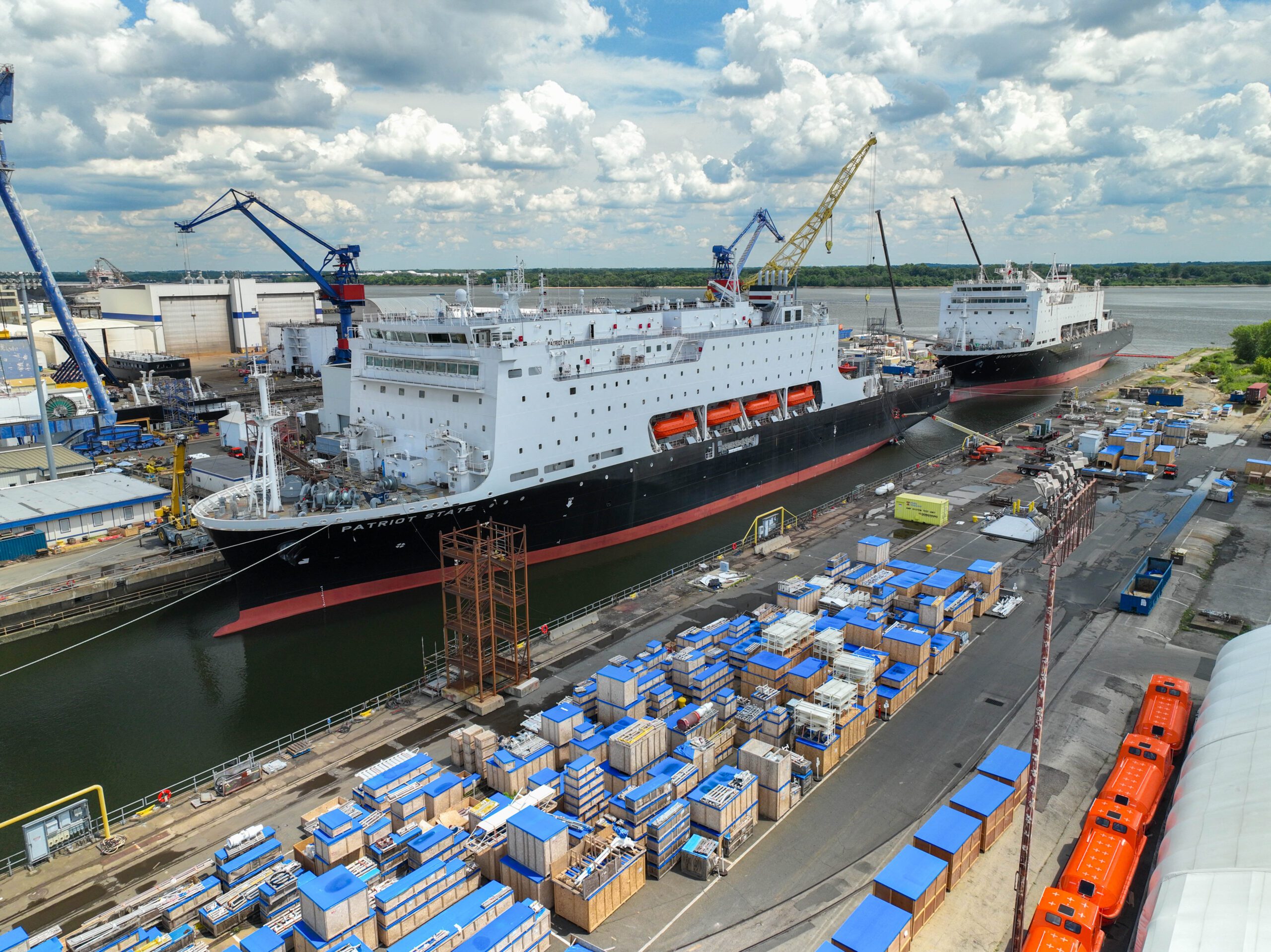
The United States is poised for a significant transformation in its shipbuilding industry, as it seeks to learn from the advanced practices of South Korea. This shift comes as South Korea and China continue to dominate the global shipbuilding market, with South Korea achieving a remarkable **28% market share** by compensated gross tonnage in 2023, a **22% increase** in shipyard output. Meanwhile, China holds an even larger share at **53%**, having increased its output by **18%** compared to the previous year, according to the **2024 Clarksons Global Shipbuilding Review**.
In response to these developments, U.S. policymakers are implementing strategic initiatives to enhance domestic shipbuilding capabilities. Notably, the proposed **Shipbuilding and Harbor Infrastructure for Prosperity and Security (SHIPS) for America Act** is gaining bipartisan support, although it has yet to pass into law. Additionally, an executive order titled “Restoring America’s Maritime Dominance,” signed by President Trump, mandates a comprehensive **Maritime Action Plan**. This plan, which was due on **November 5**, aims to bolster the maritime industrial base, focusing on shipbuilding, repair, and workforce development.
The Maritime Action Plan emphasizes the need for a well-trained and adequately funded domestic maritime workforce. It proposes establishing a **Maritime Security Trust Fund**, reforming acquisition processes, exploring “maritime prosperity zones,” and modernizing the **U.S. Merchant Marine Academy**. These efforts reflect a commitment to expanding the nation’s maritime infrastructure and capabilities.
U.S. shipbuilders are not navigating this transformative journey alone. During President Trump’s recent visit to South Korea, it was announced that South Korea would invest **$150 billion** in U.S. shipbuilding. This investment aligns with existing partnerships, such as the collaboration between **HD Hyundai Heavy Industries** and **Huntington Ingalls Industries** to construct auxiliary ships for the U.S. Navy.
Leveraging South Korea’s Shipbuilding Success
The decision to partner with South Korea is strategic, as the country is renowned for its high-tech vessels and efficient production methods. Major South Korean shipyards, including **Hanwha Ocean** and **Samsung Heavy Industries**, have set industry standards through decades of collaboration with global partners and substantial investments in digitalization. U.S. officials have praised the efficiency and modernization of South Korean shipyards following recent visits.
South Korea’s successful shipbuilding model hinges on the concept of a **digital shipyard**. This involves the integration of advanced digital technologies and practices that streamline the shipbuilding process from design to production. By utilizing **digital 3D workflows** and **digital twins**, South Korean shipyards can optimize design processes, reduce errors, and enhance collaboration among various teams. This approach has allowed them to deliver projects on time and within budget, even in high-stakes environments.
The potential for U.S. shipyards to adopt similar practices is significant. By implementing digital technologies, American shipbuilders can improve productivity and attract new talent to the industry, which is crucial given the current shortage of a trained maritime workforce. Countries like Japan and South Korea have faced similar recruitment challenges, particularly following economic downturns.
Training and Attracting Talent
To address the shortage of skilled labor, the U.S. shipbuilding sector must enhance its appeal to younger generations. Digital technologies can play a key role in this transformation by automating repetitive tasks and allowing engineers and naval architects to focus on more complex challenges. The rapid advancement of artificial intelligence also presents new opportunities to leverage data and improve operational efficiency.
Investing in shipbuilding is essential for the U.S. for multiple reasons, including job creation, economic growth, and national security. The revitalization of the shipbuilding industry will not only strengthen the economy but also enhance maritime capabilities.
As the U.S. looks to South Korea for guidance, it aims to adopt proven best practices and innovative technologies to accelerate its shipbuilding renaissance. By focusing on digital continuity and collaboration, American shipyards have the potential to compete effectively in the global market, ensuring a robust maritime industry for the future.