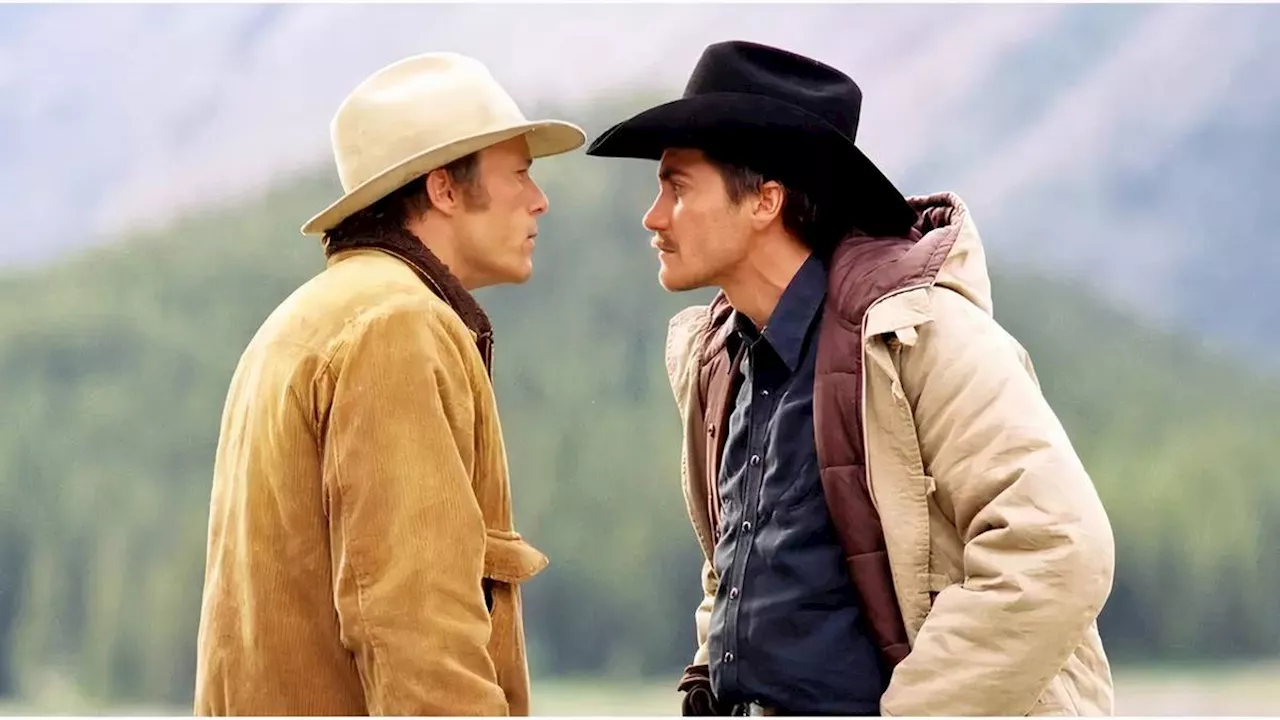
Two decades after its release, Brokeback Mountain continues to resonate with audiences, reflecting the complexities of love and the pain of societal expectations. Directed by Ang Lee, the film premiered at the Venice Film Festival on September 2, 2005, before hitting theaters on December 9, 2005. Its poignant narrative, adapted from Annie Proulx‘s 1997 short story, explores the tumultuous relationship between Ennis Del Mar, played by Heath Ledger, and Jack Twist, portrayed by Jake Gyllenhaal.
Set against the backdrop of the majestic mountains in Wyoming during the early 1960s, the film opens with a raw and passionate encounter between the two protagonists. Their first sexual experience is both primal and fraught with tension, symbolizing their struggle against the rigid confines of masculinity and societal norms. As they navigate their feelings in secret, the expansive landscape mirrors their emotional isolation.
Love Against All Odds
The heart of Brokeback Mountain lies in its exploration of internal conflict rather than external prejudice. Although both characters face societal judgment, it is their inability to accept their identities that ultimately hampers their relationship. Ledger’s Ennis embodies this struggle, with his stoic demeanor concealing deep-seated emotions. The film portrays his journey with unflinching honesty, showcasing the pain he experiences as he grapples with his desires.
In stark contrast, Gyllenhaal’s Jack displays a more open but equally troubled nature. His famous line, “I wish I knew how to quit you,” encapsulates the complex emotions tied to their relationship. Throughout the film, the passage of time is deftly handled, with the editing creating a sense of a suspended reality where their love flourishes in moments of intimacy, often devoid of dialogue. This technique emphasizes the depth of their bond, which exists outside the constraints of their daily lives.
Enduring Impact and Legacy
The film’s cultural significance was underscored during the 2006 Academy Awards, where it received eight nominations, winning three, including Best Director for Lee. Although it did not take home the coveted Best Picture award, its influence has only grown over the years. With a modest budget of $14 million, Brokeback Mountain grossed nearly $180 million worldwide, proving its commercial viability alongside its critical acclaim.
In the years following its release, the performances of Ledger and Gyllenhaal have remained iconic, showcasing the emotional depth of their characters. The film’s legacy is further deepened by the tragic loss of Ledger in 2008, which adds a layer of sorrow to his already poignant portrayal of Ennis. His performance, marked by a quiet intensity, invites audiences to reflect on the struggles faced by many in the LGBTQ+ community.
As Brokeback Mountain approaches its 20th anniversary, it stands as a testament to the enduring power of love and the heartache of societal rejection. The film continues to resonate not just as a story of two men in love but as a broader commentary on the human condition. Its stunning visuals, coupled with a haunting score by Gustavo Santaolalla, evoke the beauty and tragedy of the characters’ experiences, making it a timeless piece of cinema that invites reflection and discussion.
Ultimately, Brokeback Mountain is more than just a film; it is a cultural touchstone that invites audiences to confront their perceptions of love, loss, and acceptance. In a world where such stories are still vital, the film remains a powerful exploration of the complexities of the human heart.