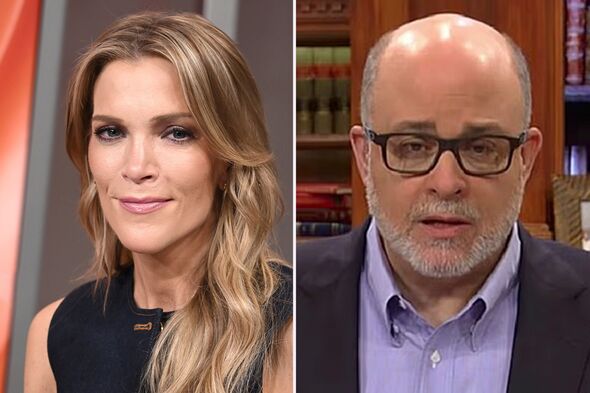
A public dispute has erupted between former Fox News colleagues Megyn Kelly and Mark Levin, igniting controversy on social media. The conflict began when Levin criticized MAGA influencer Jack Posobiec for showcasing a rosary during the Turning Point USA’s AmericaFest event on December 15, 2023, labeling him a “crackpot.” Kelly quickly defended Posobiec, asserting that his faith and practices should not be ridiculed.
Kelly responded directly to Levin’s comments on X, stating, “Off to go pray the beautiful rosary @JackPosobiec gave me, like virtually all Christians do, which doesn’t make us ‘crackpots’ no matter what some old, angry anti-Christian nut on weekend Fox says.” She added a jab at Levin’s career, remarking, “Never could get himself into the prime time. Sad!”
Levin, the host of the weekend program Life, Liberty and Levin, retaliated later that evening, promising a more thorough response on his radio show. His remarks included a pointed critique of Kelly, claiming it is “not possible to keep up with the Woke Reich psychos and groyper-bigots like Megyn Kelly on social media.”
The exchange highlights a growing rift among conservative voices, with Levin also labeling Kelly as a “click wh*re” and questioning her conservative credentials. He further criticized Posobiec for his associations, particularly after footage surfaced of fitness podcaster Myron Gaines making antisemitic remarks at the same event. Levin stated, “Here’s the lowlife Jack Posobiec pals around with,” referencing the incident and asserting that Posobiec has yet to condemn such behavior.
Levin’s comments about Kelly extend beyond her defense of Posobiec. He suggested that she is akin to other controversial figures in conservative circles, labeling her a “sinister grifter.” This feud comes as Kelly has also challenged other right-wing commentators, such as Ben Shapiro and Bari Weiss, accusing them of contributing to antisemitism. These assertions have drawn criticism from the Anti-Defamation League, which cautioned against blaming Jewish figures for the actions of antisemites, suggesting it risks entering a “dangerous line” of victim-blaming.
Kelly, who gained prominence as a Fox News host and is known for her sharp interviews and political analysis, is now part of a widening debate within conservative media. Levin, a prominent radio personality and vocal supporter of Israel, has built a reputation for his forthright opinions and commentary.
As the situation unfolds, it reflects the ongoing tensions within the conservative movement, with figures like Kelly and Levin representing diverging views on faith, ideology, and the responsibilities of public commentators. The fallout from their exchange highlights the complexities of navigating identity and belief in contemporary political discourse.