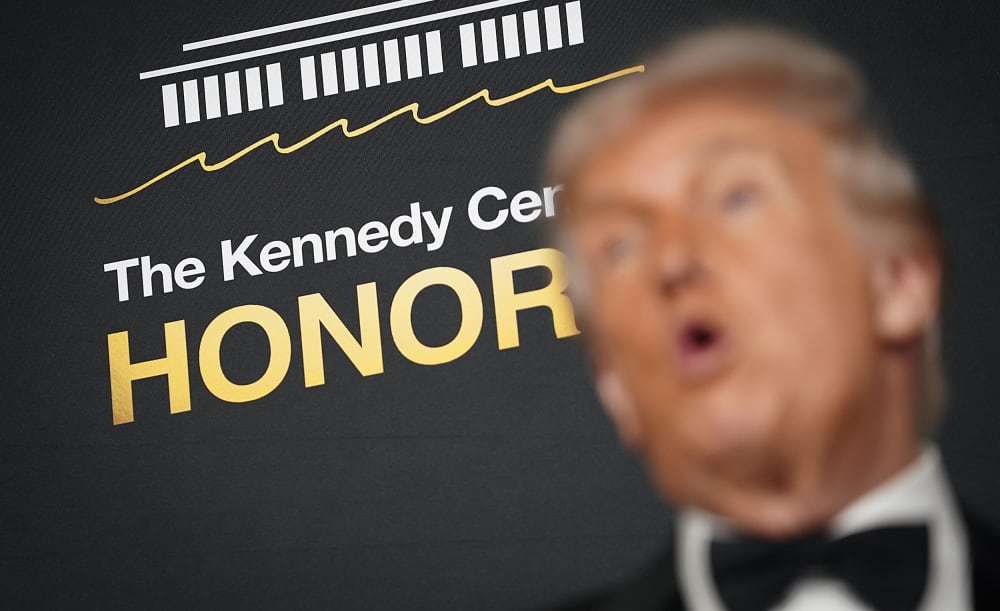
Donald Trump’s recent hosting of the Kennedy Center Honors failed to capture the audience’s interest, resulting in the show’s lowest viewership ever. The event, which has been a staple of holiday programming since 1978, averaged only 2.65 million viewers, a significant drop from 4.1 million in 2024. This decline highlights a growing disconnect between Trump’s ambitions and the traditional audience for the program.
The Kennedy Center Honors celebrate significant contributions to American arts and culture, featuring a diverse array of performers over the years, including icons like Tom Hanks, Lucille Ball, and Aretha Franklin. Historically hosted by notable figures such as Walter Cronkite and David Letterman, the event has maintained a reputation for honoring a wide spectrum of artistic talent.
This year, Trump took a bold step by appointing himself as chairman of the Kennedy Center board and hosting the event, which aired on December 12, 2025. He claimed to be “98% involved” in selecting the honorees, who he characterized as “anti-woke.” The list included Sylvester Stallone, the rock band KISS, and disco singer Gloria Gaynor. Despite his enthusiasm, the show’s reception was underwhelming, prompting questions about his understanding of the event’s cultural significance.
While Trump’s past media ventures, such as his reality show “The Apprentice,” were commercially successful, his approach to the Kennedy Center Honors diverged from its established ethos. The program has traditionally celebrated a blend of highbrow and middlebrow artistic expressions, reflecting the cultural tastes of the Kennedy family. Trump’s selection of honorees shifted this vision towards a more populist focus, which may not have resonated with the established audience.
In an ironic twist, CBS’s legal and standards department insisted on retaining the traditional name, Kennedy Center Honors, rather than the proposed “Trump Kennedy Center Honors.” This decision perhaps reflects a desire to maintain the program’s integrity and reputation amidst Trump’s branding efforts.
Trump’s programming choices echo a broader theme in his public life: a struggle to connect with those outside his core conservative base. While he excels at engaging his loyal supporters, his ability to understand the broader public sentiment remains a challenge. This disconnect may have contributed to his declining ratings, both on television and in the polls, as audiences increasingly seek authenticity and relevance in programming.
As Trump continues to navigate his post-presidency endeavors, the mixed reception of the Kennedy Center Honors serves as a reminder of the complexities inherent in balancing personal branding with established cultural traditions. The significant drop in viewership underscores the necessity for any public figure, particularly one as polarizing as Trump, to adapt to the evolving landscape of audience expectations and preferences.