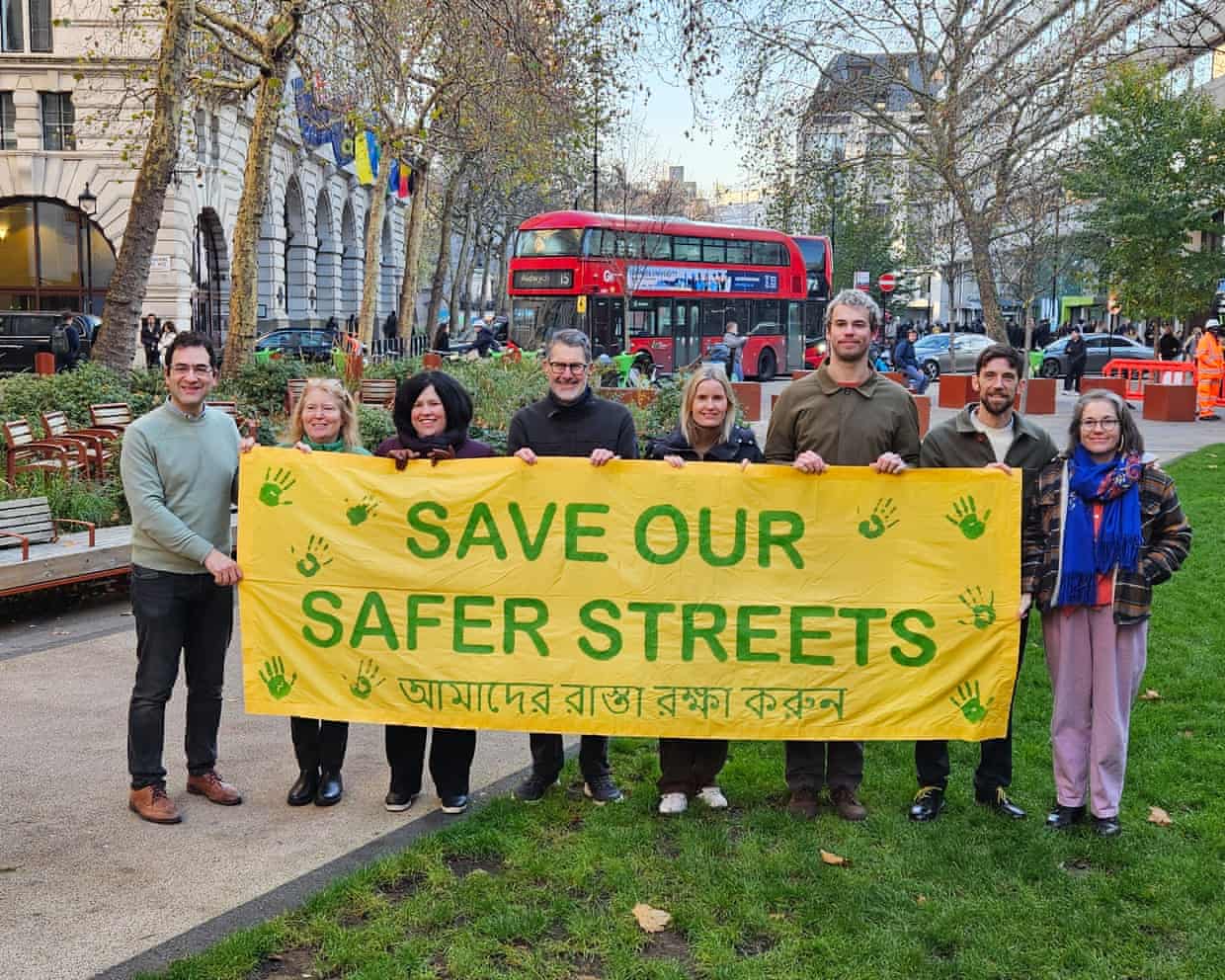
The Court of Appeal has determined that the Mayor of Tower Hamlets, Luftur Rahman, acted unlawfully in his efforts to dismantle three low traffic neighbourhood (LTN) schemes. This decision follows a lengthy campaign by road safety activists, who have fought for over three years to maintain these traffic restrictions in areas such as Bethnal Green, Shoreditch, and Columbia Road.
The ruling overturned a previous decision made in December 2022 by the High Court, where Rahman had initially secured a victory. Rahman campaigned on a platform that promised to remove the LTNs, which he claimed created barriers for working-class residents who relied on cars. His manifesto articulated a commitment to “reopen our roads” and abolish the “failed Liveable Streets scheme,” alleging that emergency services and vulnerable residents faced access issues due to the LTNs.
Advocates for the LTNs argued that these measures provided significant benefits to the local community. Their campaign received backing from local NHS trusts and the heads of five schools, emphasizing that the LTNs offered “simple and cheap infrastructure” that mitigated the adverse effects of vehicular traffic. They contended that these measures were essential for enhancing safety, accessibility, and support for those who walk, cycle, or use public transport.
In the hearing, the judge concluded that Rahman lacked the authority to remove the LTNs, which had been implemented as part of a traffic strategy agreed upon with Transport for London (TfL). Ted Maxwell of Save Our Safer Streets highlighted the importance of TfL’s involvement in the appeal process, stating, “The intervention of TfL helped win the appeal. We the community brought this legal challenge, including raising thousands of pounds for legal support, but the involvement of TfL was key.” The judge remarked that Rahman had acted beyond his powers, reinforcing the legal framework governing local traffic schemes.
Maxwell expressed hope that this ruling would inspire similar activism across London, stating, “We are vindicated and this is a very emotional moment for us. We hope campaigners for safer streets see this as a shot in the arm.”
Sadiq Khan, the Mayor of London, has consistently advocated for reducing car journeys throughout the capital. Last year, he reaffirmed his commitment to increasing low traffic streets and enforcing 20 mph speed limits to enhance urban safety.
A spokesperson for TfL responded positively to the Court of Appeal’s decision, noting, “We are very pleased with the court’s decision in this case, which provides welcome clarity on the scope of London boroughs’ legal duties to implement and retain schemes funded by TfL to implement the mayor’s transport strategy.” They emphasized that infrastructure designed for walking and cycling, like LTNs, plays a crucial role in creating safer urban environments.
This ruling not only validates the efforts of local activists but also underscores the ongoing debate about urban traffic management and its implications for community accessibility and safety.