Health policy discussions took on a creative twist this year as readers submitted their health-themed valentines, reflecting both humor and frustration with the current system. In 2026, submissions highlighted significant issues such as rising insurance costs, overcharging, and the growing role of artificial intelligence in healthcare.
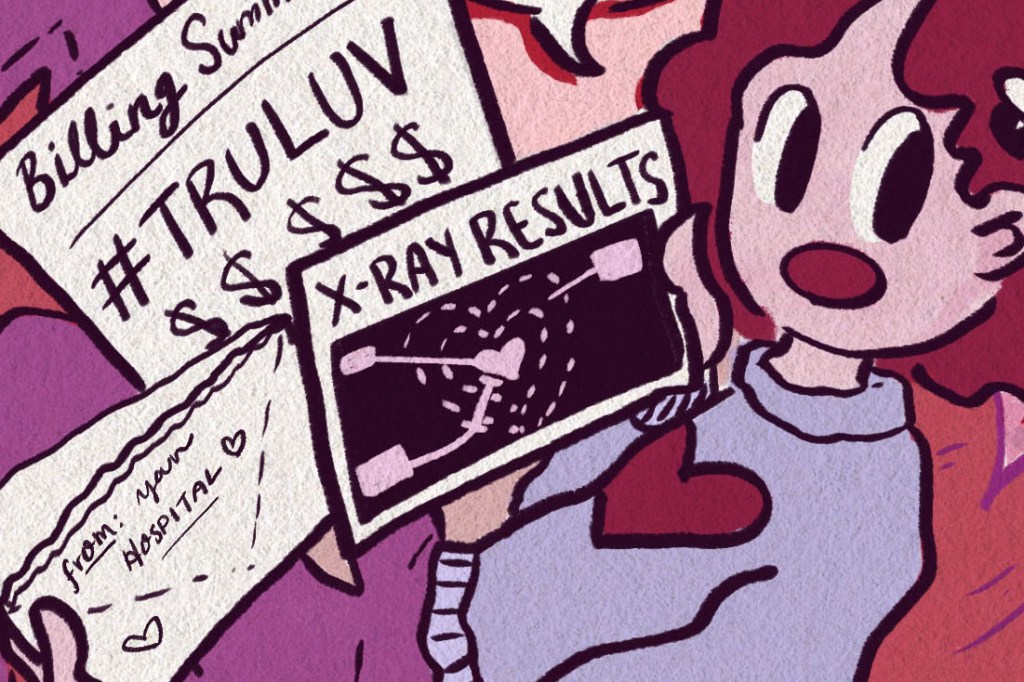
One standout piece was a poem by Laura Wagner, which captured the essence of many people’s experiences with health insurance. She wrote:
A box of chocolates?
A dozen roses?
Just the usual Valentine’s occurrence.
I’d rather Cupid chip in for my rising insurance.
This poignant reflection resonated with many and was even transformed into a cartoon by Oona Zenda, an illustrator for KFF Health News.
Other notable submissions included a witty take on menopause from Priya Bathija, who lamented the lack of available experts, and a humorous scenario by Sara Culley about the challenges of accessing healthcare during Valentine’s Day. Culley wrote:
Feeling lonely on Valentine’s with no PCPI call all the offices, but no one can see me.
My insurance suggests telehealth to thicken the plot,
but with no one around, I’ll seek care from an AI robot.
Another poem, from Thy-Ann Nguyen, poignantly captured the financial dilemma many face:
Roses are red,
Violets are blue,
If I had to choose health insurance or my house,
I wouldn’t know what to do.
These creative expressions underscore the growing concerns about healthcare accessibility and affordability in the United States. As costs continue to climb, many individuals feel caught between essential health coverage and their financial security.
KFF Health News is known for its in-depth journalism surrounding health policy issues and serves as a critical resource for understanding the complexities of the healthcare landscape. The submissions this year reflect not only the creativity of the public but also their urgent need for change in a system that often feels burdensome and confusing.
In a landscape where health insurance and access to care are paramount, these valentines serve as a reminder of the human impact of policy decisions and the ongoing struggles that many individuals face in obtaining adequate care.