A new HIV vaccine trial in South Africa is set to begin next week after overcoming significant obstacles, including a near halt due to funding cuts from the U.S. Agency for International Development (USAID). This initiative, backed by the BRILLIANT Consortium, aims to address the urgent need for an effective vaccine in a region heavily impacted by the disease.
The story of this trial unfolded during a pivotal meeting in January 2023 in Zanzibar, where over a hundred experts gathered to discuss strategies for developing an innovative vaccine. The consortium had secured a substantial $45 million grant, which marked a notable collaboration of African scientists focused on an African health issue. Nonhlanhla Mkhize, a medical scientist at the National Institute for Communicable Diseases (NICD) in Johannesburg, expressed the excitement of the attendees, stating, “We were at the beginning of something big.”
However, just as momentum built, the atmosphere shifted dramatically. On January 20, 2025, an executive order signed by former President Trump froze all foreign aid, triggering widespread uncertainty and budget cuts at USAID. Penny Moore, a virologist at the University of the Witwatersrand in South Africa, recalled the unsettling moment when a USAID colleague expressed doubt about future collaboration: “I completely underestimated how much it would gut the program.”
The immediate fallout was significant. Official stop work orders were issued, halting the trial just before it was set to begin. “That was crushing because we were about to enroll our first participants,” Moore said. The setback left researchers alarmed and scrambling for alternatives.
Despite this setback, the team remained resolute. Linda-Gail Bekker, director of the Desmond Tutu Health Foundation, emphasized the urgency of their mission, stating, “In many ways, we’ve kind of had our legs cut off even as we’re beginning to run the sprint.” The researchers rallied together, driven by the critical need for a vaccine in the fight against HIV.
Moore pointed out that while treatments exist, they are not sufficient. “We need to get to the point where we are finally ahead of the virus, and I think that the only way we can do that is through a vaccine.” Her extensive research into HIV has not only contributed to understanding the virus but has also provided insights applicable to other diseases.
The trial’s focus is on broadly neutralizing antibodies, which can potentially combat various strains of HIV. These antibodies are effective but difficult to stimulate in the human body. With the grant from USAID, the team aimed to establish trials that would explore the best methods to encourage the immune system to produce these critical antibodies.
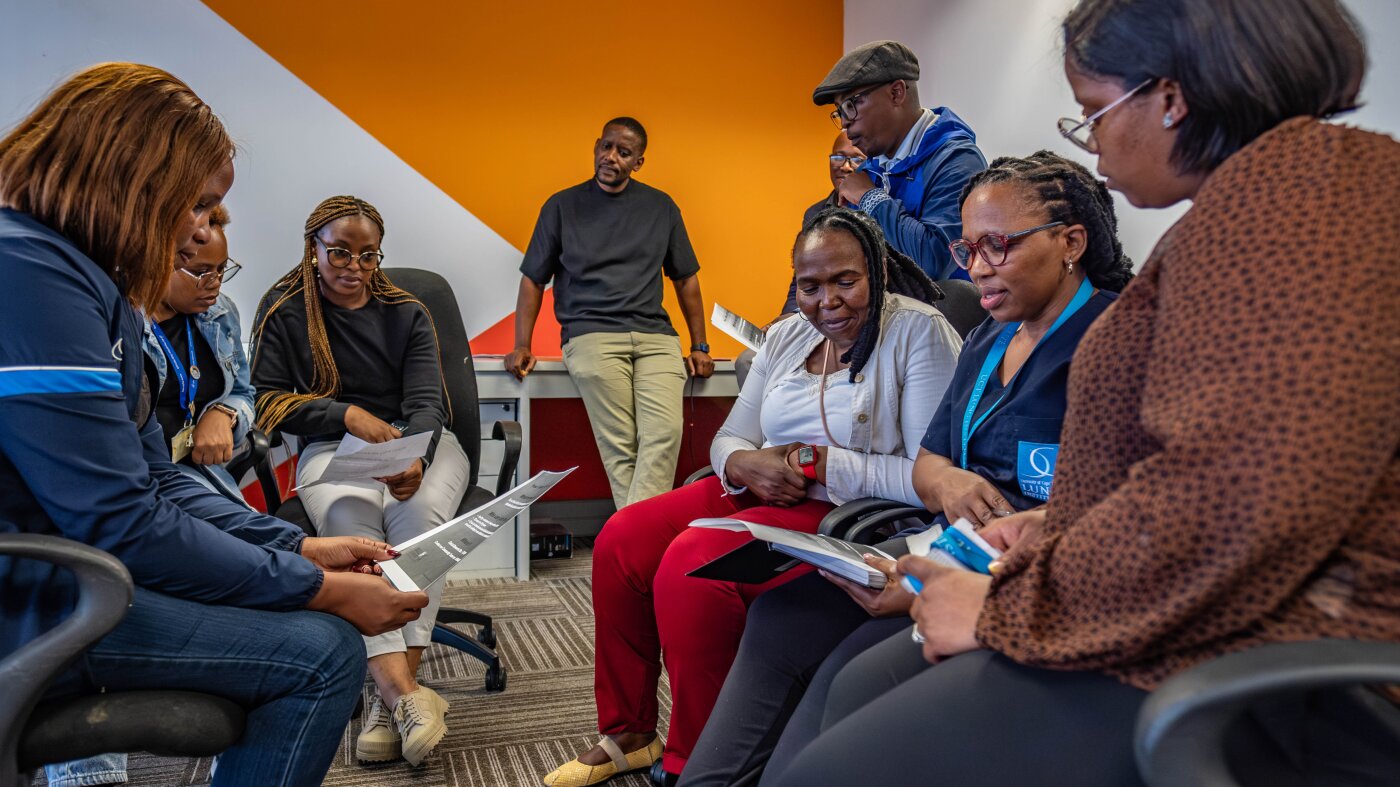
After the funding withdrawal, the researchers faced a stark reality. “There were a lot of hugs and there were a lot of tears,” Moore recalled. Yet, rather than abandon their efforts, the South African team devised an alternative plan to continue the research independently. They scaled back the scope of the trials to focus solely on South Africa, determined to demonstrate their capability to progress without external funding.
Amelia Mfiki, the community liaison officer for the vaccine trials, expressed optimism about this shift. “This is a great opportunity for South Africa to prove that we can do things in South Africa for South Africa with South African financing,” she said. The team worked tirelessly, applying for grants from various sources, ultimately securing funding from the South African Medical Research Council and the Gates Foundation.
Although this new funding is significantly less—about $2.25 million—than the original USAID grant, it represents a critical lifeline. Moore noted that the project has begun screening participants for the revised trials, marking a significant step forward after nearly a year of delays.
The trials will take place in Philippi Village, an impoverished township near Cape Town where HIV prevalence is notably high. “It’s important to do the work not in these communities — but with these communities,” Kassim explained, highlighting the importance of involving local populations in the research process.
As the first shots of the new trial are set to be administered, participants like Nandipha Mongo, a 25-year-old woman who has previously engaged in HIV research, are eager to contribute. “I’m over the moon, man!,” she said, acknowledging the impact of her involvement on her community, which faces significant challenges related to HIV, gender-based violence, and unplanned pregnancies.
With the commencement of the vaccine trial, the researchers hope to make significant strides in combating HIV in South Africa, reaffirming their commitment to finding a solution to an epidemic that has affected millions. The determination and resilience of the team exemplify the spirit of scientific inquiry and community collaboration, essential in the fight against one of the world’s most persistent health crises.