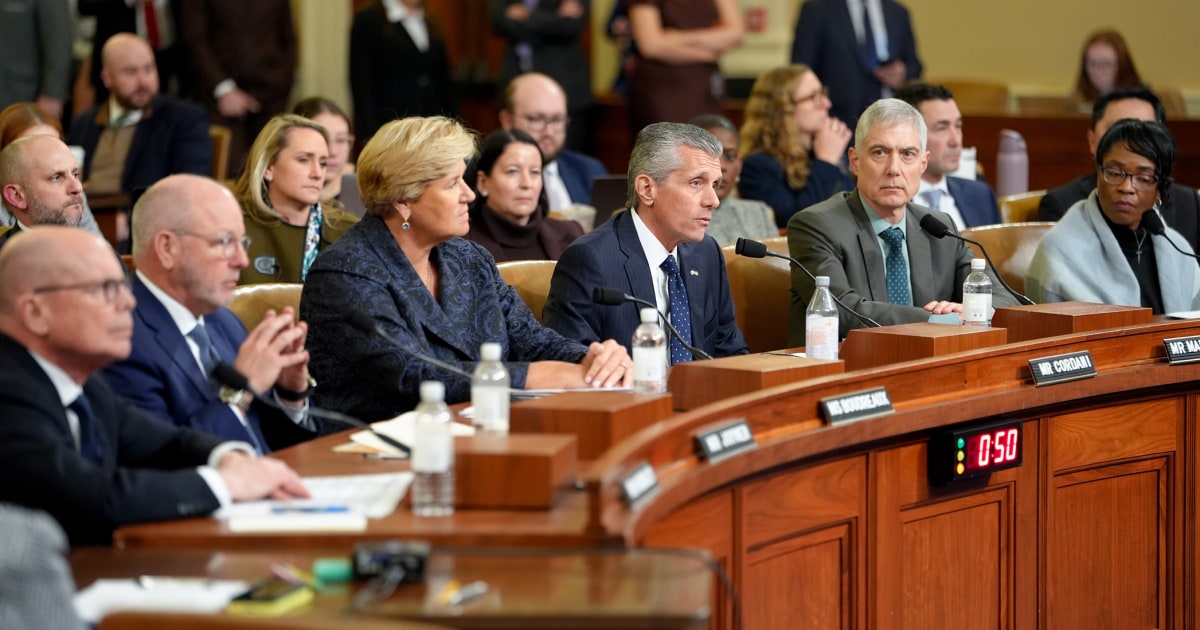
Lawmakers in Washington, D.C., held back-to-back hearings on March 14, 2024, scrutinizing the rising costs of health care as they questioned CEOs of major health insurance providers. Executives from UnitedHealth Group, CVS Health Group, Cigna Health Group, Elevance Health, and Ascendiun faced tough inquiries about premium increases, prior authorization rules, and claim denials. The bipartisan hearings aimed to uncover how these corporate decisions impact patients across the nation.
The hearings, convened by Republican lawmakers, come in the wake of significant spikes in health insurance premiums affecting millions of Americans. Many individuals relying on coverage through the Affordable Care Act have seen their premiums double or triple following the expiration of enhanced subsidies at the end of 2025. Job-based insurance plans have also experienced similar increases, with insurers attributing these hikes to the rising costs associated with prescription drugs and hospital care.
During the hearings, Representative Debbie Dingell, a Democrat from Michigan, expressed concern, stating, “Millions of Americans across the nation have seen their health care premiums skyrocket. Yet, all of you are posting record profits.” Meanwhile, Representative Jodey Arrington, a Republican from Texas, highlighted the broader economic implications, saying, “It’s crushing our families, it’s a drag on our economy, and it’s a threat to my children’s future.”
In response to the mounting criticism, the CEOs defended their positions, arguing that rising premiums are a reflection of increased costs throughout the health care system. They emphasized that the insurance industry operates in a competitive market and that raising premiums beyond what consumers can afford is not in their interest. David Cordani, CEO of Cigna, stated, “We work every day to lower the cost of health care.”
Focus on Pharmacy Benefit Managers
Throughout the hearings, attention was drawn to the acquisitions of pharmacy benefit managers (PBMs) by major insurance companies, which play a critical role in determining what prescriptions are covered. Notably, CVS Health owns Aetna and its PBM, CVS Caremark, while UnitedHealth Group operates its insurance division alongside its PBM, Optum. Cigna also owns Express Scripts, another PBM.
In a pointed exchange, Representative Alexandria Ocasio-Cortez, a Democrat from New York, questioned David Joyner, CEO of CVS Health, about the company’s market influence. Ocasio-Cortez noted that CVS manages approximately 30% of all prescriptions filled in the U.S., prompting her to remark, “That is quite a bit of market concentration.” Joyner responded, “I wouldn’t agree. It’s a model that works really well for the consumer,” to which Ocasio-Cortez quipped, “I think it works very well for CVS.”
Concerns about executive compensation were also raised. Representative Buddy Carter from Georgia inquired about Joyner’s reported compensation of $41 million in 2024, questioning its justification.
Denials and Consumer Impact
Lawmakers shared stories from constituents who faced denial of coverage. Representative Kim Schrier, a Democrat from Washington, described a constituent who was denied hospitalization by UnitedHealth Group following a stroke. “That is just unconscionable and shameful,” she told Stephen Hemsley, CEO of UnitedHealth Group. “This is why so many people hate their insurance company.”
These hearings mark the beginning of what is expected to be a comprehensive examination of the underlying causes of high health care costs. While criticisms of insurance companies were bipartisan, there were also attempts to shift blame for the crisis. Republicans criticized the Affordable Care Act, while Democrats pointed fingers at Republican lawmakers for inaction regarding rising premiums.
During the hearings, Representative Jason Smith, a Republican from Missouri and chairman of the Ways and Means Committee, stated, “Obamacare prices have only gone up, not down.” In contrast, Representative Frank Pallone, Jr., a Democrat from New Jersey and the ranking member of the Energy and Commerce Committee, remarked, “Make no mistake, congressional Republicans and President Donald Trump are to blame for the health care affordability crisis Americans are experiencing today.”
The political landscape surrounding health care continues to evolve, with President Trump recently announcing a new health care plan that has drawn criticism for lacking specific details. As discussions on health care affordability persist, both sides of the aisle appear committed to addressing the challenges faced by American families.