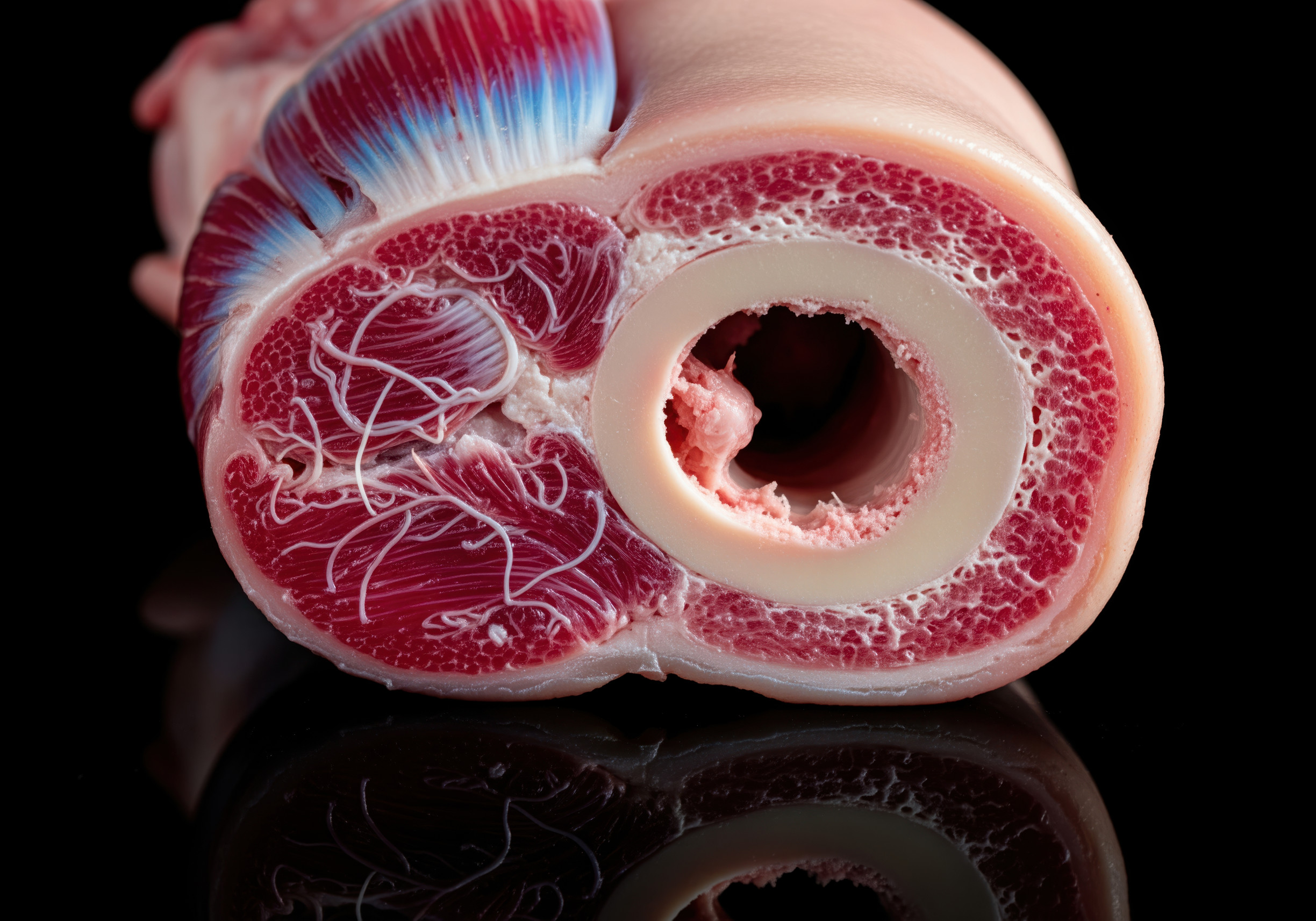
In a significant advancement for regenerative medicine, researchers have developed the first fully human-engineered bone marrow model. This innovative “blood factory,” created by scientists at the University of Basel and University Hospital Basel, has the potential to transform the study of blood diseases, including leukemia and anemia, by providing a more accurate platform for testing treatments.
Bone marrow is essential for producing blood cells that support the immune system and transport oxygen throughout the body. When this process fails, as seen in various blood cancers, the consequences can be dire. Traditionally, understanding blood formation and its disruptions has relied on animal models or basic cell cultures, which often do not accurately reflect human biology. The research team aimed to address this gap by constructing a model that closely mimics the complex environment of human bone marrow.
The study, published in the journal Cell Stem Cell, outlines a bioengineered system that replicates the three-dimensional structure where blood cells are produced. Led by Professor Ivan Martin and Dr. Andrés García García, the team began with a synthetic scaffold made from hydroxyapatite, a mineral naturally found in human bones. They then introduced reprogrammed human pluripotent stem cells capable of differentiating into various cell types, including those specific to bone marrow.
Through a carefully orchestrated process, the researchers successfully guided these stem cells to create a diverse range of blood-producing cells. The final product is a compact model measuring just eight millimeters in diameter and four millimeters thick, which maintained blood cell production in the laboratory for several weeks. Notably, it successfully recreated the endosteal niche, a critical area in the bone marrow where blood stem cells reside and where certain blood cancers can resist treatment.
“Our model brings us closer to the biology of the human organism,” stated Professor Martin. “It could serve as a complement to many animal experiments in the study of blood formation in both healthy and diseased conditions.”
The implications of this research extend beyond mere technical achievement. By providing a human-specific model, the system could significantly reduce reliance on animal testing while enhancing the accuracy of scientific findings. This development aligns with ongoing efforts within the scientific community to refine and replace animal experiments with more ethically sound alternatives.
In terms of future applications, the research team envisions the potential for using patients’ own cells to create personalized bone marrow models. This could lead to tailored treatment plans that account for individual biological differences, increasing the effectiveness of therapies for blood cancers.
Despite these promising prospects, the current model’s size may present challenges for high-throughput drug testing. Dr. García García acknowledged, “For this specific purpose, the size of our bone marrow model might be too large,” indicating the need for further refinements and miniaturization to integrate it into broader diagnostic workflows.
Even so, the creation of this fully human, lab-grown bone marrow system represents a crucial milestone in medical research. It shifts the focus away from animal models toward human-specific biology and opens new avenues for drug testing, disease study, and the development of targeted therapies. This “blood factory,” while small in size, carries immense potential for advancing our understanding of human health and improving treatment outcomes for patients suffering from blood-related disorders.