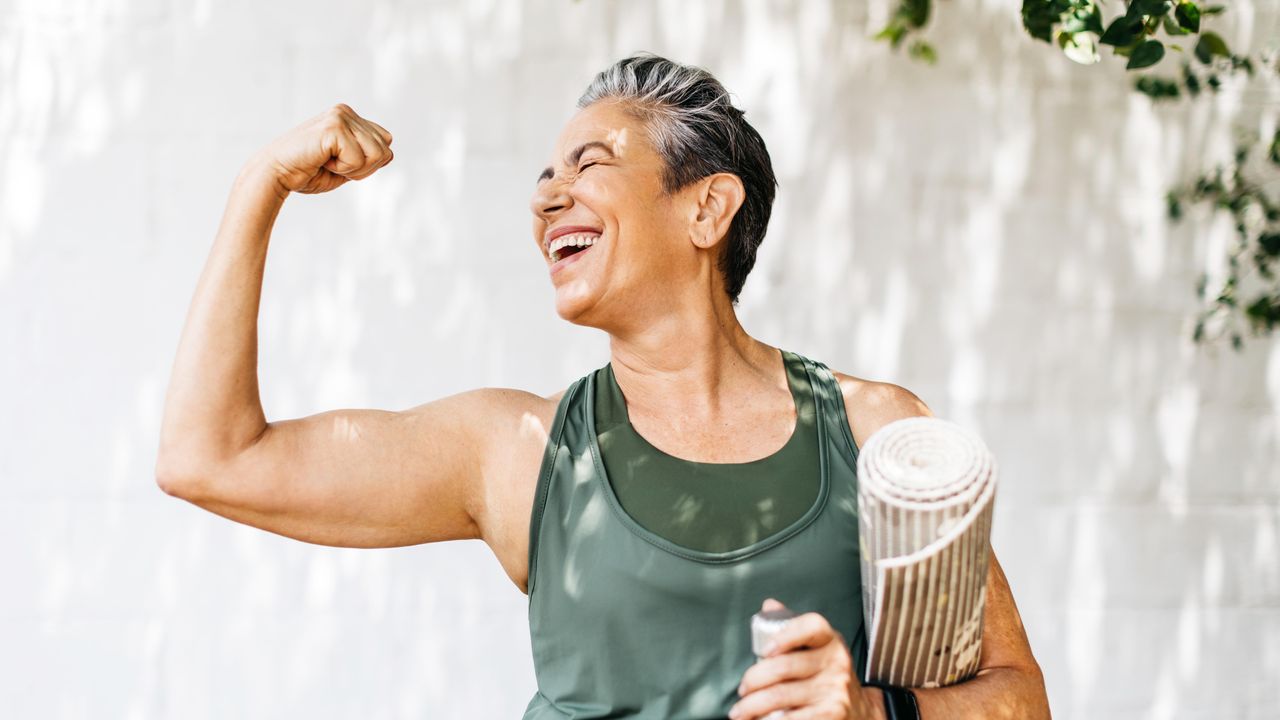
Building muscle becomes more challenging with age, but it remains entirely achievable. Changes in muscle strength and endurance can vary greatly among individuals, yet they do not signify an irreversible decline in fitness. According to physiotherapist and personal trainer Grace Heinrichs, who practices at X-Club Pilates & Wellness in London, these physical shifts are a normal aspect of aging rather than a reason for despair.
“There is good news in all of this: aging muscles respond very well to progressive strength training,” Heinrichs explains. The key lies in approaching training with patience and consistency. Progressive strength training, or progressive overload, involves gradually increasing the demands placed on muscles over time. This can mean adding small weights, increasing repetitions, or enhancing control and range of motion.
For those looking to either return to exercise or strengthen their foundational skills, Heinrichs recommends a straightforward five-move routine designed to build muscle effectively.
Five Essential Exercises for Older Adults
1. **Sit to Stand (Chair Squat)**: Perform 3 sets of 10 repetitions. Begin by sitting tall on a chair with feet hip-width apart. Press through your heels to stand up fully, ensuring your chest remains lifted. Slowly lower yourself back down to the chair in a controlled manner.
2. **Wall Push Ups**: Complete 3 sets of 10 repetitions. Stand a step or two away from a wall, placing your hands at shoulder height. Bend your elbows to bring your chest towards the wall, then push back to straighten your arms while maintaining core engagement.
3. **Step Ups**: Execute 3 sets of 10 repetitions per leg. Step onto a sturdy platform or low bench, with or without weights. Drive through your heel to stand tall, bringing the other foot up if comfortable. Step back down and repeat on the opposite leg.
4. **Farmer’s Carry**: Hold for 30-60 seconds over 3 sets. Grip a weight in each hand, such as dumbbells or kettlebells. Stand tall with shoulders back and walk steadily for the set duration. Focus on maintaining good posture and controlled breathing during this exercise.
5. **Shoulder Bridge**: Perform 3 sets of 10 repetitions. Lie on your back with knees bent and feet flat on the floor, arms by your sides. Press through your heels to lift your hips towards the ceiling while squeezing your glutes. Lower back down slowly, ensuring your lower back does not collapse. To increase difficulty, lift one knee toward your chest while bridging, then switch sides.
These exercises not only enhance muscle strength but also improve overall stability and mobility. As individuals age, maintaining physical activity becomes increasingly vital for sustaining quality of life and independence.
For those uncertain about starting a new exercise routine, seeking guidance from a certified professional can provide personalized support and ensure safety during workouts. With the right approach, strength training can be a rewarding endeavor at any age, particularly after 65.