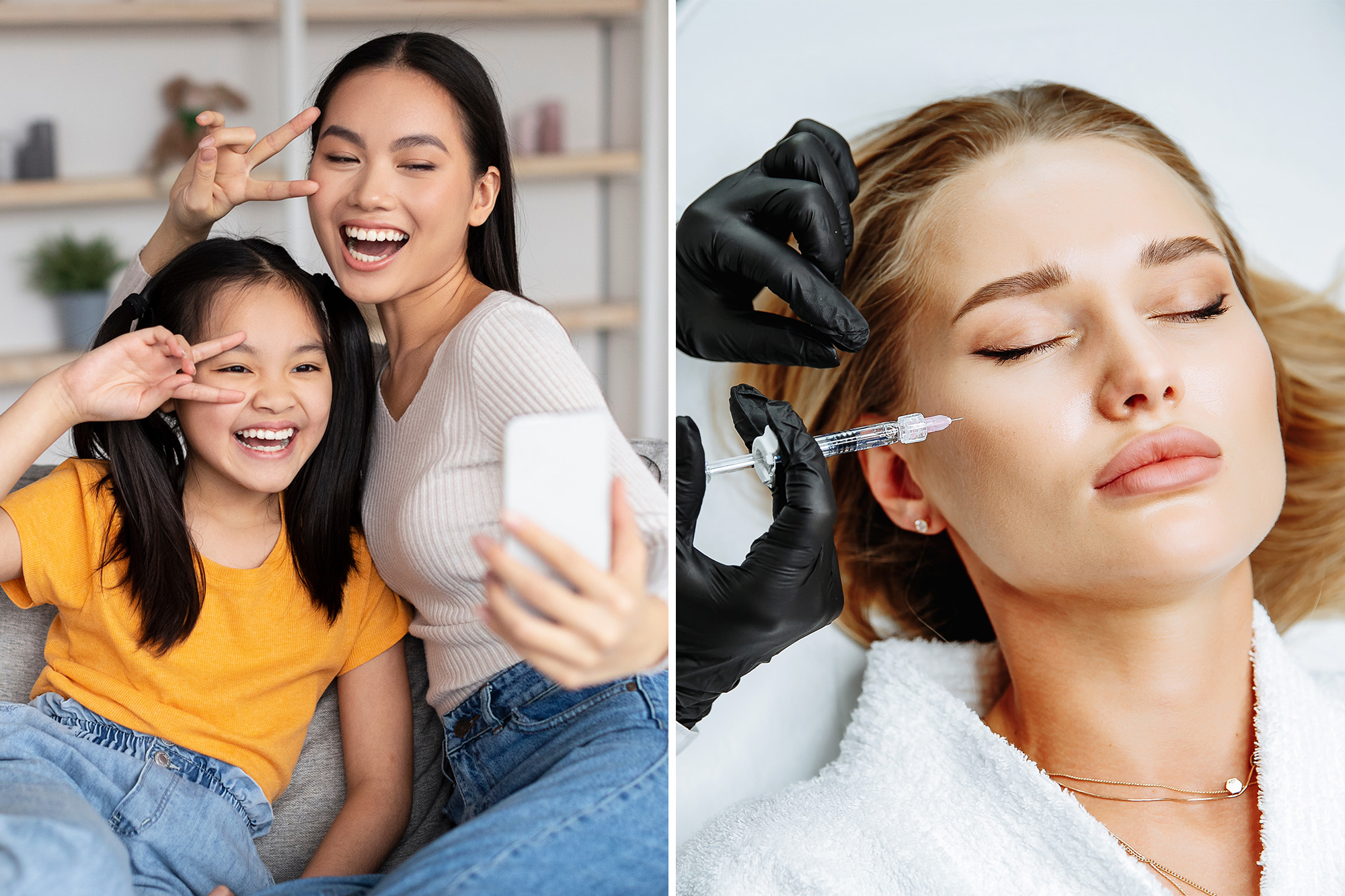
A recent study has found a connection between mothers who frequently take selfies and the likelihood of their children considering plastic surgery during adolescence. Conducted by researchers in China, the study involved 541 mother-child pairs and highlights a concerning trend regarding teenagers’ self-image.
The research, published in the Journal of Health Psychology, indicates that mothers who engage in “self-related behavior” may indirectly influence their children’s body image. As a result, these children, particularly those around 16 years old, are more inclined to experience “facial dissatisfaction.” The study suggests that this dissatisfaction could lead to an increased likelihood of contemplating cosmetic surgery.
While the findings point to a correlation, researchers emphasized that there is no direct causation between mothers’ selfie habits and their teenagers’ desires for cosmetic procedures. Instead, they argue that mothers serve as crucial role models for self-perception, shaping their children’s views on body image. According to another study from Brigham Young University, mothers significantly influence their children’s body image and perceptions of self-worth.
In a broader context, societal pressures and unrealistic beauty standards often propagated through social media platforms exacerbate these issues. Recent incidents have drawn attention to the impact of such standards. For example, in June 2023, Noel LaPalomento, a New Jersey momfluencer, faced criticism for taking her 7-year-old daughter Giada to a tanning salon, which many viewed as instilling harmful beauty ideals.
Similarly, reality TV star Kim Kardashian encountered backlash when her 12-year-old daughter North West appeared in a TikTok video adorned with a nose ring, fake tattoos, and black grills. These examples illustrate the growing concern over how parental behaviors and societal influences can shape children’s perceptions of beauty and self-worth.
Furthermore, the implications of selfie culture extend beyond individual families. Research from the University of Palermo found that daughters who perceived their mothers as less caring or overly protective were more likely to struggle with body dissatisfaction. This suggests that emotional closeness and support are crucial in helping children develop a positive self-image.
As the discussion around body image and cosmetic surgery continues to evolve, this study serves as a reminder of the profound impact parental behavior can have on adolescents. The findings urge parents to reflect on their own self-perception and its potential effects on their children’s views of beauty and self-worth, particularly in an age dominated by social media and visual culture.