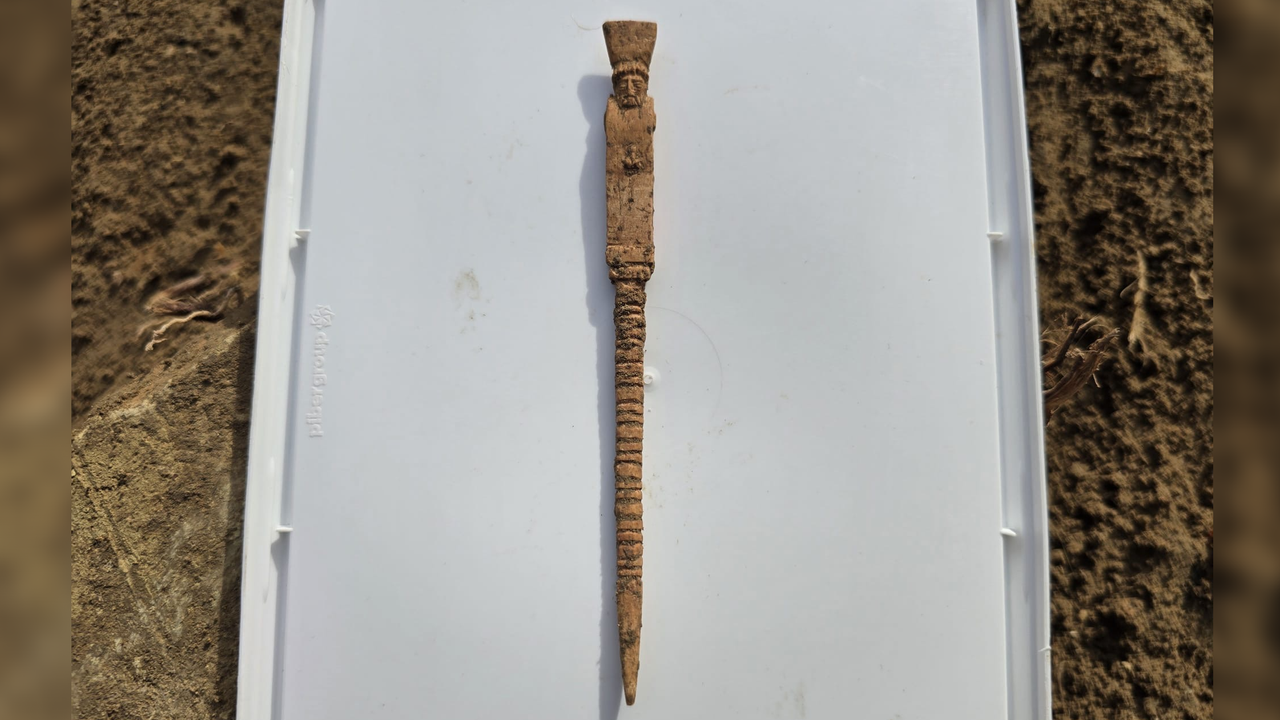
A remarkable archaeological discovery has emerged in southern Sicily: a bone stylus dating back to the fifth century B.C. The artifact, depicting the Greek god Dionysus alongside an erect phallus, showcases the intricate craftsmanship of the period when Sicily was a Greek colony. This find was made during ongoing excavations in the city of Gela, where archaeologists continue to uncover significant remnants of ancient life.
The stylus measures approximately 13.2 centimeters (5.2 inches) in length and is crafted from bone. At the top, it features a grumpy-looking male head, while the middle section presents the prominent depiction of Dionysus. According to Daniela Vullo, head of the Superintendency for Cultural and Environmental Heritage of Caltanissetta, this artifact represents a unique example of its kind within the archaeological landscape of the time.
Significance of the Stylus
The stylus is believed to have been utilized by a ceramicist for marking pottery. Its dedication to a deity suggests it may have been offered as a gift, highlighting the cultural practices surrounding religious devotion in ancient Greece. Vullo remarked, “Due to its unique characteristics, it deserves to be exhibited and made available for public enjoyment.” The stylus’s design reflects the ancient Greek tradition of herms—sculptures typically featuring a carved head and male genitalia, which were often placed at boundaries and temples to ward off evil spirits.
The stylus’s discovery adds to the rich tapestry of Sicilian heritage, as it is part of a larger excavation effort that has revealed a substantial Hellenistic-era neighborhood, dating from the fourth to the first centuries B.C. This ongoing project promises to yield further insights into the daily lives and beliefs of ancient Sicilian inhabitants.
Future Implications and Public Engagement
The significance of this find extends beyond the artifact itself; it opens avenues for increased public engagement with Sicily’s archaeological heritage. As more artifacts are uncovered, local authorities are likely to consider exhibitions that showcase these historical treasures. Engaging the public with these findings can deepen appreciation for the region’s ancient past, fostering a connection to its cultural roots.
This stylus, with its intricate representations and historical context, serves as a testament to the artistry and religious practices of ancient civilizations. As excavations continue in Gela, the potential for additional discoveries remains high, offering further opportunities to explore the legacy of Sicily’s ancient inhabitants.