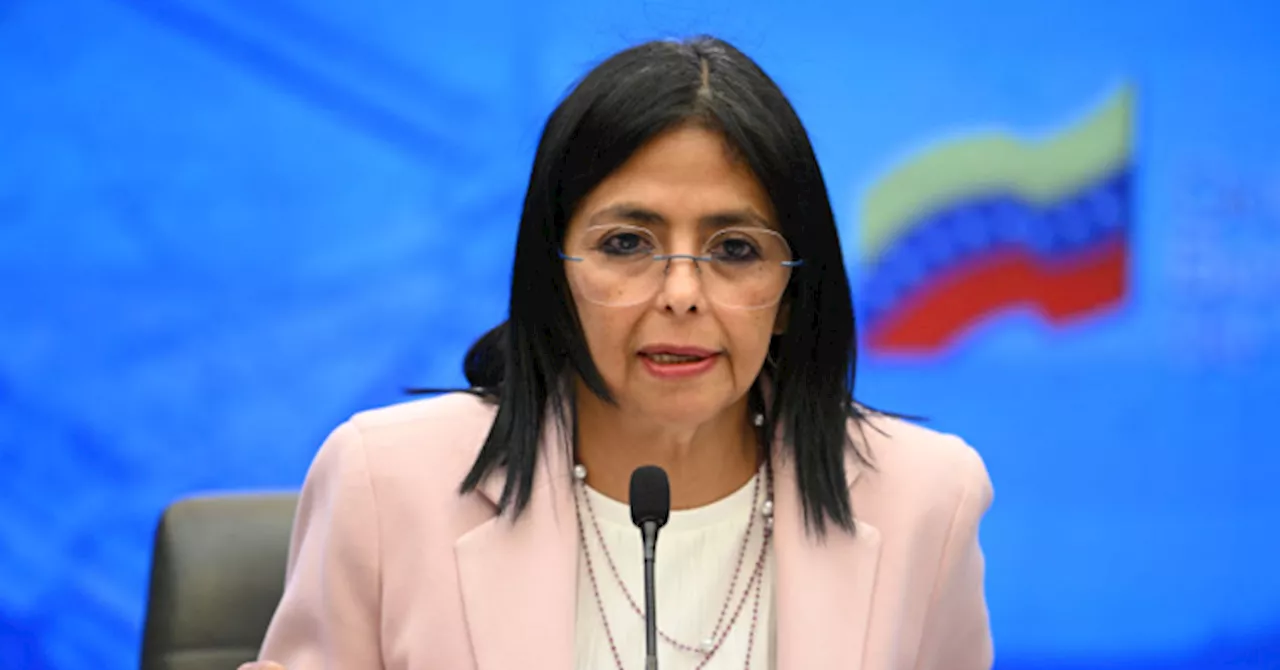
President Donald Trump announced on March 16, 2024, that Venezuelan Vice President Delcy Rodríguez has expressed a willingness to cooperate with U.S. officials following the capture of President Nicolás Maduro earlier that day. During a press conference, Trump revealed that Marco Rubio, Secretary of State, had communicated directly with Rodríguez, who has recently been sworn in as head of the Venezuelan government.
According to Trump, Rodríguez, appointed by Maduro, is prepared to engage with the U.S. to facilitate a transition in Venezuela, stating, “She’s essentially willing to do what we think is necessary to make Venezuela great again.” He emphasized the importance of U.S. involvement in ensuring a stable leadership transition, with concerns about the lack of viable alternatives to Maduro’s regime.
Rodríguez has held several key positions within the Maduro administration, including serving as oil minister since 2024 and vice president since 2018. Her brother, Jorge Rodríguez, currently heads the socialist-controlled National Assembly, highlighting the powerful political alliance within the regime. The Venezuelan constitution allows the president to appoint and dismiss vice presidents without a democratic process, which underscores the political dynamics at play in the country.
During the press conference, Trump also indicated that U.S. Secretary of War Pete Hegseth will work alongside Rubio to support Venezuelans during this transition. He expressed confidence that the U.S. could help restore order and democracy in Venezuela, reiterating, “For us to just leave, who’s gonna take over?”
As the situation evolves, Rodríguez has voiced her concerns regarding Maduro’s whereabouts, demanding that the U.S. government provide “proof of life” for both Maduro and his wife, Cilia Flores. Reports suggest that U.S. forces captured Maduro during a military operation in Caracas, along with Flores.
The U.S. Department of the Treasury had previously imposed sanctions on Rodríguez and other members of the Maduro regime in 2018. The European Union similarly sanctioned her due to her ties to the government. Trump’s administration has signaled a commitment to addressing Venezuela’s long-standing issues, including its troubled oil infrastructure, as a means to stabilize the country.
The outcome of this political upheaval remains uncertain, but the willingness of Rodríguez to communicate with U.S. officials marks a potentially significant shift in Venezuela’s political landscape. As the international community watches closely, the dynamics between the U.S. and the new Venezuelan leadership will be pivotal in shaping the future of the nation.