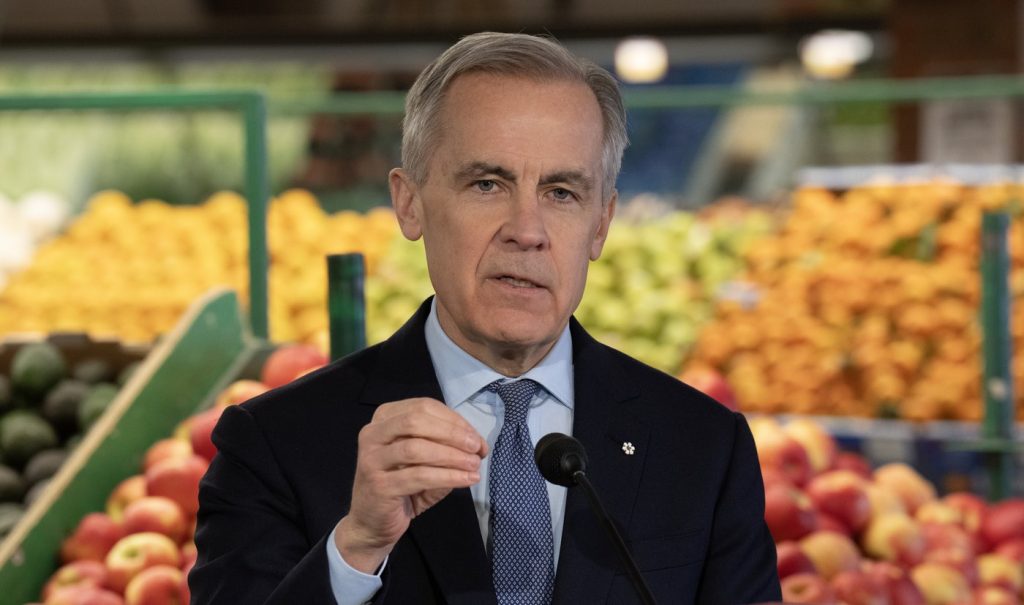
Prime Minister Mark Carney has achieved his highest approval rating since assuming leadership of the Liberal Party, reaching a notable 60 percent. Despite this personal success, polling data indicates that the Liberal Party’s electoral prospects remain stagnant, particularly in British Columbia.
According to a poll conducted by the Angus Reid Institute and released on January 26, 2024, the Liberal Party and the Conservative Party are neck-and-neck in British Columbia, with voter support virtually tied at 39 percent for liberals and 38 percent for conservatives. This close margin is tighter than in any other province across Canada, highlighting a competitive political landscape.
Shachi Kurl, president of Angus Reid, noted that while Carney’s personal brand has gained traction following his influential speech at the World Economic Forum in Davos, this momentum has not translated into increased support for the Liberal Party. Kurl stated, “When we see moments of strident rhetoric from the Prime Minister… we definitely see a bit of a tick up for his momentum personally.”
In British Columbia, Carney’s approval rating is slightly lower than the national average, standing at 58 percent. Despite this, it remains the highest among all western provinces. Conversely, Conservative leader Pierre Poilievre enjoys a 40 percent approval rating in British Columbia, which surpasses his national figure of 36 percent.
Interestingly, while Carney’s popularity has risen, the vote intention for the Liberals has remained relatively unchanged. Kurl explained that the Liberal Party’s improved standing in British Columbia shows an increase over previous months, as they were at only 33 percent in December 2023, trailing the Conservatives by ten points.
“If an election were to be held today, the poll found 39 percent of B.C. constituents would vote for the Liberals. 38 percent would mark their cross next to the Conservatives on the ballot,” Kurl added. This indicates a slight improvement for the Liberals, yet they still face challenges in expanding their voter base.
On a national scale, the gap between the two parties is marginally wider, with 41 percent of Canadians favoring the Liberals compared to 38 percent for the Conservatives. Kurl emphasized that while the Liberals in B.C. are edging out the federal Conservatives by only about a point, the overall trend reflects a modest bump for the Liberal Party.
The data suggests that despite Carney’s rising personal approval, the Liberal Party must work to convert this individual support into broader electoral success if it hopes to maintain its position in the competitive Canadian political arena.