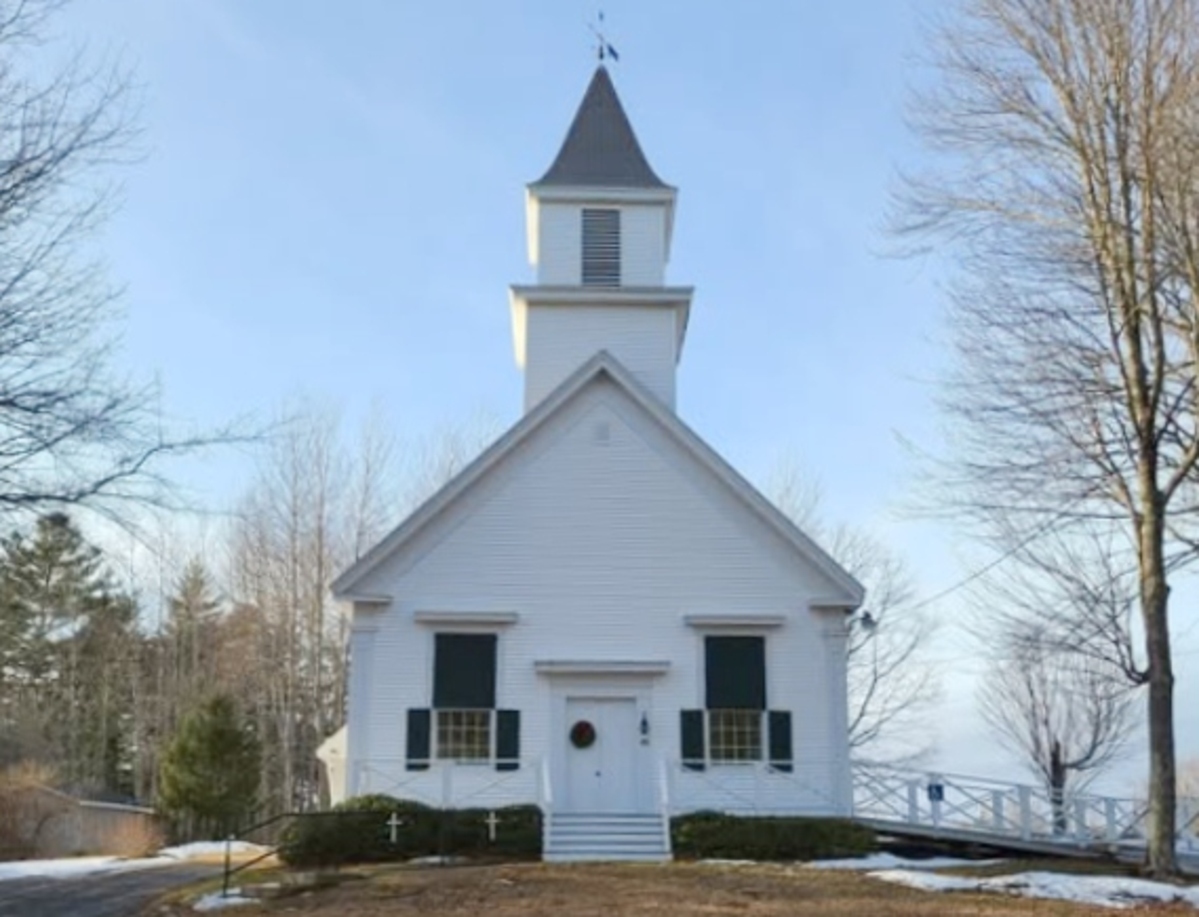
An independent church in Cushing, Maine, has initiated legal action to prevent a branch of the United Methodist Church from seizing its property. On December 3, 2023, the Broad Cove Church filed a complaint in Knox County court in response to efforts by the New England Annual Conference of United Methodist Church, Inc. to claim ownership of the church facility.
The complaint, which describes the situation as an “attempted religious land grab,” seeks a preliminary injunction to halt the conference’s actions. The church emphasizes its long-standing independence, having served the local community for over 170 years and welcoming members from various Christian denominations.
According to court documents, Broad Cove Church asserts that it has never voted to affiliate with the United Methodist Church and has been incorporated in Maine since 1969. The church’s lawyers argue that the conference is trying to expand its diminishing property holdings by declaring Broad Cove a “Methodist-only community,” which would force non-Methodist members to either comply or seek alternative places of worship.
Broad Cove Church highlights that it has maintained a close relationship with various Methodist denominations while preserving its non-denominational status. This approach has allowed it to serve a diverse congregation. The church, which does not have sufficient membership to support a full-time minister, has historically collaborated with the United Methodist Church to assign part-time ministers.
The relationship, however, turned contentious in 2023 when a minister referred to in court documents as “Mr. Leonard” was assigned to Broad Cove. The lawsuit alleges that Leonard insisted on making changes to church practices and property, aiming to align Broad Cove more closely with the United Methodist Church. Tensions escalated in June 2025 when conflicts arose over revisions to the church’s bylaws. Leonard reportedly insisted that the term “non-denominational” be removed, leading to a membership vote that resulted in his dismissal.
Following this decision, the United Methodist Church sent a letter asserting that Broad Cove had not owned the church but had merely held it in trust for the conference. Broad Cove contends that this claim contradicts existing deeds, bylaws, and incorporation papers.
Broad Cove Church is represented by a team of attorneys including Daniel Dalton of Dalton and Tomich, Joshua Mitchell of Wilkie Farr & Gallagher, and Dan Stevens of Stevens and Day Law. Mitchell, who is the son of the church’s secretary, is providing his services pro bono. The United Methodist Church is represented by attorneys Adam Shub and Michael Melusky of Preti, Flaherty, Beliveau & Pachios.
As of now, no hearing has been scheduled regarding Broad Cove’s request for an injunction, and the church argues that without it, they would face irreparable harm, particularly in the loss of a space for worship for their congregation. The situation underscores the broader tensions within the United Methodist Church, which has seen a significant decline in membership and congregations following a schism in 2023.
The outcome of this legal battle could have lasting implications for both Broad Cove Church and the regional conference, marking a significant moment in the ongoing evolution of religious affiliations and property rights within the community.