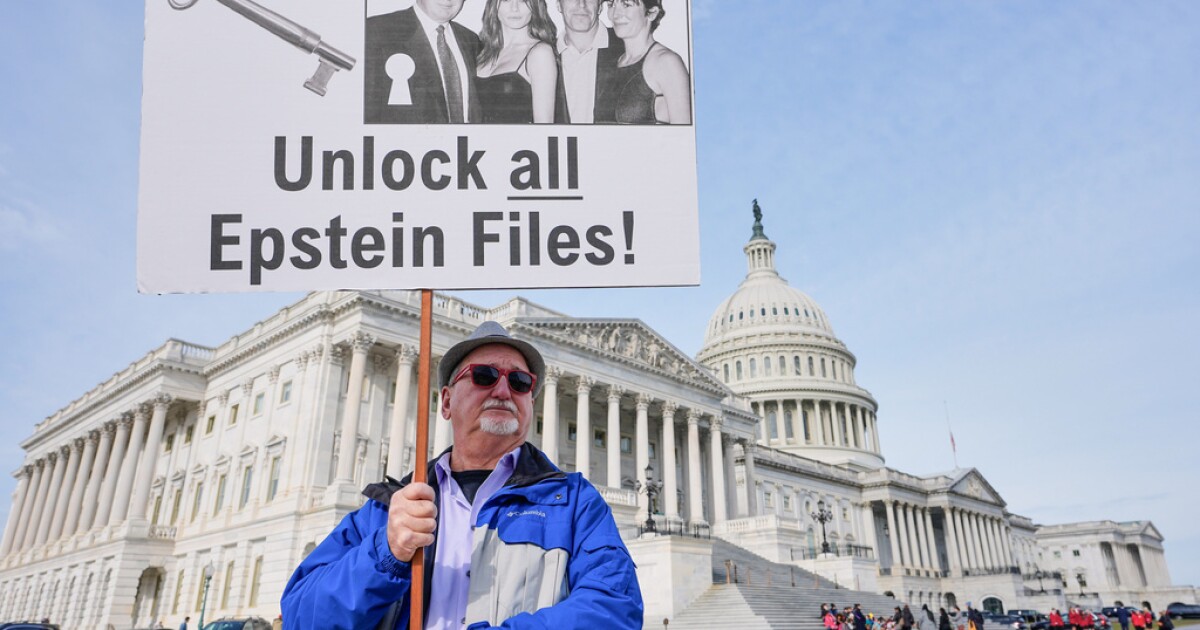
The Department of Justice (DOJ) is currently one month overdue in releasing documents related to the investigations into Jeffrey Epstein and Ghislaine Maxwell. The expected release date passed without significant updates, leaving the public with minimal information. As of now, the DOJ has disclosed only 1% of the records, despite the anticipated publication of upwards of two million files under the Epstein Files Transparency Act, which mandates transparency even with redactions.
While the last document release took place 27 days ago, uncertainty looms regarding when further information will be made available. Recent letters filed in federal court highlight this ambiguity. In a communication to U.S. District Judge Paul Engelmayer, who presided over Maxwell’s trial, Attorney General Pam Bondi argued that federal courts do not possess the authority to enforce the Epstein Files Transparency Act. The legislation was signed into law by President Trump in November 2022.
Judge Engelmayer had previously refrained from intervening in document release matters, notably denying the release of all grand jury materials related to the Maxwell case. However, after the law’s enactment, he ordered the release of documents. The DOJ now maintains that the court cannot compel the enforcement of the law. “The Act does not provide a cause of action,” Bondi stated, asserting that the court may not “create” one “through judicial mandate.”
In response to the DOJ’s stance, bipartisan lawmakers Rep. Thomas Massie and Rep. Ro Khanna, who authored the bill, have criticized the administration’s efforts. Massie took to social media, questioning, “Why is this administration working harder to hide the Epstein files than prior administrations did to cover up Iran-Contra and Watergate?”
The DOJ’s letter opposing court enforcement followed another communication to Judge Engelmayer, indicating the department is working “around the clock” to prepare documents for release. The DOJ claims that hundreds of staff members are engaged in reviewing the files and making necessary redactions to protect sensitive information. Recently, they added 80 additional attorneys to expedite this process.
Despite these efforts, the DOJ has not provided a timeline for the anticipated release of any files. The lack of clarity continues to frustrate advocates and survivors who have urged the DOJ to implement oversight in future file releases. As the situation develops, many remain anxious for transparency in this high-profile case.