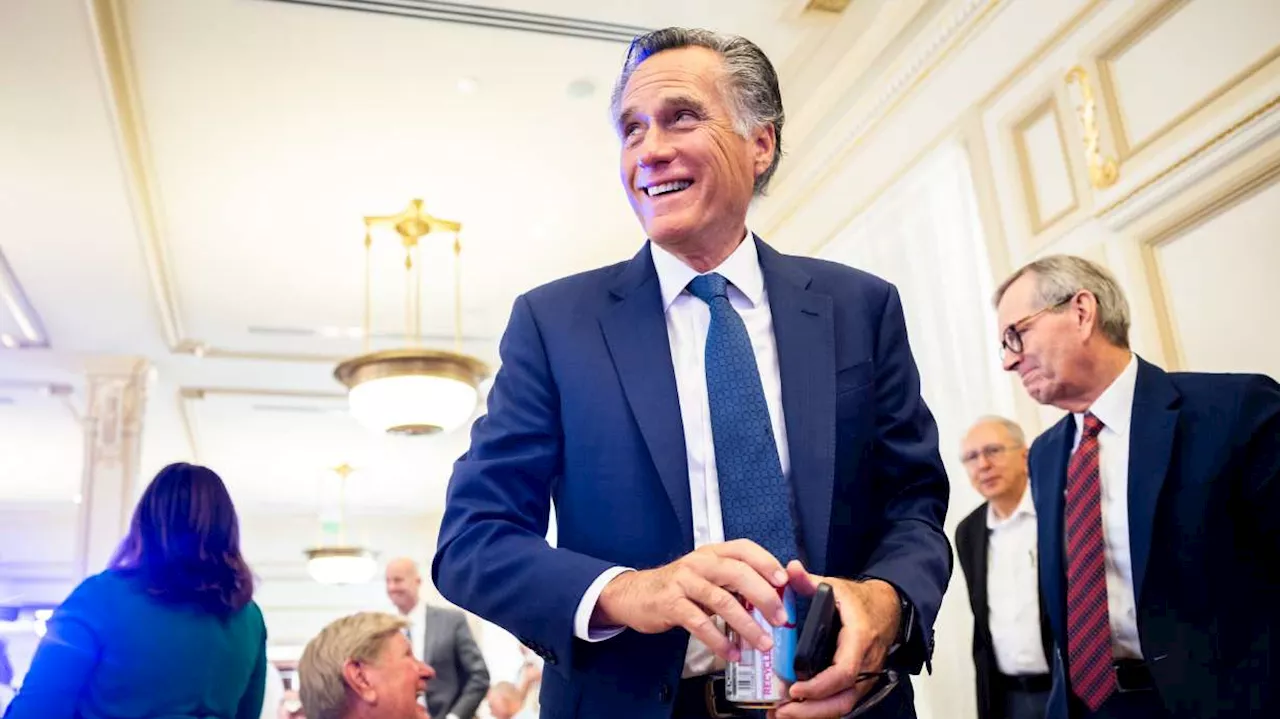
SALT LAKE CITY — Former Senator Mitt Romney has publicly called for increased taxes on the wealthiest Americans to address looming financial challenges facing the Social Security system. In an opinion editorial published on October 20, 2023, in the New York Times, he highlighted the urgent need for fiscal reform as the Social Security trust fund is projected to deplete by 2034.
Romney’s editorial comes at a time when the Republican Party is grappling with its identity, particularly following the populist shift under former President Donald Trump. He argues that if the GOP aims to genuinely support working-class Americans, it must reconsider its stance on taxation, particularly for the affluent.
Addressing the Social Security Crisis
In his piece, Romney warned that retirees could see their Social Security benefits slashed by nearly a quarter if the trust fund becomes insolvent. He described this potential cut as a “looming cliff” that would require significant financial resources to rectify, suggesting that failure to act could lead to “economic calamity.” He noted that addressing both the national debt and impending cuts would require a dual approach of raising taxes and reducing spending.
Romney’s call for a tax increase is significant given his previous stance as the Republican presidential nominee in 2012, where his tax plan faced criticism for favoring the wealthy. Now, he advocates for a reevaluation of tax policies that enable the rich to retain their wealth without contributing their fair share. He described certain tax loopholes as “caverns” rather than mere gaps, emphasizing their extensive nature.
Capital Gains and Wealth Inequality
Among the specific reforms Romney proposes is the reevaluation of capital gains taxation, particularly the step-up in basis provision. This tax rule allows heirs to inherit assets without paying taxes on the capital gains accrued during the deceased’s ownership. For instance, if entrepreneur Elon Musk purchased Tesla stock for $1 billion and it appreciated to $500 billion by the time of his death, his heirs would not owe taxes on the $499 billion gain.
“This unusual provision makes sense when you’re talking about helping families keep their family farms. But it’s used by billionaires to avoid capital gains taxes,” Romney wrote.
His proposals reflect a significant shift in his viewpoint, as he acknowledges the need for a more equitable tax system that addresses the disparities between the wealthy and the average American. By advocating for such changes, Romney aims to not only safeguard Social Security but also to foster a fairer economic landscape.
As discussions around taxation and Social Security continue, Romney’s stance serves as a reminder of the complexities involved in balancing fiscal responsibility with social equity. His perspective highlights the growing urgency for comprehensive reforms that can ensure the sustainability of vital programs like Social Security while also addressing wealth inequality.