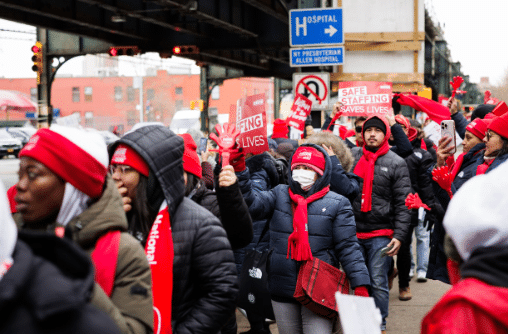
Fifteen thousand nurses in New York City are currently on strike, marking the largest of its kind in the city’s history. Organized by the New York State Nurses Association (NYSNA), these healthcare professionals are advocating for safer staffing levels, enforceable nurse-patient ratios, improved healthcare coverage, and protections against workplace violence. As the strike enters its third week, the situation highlights the pressing issues faced by nurses and the impact on patient care.
Demands for Safer Staffing and Better Benefits
At the heart of the nurses’ demands is the need for lower nurse-patient ratios. One nurse, referred to as J, working at Mount Sinai West, emphasized the dangers of understaffing. He pointed out that an intensive care unit (ICU) nurse managing four patients cannot provide adequate care to each individual. “If she has four patients in the ICU, she can’t possibly attend to all of them properly,” he stated, underscoring the risks involved.
J also raised concerns about the hospital’s plans to remove healthcare coverage for nurses, effectively imposing a pay cut without offering any salary increase. This situation has left many nurses worried, especially given a current dispute between Mount Sinai and its insurance provider, which limits nurses’ access to care at their own facility. The threat to their health benefits is deeply personal for many, with one nurse asserting, “My insurance is my family’s insurance. I have a partner and children — this affects all of us.”
Moreover, workplace violence remains a significant issue. J noted that incidents of assault against nurses occur frequently, yet there are insufficient measures in place to address these incidents. The union is calling for enhanced security to protect staff.
Continuing the Fight Together
The nurses’ frustration is compounded by a lack of meaningful negotiations from hospital management. According to J, management has only engaged in one mediated meeting since the strike began, with no direct discussions occurring. He expressed his determination to remain on strike until their demands are met, stating, “Management isn’t even willing to come to the bargaining table to negotiate.”
As the strike progresses, morale among the nurses remains high, despite growing frustration. Another nurse, S, who works in outpatient neurology at Mount Sinai, echoed the importance of unity among healthcare staff. “This has to end somehow,” she commented, revealing a sense of commitment to the cause. “But the longer it goes on, the more motivated — and more entrenched — people become.”
The nurses insist that enforceable staffing standards are crucial for both their well-being and that of their patients. Studies have shown that for every additional patient assigned to a nurse, the risk of negative outcomes increases by up to 7 percent. This data reinforces their argument for better staffing practices, which they believe will lead to improved patient care.
As the strike continues, the nurses are determined to fight for their rights, not only for themselves but for the patients they serve. Their commitment highlights the broader issues within the healthcare system, particularly the need for fair treatment and adequate resources in an increasingly demanding environment.