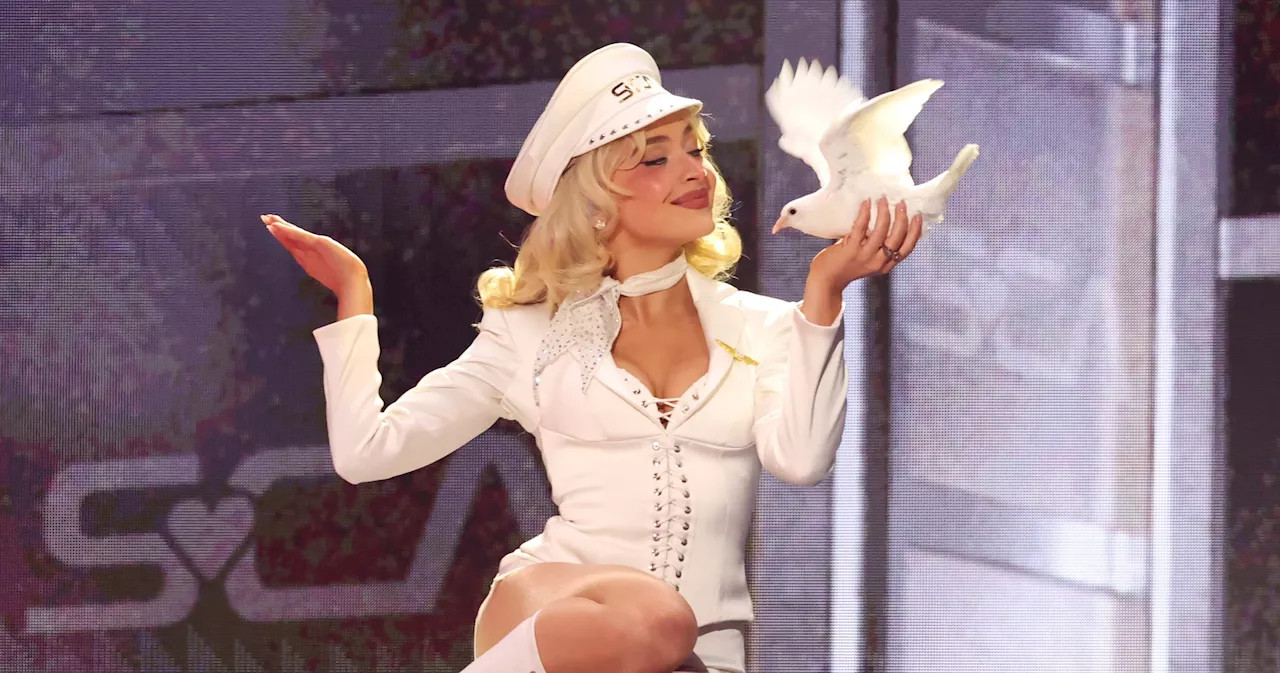
Sabrina Carpenter faced backlash from the animal rights organization PETA after incorporating a live dove into her performance at the 2026 Grammy Awards. The incident occurred on February 1 at the Crypto.com Arena in Los Angeles, where Carpenter performed her hit song “Manchild” while holding the bird.
During her set, Carpenter, 26, showcased the dove in a moment that drew swift criticism on social media. PETA took to its official X account, stating, “Hey Sabrina, bringing a live bird onto the Grammys stage is stupid, slow, useless … and cruel!” The organization emphasized that the bright lights and loud noises of such an event can cause significant fear and distress for animals. They continued, “Did Sabrina Carpenter really just bring a bird on stage in 2026?! The ‘Manchild’ singer is giving childlike behavior. Leave animals out of the #GRAMMYS!”
Carpenter’s performance was notable as she was nominated for six Grammy awards this year, including Song of the Year for “Manchild.” She was the first live performer of the evening and set the tone with an airport-themed backdrop. The dove made its appearance towards the end of her act, which was framed as a flight sequence, with Carpenter seated in what resembled an airplane.
PETA representatives attended the Grammy ceremony and staged a separate stunt in the gifting suite, where they introduced a “walking, talking robo-chicken” to promote vegan food options to attendees, including stars like Reba McEntire and Sheryl Lee Ralph. PETA’s initiative aimed to encourage celebrities to use their platforms for animal welfare throughout the award season.
This is not the first time Carpenter has attracted criticism for her creative choices. Her album, Man’s Best Friend, released in August 2025, faced scrutiny for its lyrics and imagery. Critics particularly highlighted the lyrics of “Manchild,” with some labeling the use of the term “slow” as an ableist slur that fails to consider the perspectives of individuals with disabilities.
In a previous interview with Interview magazine, Carpenter addressed the backlash, saying, “You can be sure that anything I do and say has a little bit of a wink to it. If I’m being completely transparent, I don’t do anything anticipating what the reaction will be.” She emphasized her intention to create art that resonates with her and expresses her feelings.
Additionally, the album cover for Man’s Best Friend, which depicts Carpenter on all fours being pulled by her hair, prompted discussions about the portrayal of women and domestic violence. Critics argued that such imagery could glorify degrading treatment.
Despite the controversies surrounding her work, Carpenter continues to engage with her audience and create music that reflects her personal experiences. Whether through performance art or lyrical content, she remains a figure of interest in the entertainment industry, often sparking conversations that extend beyond music.