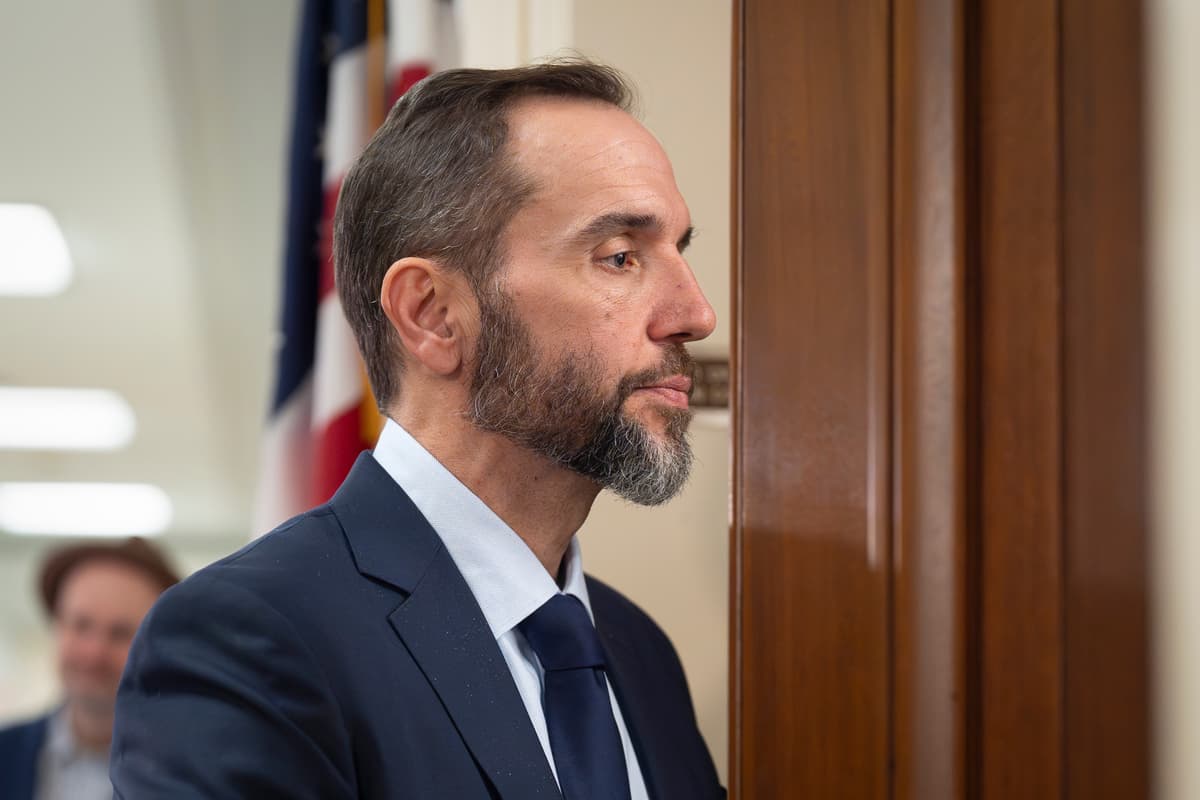
Special Counsel Jack Smith faced intensified scrutiny during his closed-door testimony before the House Judiciary Committee on November 1, 2023. This event signals a growing confrontation between prosecutors and Republican lawmakers supporting former President Donald Trump. The pressure on Smith escalated just hours before his testimony, as the FBI and Department of Justice provided Congress with emails revealing internal doubts regarding the legality of the search warrant executed at Trump’s Mar-a-Lago estate.
The emails, which were declassified by Attorney General Merrick Garland and FBI Director Kash Pater, indicate that there was significant disagreement within the FBI about the warrant’s basis. One email stated, “we are not in agreement for PC [probable cause] on the SW [search warrant],” while another expressed concerns over the search’s broad scope. Some officials proposed “alternative, less intrusive and likelier, quicker options for resolution.” Despite these concerns, the warrant was ultimately approved by a magistrate judge.
The search, which included areas such as First Lady Melania Trump’s bedroom and Barron Trump’s private quarters, has drawn sharp criticism from Trump and his Republican allies. One email suggested that the extensive focus on establishing probable cause was “counterproductive” given the investigation’s goal of swiftly identifying and recovering classified documents.
As the inquiry continues, Smith may be called for further testimony regarding the Mar-a-Lago case. Lawmakers have been limited in their inquiries due to the ongoing nature of the investigation and the sealing of Smith’s final report by Judge Aileen Cannon. Cannon has argued that releasing the report could infringe on the due process rights of Trump and his co-defendants, Waltine Nauta and Carlos De Oliveira. The cases against the trio were dismissed “without prejudice,” meaning they could be refiled in the future.
Public interest in the report’s release is mounting, with advocacy groups like the Knight First Amendment Institute and American Oversight urging for its disclosure. They argue that the rationale for keeping the report sealed has diminished. The 11th United States Appeals Circuit, which oversees Cannon’s rulings, has criticized her for an “undue delay” and instructed her to address requests for release by early January 2024.
During his testimony, Smith defended his prosecution of Trump regarding allegations of election interference. He characterized Trump’s actions as part of a “criminal scheme,” asserting he had gathered evidence sufficient to prove guilt “beyond a reasonable doubt.” In a statement to legislators, Smith asserted, “If asked whether to prosecute a former president based on the same facts today, I would do so regardless of whether the president was a Republican or Democrat.”
Additionally, another contentious issue is emerging from Smith’s investigation known as Operation Arctic Frost, which pertains to the events of January 6, 2021. This investigation involved the monitoring of telephone metadata from eight senators and one congressman. Smith not only obtained warrants for this surveillance but also secured “do not disclose” orders, preventing lawmakers from being aware of the monitoring.
The existence of this surveillance was revealed by Senator Charles Grassley, who released emails indicating that the DOJ was concerned about potential “litigation risk” due to the legislative immunity enjoyed by lawmakers. As Congress prepares to hold hearings on these investigations, there is potential for further testimony from Smith in the upcoming months.
As the political and legal battles unfold, the implications for Smith’s investigations, the Trump camp, and the broader political landscape remain significant. The developments in this high-stakes situation will be closely watched in the months ahead.