Republican Senator Thom Tillis has publicly disputed Defense Secretary Pete Hegseth‘s assertion that a review by the Pentagon’s Inspector General regarding the incident known as “Signalgate” provides a complete exoneration of his actions. Speaking to CNN, Tillis emphasized that the findings do not justify Hegseth’s conduct, stating, “At some point, just take the learning experience and move on. No one can rationalize that as an exoneration.”
The controversy revolves around Hegseth’s disclosure of sensitive operational information concerning U.S. airstrikes in Yemen. The investigation revealed that he used the encrypted messaging application Signal to share real-time strike timelines, including a message specifying, “this is when the first bombs will drop.” This communication inadvertently included a journalist, Jeffrey Goldberg of The Atlantic, who was added to the group chat by National Security Adviser Mike Waltz.
In its findings, the Inspector General’s report indicated that while Hegseth possessed the authority to declassify information, there was no documented evidence that he had done so prior to sharing details from a document labeled Secret/NOFORN, which restricts sharing with foreign nationals. The report criticized Hegseth’s choice to use Signal for this purpose and recommended improved training for senior Defense Department officials on information-handling protocols.
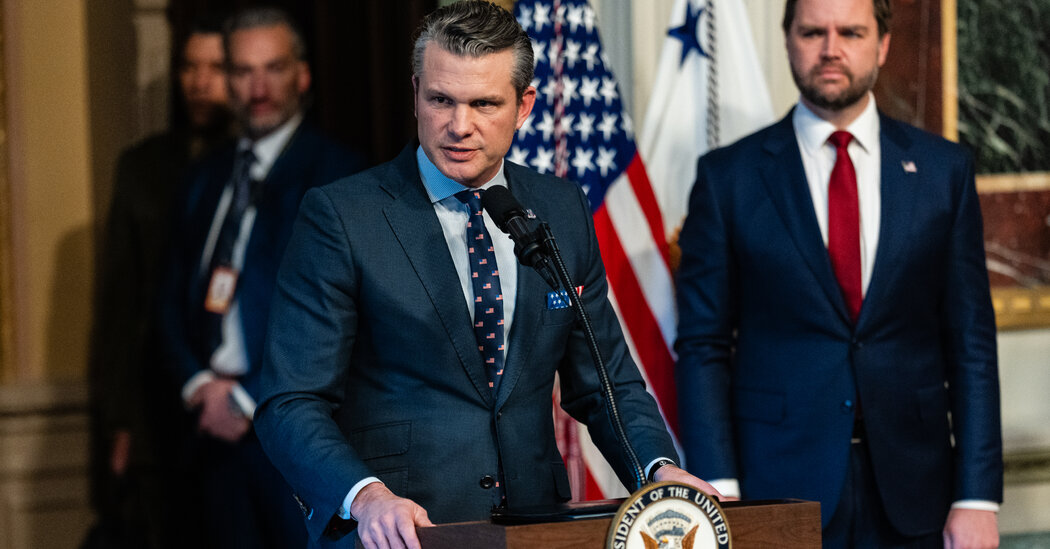
Despite the gravity of the findings, Hegseth responded to the report by asserting that he had been fully exonerated. He referenced a social media post from Pentagon spokesperson Sean Parnell, who stated, “This Inspector General review is a TOTAL exoneration of Secretary Hegseth and proves what we knew all along – no classified information was shared.” Hegseth echoed these sentiments by declaring, “No classified information. Total exoneration. Case closed.”
Tillis, however, maintained that Hegseth’s actions warranted scrutiny, saying, “We know that mission information was outside of the classified setting that it was trusted to be in.” He highlighted the importance of handling classified information with care, expressing relief that no adverse outcomes resulted from the incident. “Thank God nothing bad happened,” he stated.
Hegseth did not participate in interviews with investigators but submitted written responses, arguing that his classification authority and operational judgment justified sharing the information. He contended that his use of Signal did not violate preservation rules under the Federal Records Act.
As the discourse continues, the implications for information security within the Department of Defense remain critical. The investigation’s findings underscore the necessity for stringent adherence to protocols, especially when handling sensitive operational information. The ongoing debate around Hegseth’s role and the revelations of the Inspector General’s report highlight the urgent need for clarity and accountability in government communications.