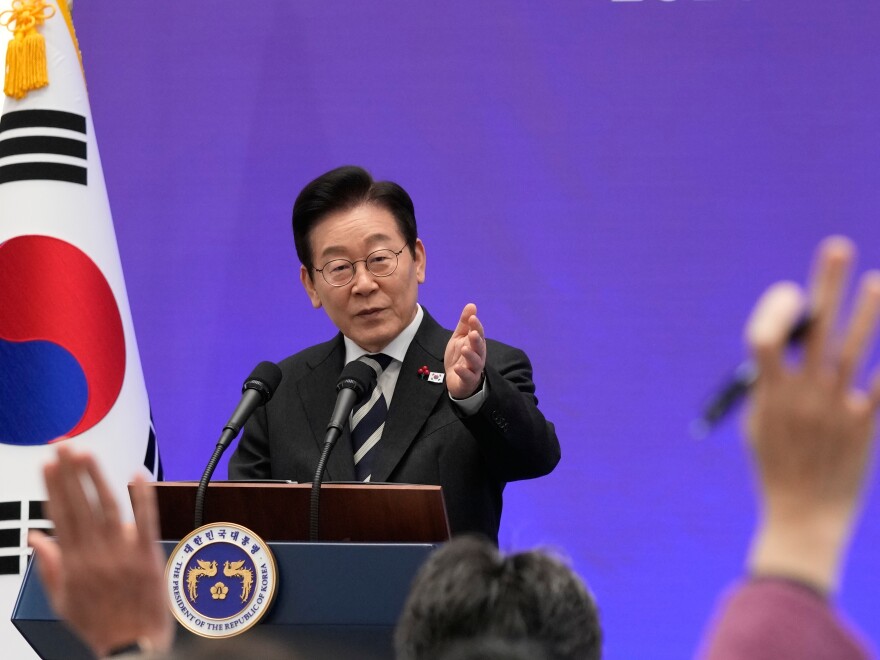
A year after a failed attempt to impose martial law, South Korea’s President Lee Jae Myung commended citizens for their role in defending democracy. On Wednesday, Lee acknowledged the public’s decisive action against former President Yoon Suk Yeol‘s efforts to consolidate power, which sparked widespread protests and highlighted the strength of the nation’s democratic institutions.
In late 2024, thousands of South Koreans gathered around the National Assembly to oppose Yoon’s declaration of martial law, which he justified by accusing the opposition of “legislative dictatorship.” Within hours, the assembly voted against the declaration, forcing Yoon to lift martial law after just six hours. Lee remarked that South Koreans “astonished the world” by thwarting what he termed a “self-coup,” where an elected leader attempts to dismantle checks on their power.
Legal Repercussions for Yoon and Allies
In the aftermath, Yoon and several of his associates faced serious legal challenges. Following a swift investigation, Yoon became the first sitting South Korean president to be arrested, with the National Assembly impeaching him on December 14, 2024. Over a dozen lawmakers from Yoon’s own party joined opposition members to support the impeachment, which was confirmed unanimously by the Constitutional Court in April 2025.
Yoon is now indicted for charges including insurrection, abuse of power, and treason. A special counsel team revealed that he allegedly sent drones into Pyongyang in October 2024 to provoke North Korean retaliation, thus justifying his martial law declaration. Additionally, numerous military and government officials, including defense and interior ministers, face charges linked to their involvement in the insurrection. The trial for Han Duck-soo, the former prime minister, is moving forward, with a verdict expected on January 21, 2026.
Reforming Political Structures
In response to the crisis, the National Assembly revised legislation to tighten the requirements for declaring martial law and enhance protections for parliamentary operations. Under the new regulations, military and police forces are prohibited from entering the parliamentary compound without the Speaker’s consent, even during martial law. Separate proposals aim to empower public servants, including military personnel, to defy unlawful orders from superiors.
Ahn Gyu-back, South Korea’s first civilian defense minister in over six decades, has initiated significant changes within the military, conducting audits of units involved in the martial law enforcement. Lee’s administration is also undertaking a comprehensive investigation into officials who played a role in the martial law execution.
In September, Lee proposed constitutional amendments to alter presidential terms from a single five-year term to two four-year terms, introducing mid-term elections to bolster accountability.
Political Landscape Shifts and Public Sentiment
Recent polls indicate a resurgence of public confidence in national institutions, including government and electoral processes. Yet, the fallout from the martial law crisis has exacerbated existing political divisions. A poll conducted last week revealed that 77% of respondents feel that polarization has intensified since the events of 2024.
The People Power Party (PPP), now in opposition, grapples with internal disagreements about whether to apologize for Yoon’s actions. With local elections on the horizon, the PPP faces a critical decision: to appeal to centrist voters through an apology or to maintain support for Yoon to satisfy their conservative base. At a recent press conference, less than a quarter of PPP lawmakers expressed remorse.
Meanwhile, President Lee confronts the challenge of balancing accountability for the political turmoil with the need for national unity. He stated, “The intention is not to mercilessly punish the perpetrators… but we can’t sweep them under the rug.”
Implications Beyond South Korea
The political crisis has not only impacted domestic affairs but has also tarnished South Korea’s international image as a beacon of stable democracy following its transition from military rule in the 1980s. This turmoil has presented challenges for the Biden administration, which had viewed Yoon as a key ally in promoting democratic values globally. Allegations of Yoon’s provocations against North Korea have raised concerns about the safety of U.S. troops stationed in the South and the integrity of the U.S.-South Korea alliance.
President Lee expressed hope that South Korea’s experience could serve as “a historic example for the restoration of democracy” worldwide. The nation’s ability to navigate this political upheaval and avoid further democratic regression will play a crucial role in shaping its future both domestically and on the global stage.