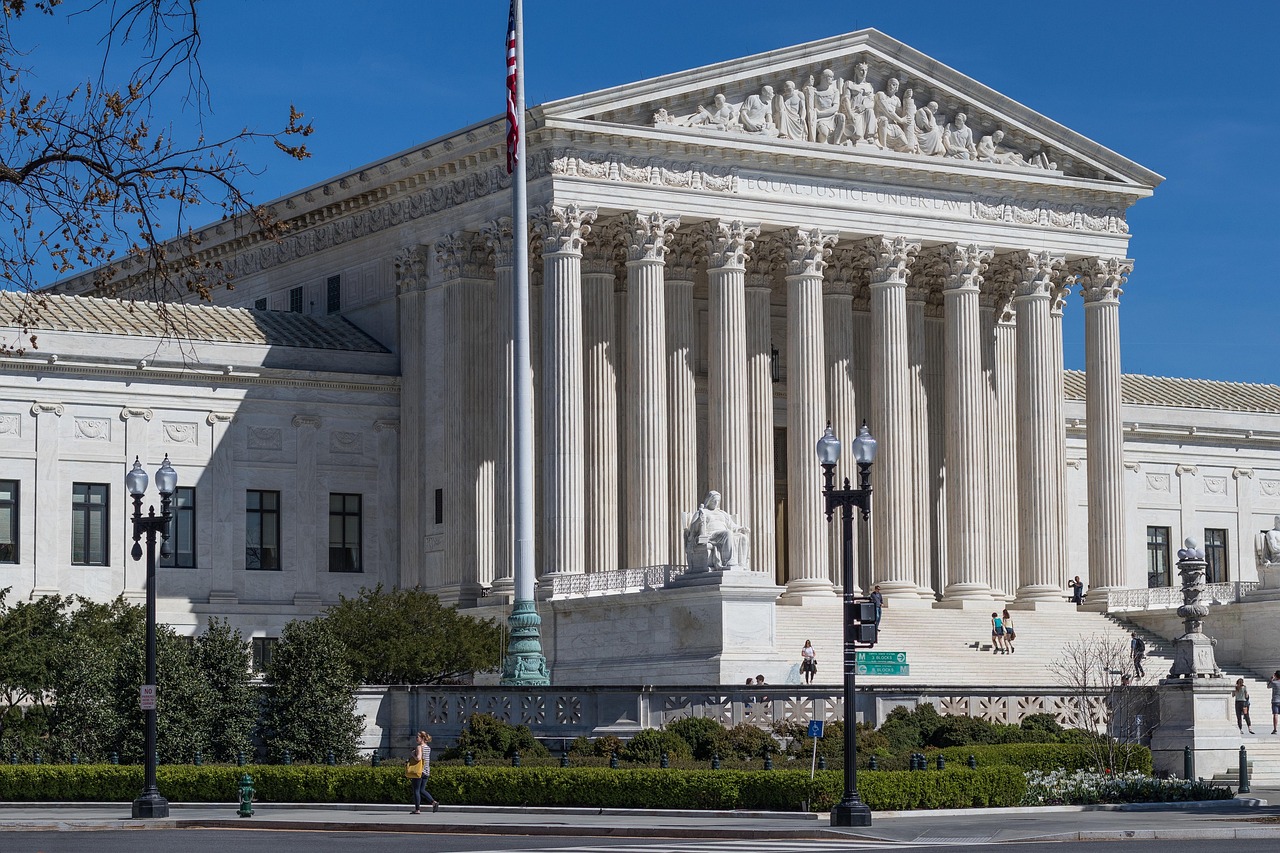
The United States Supreme Court is currently deliberating a pivotal case concerning the implications of plea agreements on defendants’ rights. The case, involving Munson Hunter, raises questions about whether individuals can legitimately waive their right to challenge unconstitutional aspects of their sentences prior to sentencing. This issue resonates particularly with Justice Ketanji Brown Jackson, who has been a long-time critic of plea bargaining and explored these themes in her college thesis at Harvard University in 1992.
Hunter’s legal troubles began in February 2024, when he entered a guilty plea for one count of aiding and abetting wire fraud. This plea was made under a written agreement that included a provision waiving nearly all his rights to appeal his sentence. After being sentenced three months later, Hunter objected to a condition requiring him to take mental health medication during his supervised release. Despite his objection, the district court assured him, “You have a right to appeal. If you wish to appeal, [your counsel] will continue to represent you.”
The court’s assurance led Hunter to believe he could appeal the conditions of his sentence. However, when he sought review from the Fifth Circuit Court, his appeal was dismissed due to the appellate waiver, as the court deemed the district court’s assurance legally meaningless.
As the Supreme Court reviews the case, Justice Jackson may reflect on her thesis, which scrutinizes the inherent power imbalances in plea negotiations. A significant question arises: was Hunter truly given a fair opportunity to negotiate his rights, or was he coerced into surrendering them? Scholars often debate whether a proposal constitutes an offer or a threat, depending on its impact on an individual’s situation. Jackson’s thesis posited that this distinction is often blurred, complicating the dynamics of plea agreements.
She illustrated this ambiguity using a thought experiment by philosopher Robert Nozick: if one person refuses to help another in distress unless a substantial payment is promised, is this an offer or a threat? This complexity is a central theme in plea bargaining, where defendants may feel pressured to accept deals due to the severe consequences of rejection.
In Hunter’s case, the prosecution’s offer to downgrade the charges in exchange for a guilty plea raises similar concerns. When a charge carries a significant sentence without parole, the option to accept a shorter sentence may feel less like a choice and more like coercion. The desperate circumstances faced by defendants can transform what appears to be an offer into a threatening scenario.
Moreover, judges, too, can exert influence over plea negotiations. They may signal to defendants that those who plead guilty are likely to receive more lenient sentences, and in some situations, this can include denying bail. Judges may also manipulate scheduling to disadvantage defense counsel, constraining their ability to prepare adequately for trial.
The coercion extends beyond prosecutors and judges. Defense attorneys can contribute to this dynamic by presenting plea options in a biased manner, failing to advocate effectively, or withholding vital information from clients. For instance, an attorney might neglect to inform a defendant about the possibility of concurrent sentences or delay proceedings while their client remains incarcerated.
Justice Jackson’s thesis argued that court actors often face a choice between pursuing their interests in efficiency and conformity versus seeking true justice. This prioritization can lead to what she termed “assembly line justice,” where the system prioritizes speed over fairness.
Despite these challenges, Jackson’s work urged a commitment to eliminating coercive practices from the legal system. Her call to action from 1992 emphasized the need to address and eradicate unacceptable forms of coercion in plea negotiations.
As the Supreme Court considers Hunter’s case, Justice Jackson’s perspective may guide her deliberations. She has expressed a steadfast belief that “the hand of oppression” should be lifted from defendants like Hunter, a principle that now carries significant weight in her role on the nation’s highest court. The outcome of this case could have lasting implications for the future of plea bargaining and the rights of individuals within the judicial system.