The Trump administration has broadened the authority of federal immigration agencies, enabling them to detain refugees who entered the United States legally. This policy change, announced in a memo from the Department of Homeland Security (DHS), affects those who have not transitioned to lawful permanent resident status, commonly referred to as a green card, within one year of their admission.
According to the memo obtained by CNN, immigration officers are now instructed to “arrest and detain” refugees who fail to adjust to permanent resident status after one year of being granted asylum. Refugees must be physically present in the U.S. for at least one year before they can apply for permanent residency. The memo emphasizes that a refugee’s admission is conditional and requires a mandatory review after this one-year period.
Significant Policy Shift
The memo, signed by USCIS Director Joseph Edlow and Acting ICE Director Todd Lyons, represents a stark shift in U.S. immigration policy. Previously, refugees who did not obtain their green cards within one year were not subject to detention or removal. Under past regulations, any detained refugees had to be released within 48 hours unless removal proceedings were initiated.
Critics of the new policy, including refugee resettlement organizations, warn that it could lead to the deportation of thousands of individuals legally residing in the U.S. Beth Oppenheim, CEO of the refugee agency HIAS, stated, “This policy is a transparent effort to detain and potentially deport thousands of people who are legally present in this country.” She criticized the memo for being issued without consultation with organizations that serve refugees.
The memo also criticizes the previous policy for allegedly creating a “population of conditional refugees” who had not been fully re-screened. This, it claims, poses public safety and national security risks. The new “detain-and-inspect requirement” ensures that refugees undergo re-vetting after one year.
Legal Challenges and Implications
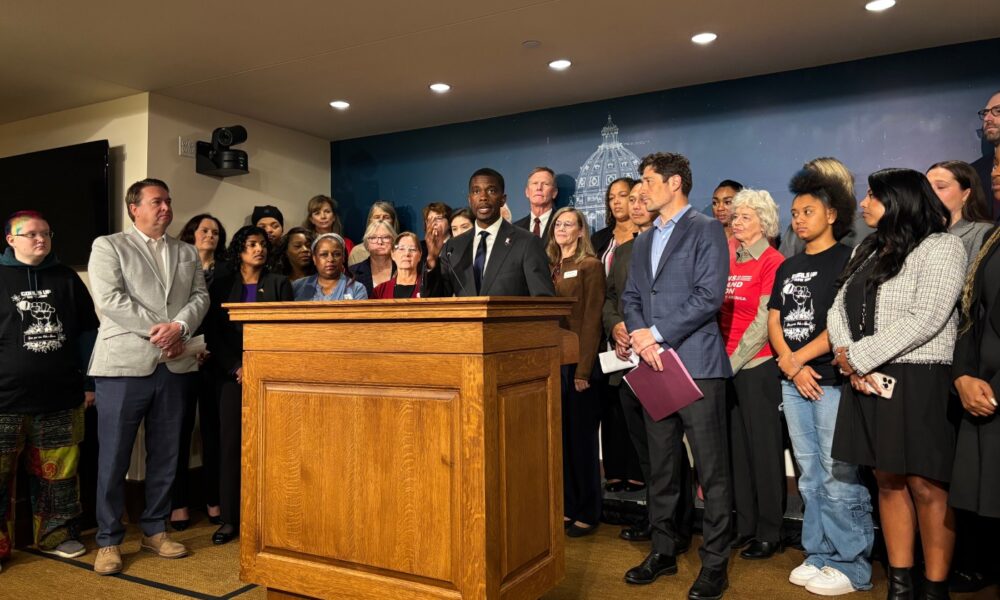
This policy change is currently under legal scrutiny. A federal judge in Minnesota has temporarily blocked the Trump administration from pursuing deportations of an estimated 5,600 lawful refugees awaiting green cards. U.S. District Judge John Tunheim issued a temporary restraining order, stating that the plaintiffs in the case are likely to prevail on their claims that the arrests and detentions are unlawful. His order is set to expire on February 25, 2024, unless extended by a more permanent injunction.
The controversy escalated with the launch of Operation PARRIS, an initiative aimed at re-examining the cases of these refugees. Cited as the largest immigration enforcement operation ever by the DHS, it involved a surge of federal officers in Minnesota. The operation purportedly targeted potential fraud in public assistance programs.
The lawsuit against the federal government, initiated in January, alleges that ICE officers conducted door-to-door arrests without legal grounds, leading to detentions in Texas. Many detainees reported being released on the streets without legal representation, forcing them to find their way back to Minnesota on their own.
Judge Tunheim rejected the government’s assertion that it had the legal right to detain refugees who had not secured their green cards within a year of arrival. He pointed out that it is illogical, as refugees are only eligible to apply for permanent residency after completing one year in the U.S. Furthermore, he noted that none of the arrested individuals had been deemed a danger to the community or a flight risk.
As the legal battle unfolds, the implications of this policy shift resonate deeply within the refugee community, highlighting the ongoing tensions and challenges associated with immigration in the United States.