A series of federal lawsuits, backed by allies of former President Donald Trump, have been filed that could significantly influence the allocation of political power and federal funding in Texas ahead of the 2030 Census. The cases aim to challenge the methodologies used by the Census Bureau in 2020, potentially altering how populations are counted and represented.
One notable lawsuit was initiated by America First Legal in Florida. It seeks to prevent the Census Bureau from employing “differential privacy” and group-quarters imputation techniques in future census counts. The plaintiffs argue that these methods resulted in distorted population figures that dilute representation for citizens. They are requesting a review of the 2020 census data and an assurance that these methods will not be utilized in the upcoming census.
In a separate but related case, four Republican state attorneys general in Louisiana, supported by the Federation for American Immigration Reform, are pursuing a legal challenge to exclude undocumented immigrants from population totals used for congressional apportionment. This lawsuit continues a broader Republican initiative to restrict apportionment to citizens and legal residents, raising critical questions about how demographic counts will shape political influence in the next decade.
Controversial Census Methods
The Florida lawsuit specifically targets two statistical methods the Census Bureau introduced in 2020. The first, differential privacy, intentionally introduces statistical “noise” to data to safeguard respondents’ identities. The second, group-quarters imputation, estimates populations in communal living situations, such as dormitories and nursing homes, when direct counts are unavailable. Proponents of these methods argue they are essential for maintaining privacy and accuracy, especially given the disruptions caused by the pandemic during the last census.
Critics, however, contend that these techniques have distorted local population figures, impacting the balance between urban and rural representation. If the courts agree with the plaintiffs, significant changes could occur in congressional districting and the distribution of federal funding, which totals approximately $2.8 trillion annually across various levels of government.
According to Pew Research Center, states like California, Texas, Florida, and New York host the largest populations of unauthorized immigrants. Thus, any alteration in how populations are counted could have pronounced effects, particularly in Texas.
Upcoming Census Preparations
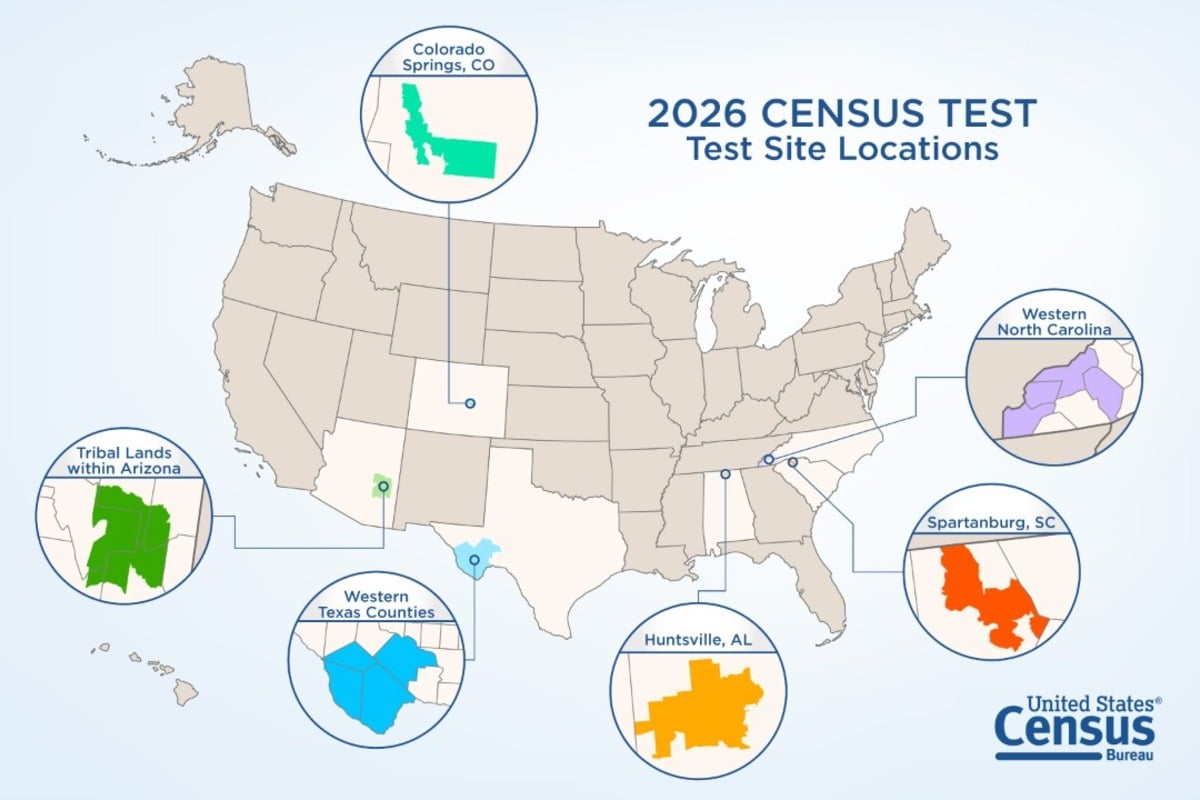
While these lawsuits progress through the courts, the Census Bureau is proactively preparing for the 2030 Census. Plans include a 2026 Census Test in six locations, including a site in western Texas, where new online response tools and counting methods will be trialed. Census officials emphasize that these preliminary tests are designed to refine processes well in advance of the actual count.
The legal battles are already in motion. America First Legal has filed motions for summary judgment and has expanded its complaint with additional plaintiffs. Meanwhile, Democratic-aligned intervenors, represented by the Elias Law Group, have sought to join the Florida case to ensure a robust defense of the Census Bureau’s practices.
In the Louisiana lawsuit, attorneys from the Justice Department have occasionally urged judges to pause or dismiss segments of the litigation, indicating a cautious approach from the federal government as it reassesses its position. Court filings suggest that lifting a stay on the case would be premature while the Bureau prepares for the 2030 cycle.
The underlying legal questions revolve around the interpretation of the Constitution and federal law. The Fourteenth Amendment mandates that the federal government count “the whole number of persons in each State,” while 13 U.S.C. section 195 places restrictions on the use of statistical sampling for apportionment purposes. Courts will need to clarify how these provisions interact as they determine the appropriate legal remedies.
The outcomes of these cases could have far-reaching implications for Texas and beyond, potentially reshaping the political landscape and funding allocation for years to come.