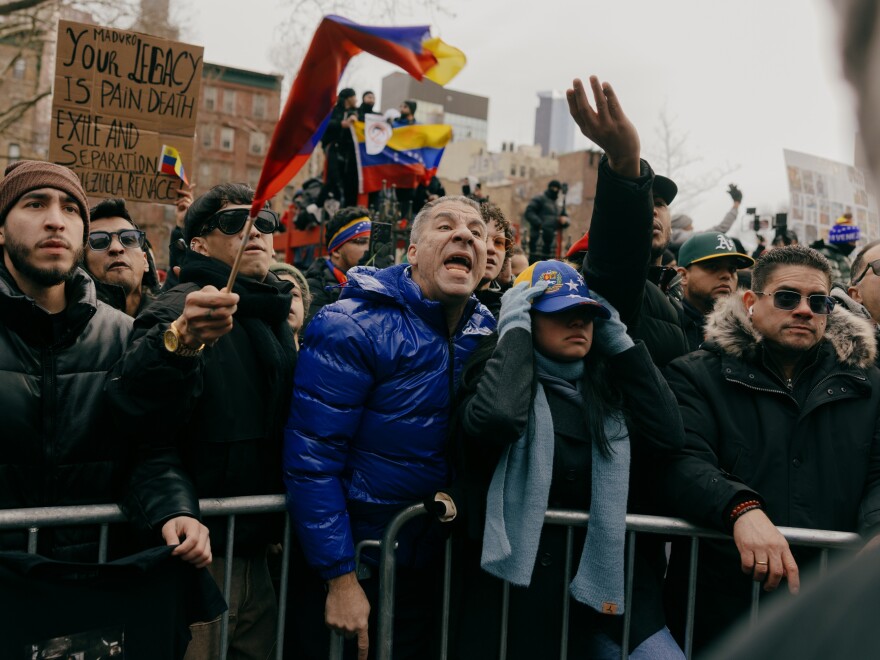
Former Venezuelan President Nicolás Maduro and his wife, Cilia Flores, pleaded not guilty to federal charges, including narco-terrorism, following their recent capture by U.S. military forces. This high-profile event took place over the weekend and culminated in their first appearance in a federal court in New York on March 15, 2024. The operation has ignited a significant debate among lawmakers regarding the implications of U.S. intervention in Venezuela.
In the wake of Maduro’s arrest, President Donald Trump is scheduled to meet with House Republicans at the Kennedy Center today. This meeting comes as Congress demands further details on the military action and the broader U.S. involvement in Venezuela going forward. Lawmakers voiced their concerns regarding Trump’s decision to carry out the operation without prior notification to Congress, with Democrats characterizing the action as an act of war. Conversely, Republicans generally supported the president’s stance, emphasizing the need for strong action against Maduro’s regime.
Shifting focus, the Centers for Disease Control and Prevention (CDC) has announced a significant reduction in its recommended childhood vaccine schedule. The number of vaccines has been decreased from 17 to 11, aligning the U.S. schedule with those of “peer, developed countries” like Germany and Japan. This new guideline eliminates previously recommended vaccines for conditions such as rotavirus, hepatitis A and B, and seasonal flu, raising discussions about public health and vaccination strategies. The changes were implemented in response to a directive issued by Trump in December 2023.
As the political landscape continues to evolve with these recent developments, the implications for both U.S. foreign policy and domestic health initiatives remain to be seen. Lawmakers and health officials will need to navigate these complex issues as they emerge in the coming weeks and months.