The dynamics of the working class and its potential for social change has been a topic of discussion for over a century. As the world witnesses various movements, the question arises: how can workers become agents of revolution? This concept can be understood through the lens of socialism, particularly the idea of “socialism from below,” which emphasizes that working-class individuals should seize control of societal structures for their benefit.
Historically, the notion of class has been explored by thinkers like Karl Marx, who differentiated between a class “in itself” and a class “for itself.” According to Marx, individuals belong to the working class if they are compelled to sell their labor to survive. This categorization is objective, yet simply being part of the working class does not imply that individuals actively recognize or engage with their class identity. The transition to a class “for itself” occurs when workers begin to organize collectively, pursuing shared interests and goals.
In contemporary society, many individuals may not identify as working-class, instead holding a mix of views influenced by their backgrounds and experiences. This creates a complex landscape where some workers may express dissatisfaction with their employers but simultaneously cling to conservative economic beliefs. It is not uncommon for individuals to espouse conflicting ideas, such as criticizing their boss while fearing economic repercussions of taxing wealthy individuals.
The challenge for socialists and activists lies in navigating these mixed beliefs. Chris Harman noted that societal ideas are shaped by the interactions between people’s lived experiences and the prevailing prejudices. As a result, individuals are often bombarded with messages from political leaders, educational institutions, and the media that promote individualism and competition, diverting attention from collective struggles.
In the 1920s, Antonio Gramsci revisited the issue of class consciousness, introducing concepts such as “common sense” and “good sense.” Common sense reflects the fragmented and often contradictory beliefs held by individuals, while good sense represents a more coherent understanding of societal dynamics. Gramsci argued that within the chaos of common sense lies a potential for critical thought, which can be cultivated through collective action and solidarity.
While education plays a crucial role in promoting anti-racist and socialist ideas, relying solely on rational discourse may not suffice for widespread transformation. Many on the left advocate for a strategy focused on better education, assuming that presenting facts and arguments will sway individuals toward progressive views. Yet, this approach often overlooks the potential for mass consciousness to shift dramatically during revolutionary moments.
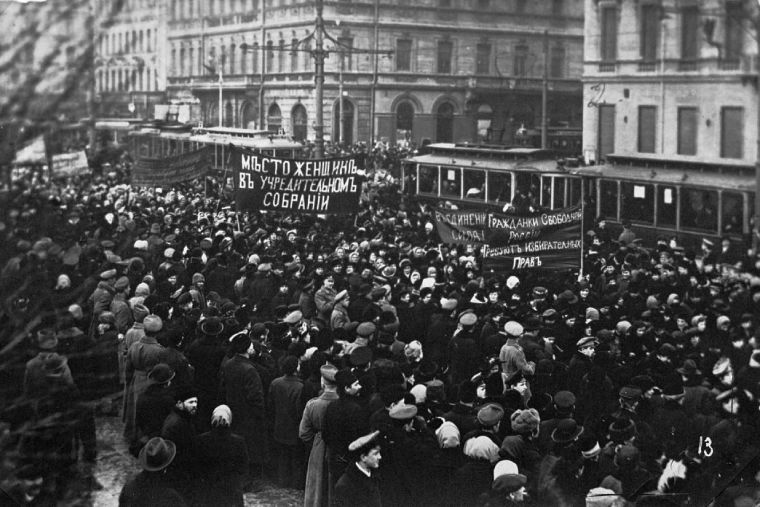
Historical instances illustrate this phenomenon, such as the events leading up to the Russian Revolution in 1917. At the time, the Russian Empire celebrated three centuries of Romanov rule, while beneath the surface, dissent simmered following a wave of revolutionary activity in 1905. By early 1917, widespread discontent erupted among workers, culminating in mass strikes against the backdrop of food shortages and ongoing war. Eventually, this unrest led to the abdication of Tsar Nicholas II and the emergence of workers’ councils, known as soviets, as a means of self-organization.
The Russian Revolution not only overthrew an autocratic regime but also catalyzed substantial social change, particularly for women. New rights regarding education, voting, and employment emerged, reshaping societal expectations. Revolutionary figures like Alexandra Kollontai captured the evolving mindset in their writings, highlighting the rapid shifts in personal relationships and societal norms.
Similar patterns can be observed in various revolutions since then, from Portugal in 1974 to Egypt in 2011. In each case, mass participation in struggles has sparked significant transformations in beliefs and aspirations.
Currently, in Minnesota, a mass movement is challenging prevailing narratives surrounding immigration and crime. While not a revolutionary situation per se, the pushback against misinformation indicates a shift in collective consciousness. Workers who previously felt disillusioned about organizing are now engaging in collective actions, including walkouts and community resistance against federal enforcement actions.
This evolving context illustrates that while the path to a class “for itself” does not require an immediate revolution, the interplay between ruling class ideologies and lived experiences can create opportunities for socialists to engage and mobilize workers. By seizing these moments and fostering solidarity, activists can help cultivate a more united and class-conscious workforce capable of advocating for transformative change.