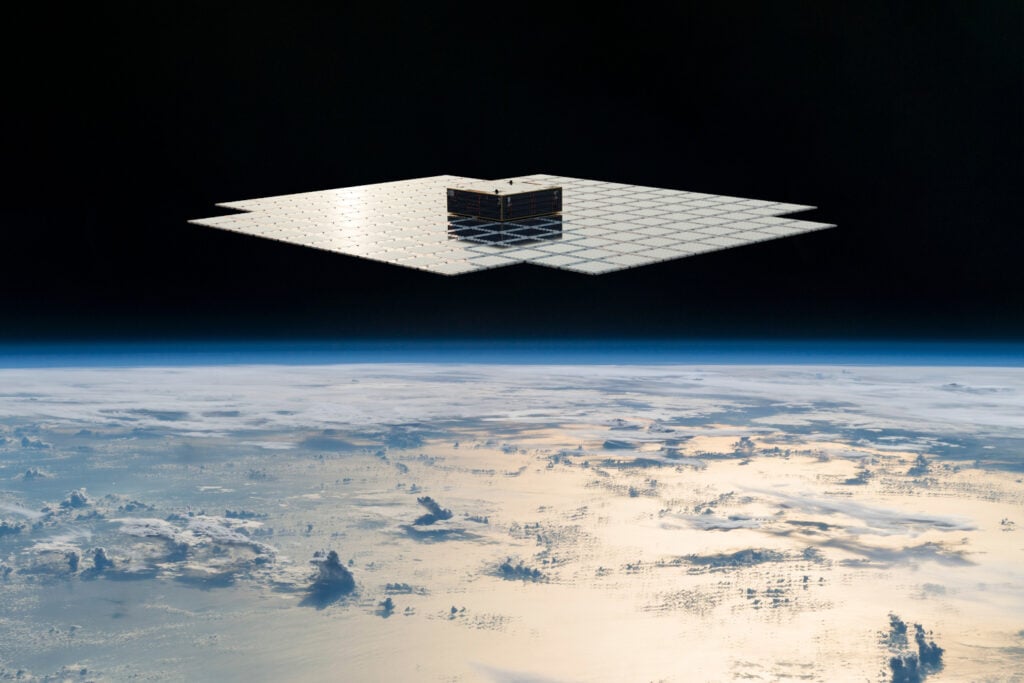
AST SpaceMobile has successfully launched its largest satellite to date, the BlueBird 6, marking a significant step in its mission to create a space-based cellular broadband network. The satellite lifted off aboard India’s LVM3 rocket from the Satish Dhawan Space Center on December 23, 2023, at 22:25 ET. This launch positions AST SpaceMobile as a formidable competitor to SpaceX’s Starlink, which currently dominates the satellite internet market.
Details of the Launch
The BlueBird 6 is approximately three times larger than its predecessors, making it the biggest commercial satellite currently in Earth orbit. This ambitious project represents the first of AST SpaceMobile’s next-generation constellation, designed to enable direct cellular broadband access from space without requiring additional hardware. This could potentially revolutionize mobile connectivity by allowing everyday cell phones to connect directly to satellites.
AST SpaceMobile previously launched BlueWalker 3 in September 2022 to test its technology, which successfully facilitated the first 5G phone call from space using a standard Samsung Galaxy S22. Since then, the company has deployed five additional satellites, collectively known as BlueBird, and has plans to launch a total of 243 more satellites into orbit.
Technological Advancements and Future Plans
The BlueBird 6 satellite is equipped with a massive array that, once deployed, will cover an area of approximately 2,400 square feet (about 223 square meters). This is significantly larger than the previous iterations, which had arrays measuring around 693 square feet (64 square meters). The increased size enhances the satellite’s capacity to deliver service, with each unit designed to support 10 gigahertz of bandwidth and provide data speeds of up to 120 megabytes per second per cellphone.
AST SpaceMobile plans to launch between 45 and 60 additional next-generation satellites by the end of 2026. This expansion aims to provide 5G data services initially across the United States, with potential to extend to other markets in the future.
Despite the promising advancements, AST SpaceMobile faces stiff competition from SpaceX, which operates more than 9,000 satellites, representing around 60% of all satellites in orbit. While SpaceX’s Starlink is well-established, AST’s larger antennas and direct-to-cell service model could give it an edge in the evolving telecommunications landscape.
The rivalry has sparked tensions between the two companies. In July, SpaceX expressed concerns to the Federal Communications Commission (FCC) regarding AST SpaceMobile’s impact on the sustainability of low Earth orbit. In response, AST accused SpaceX of seeking to intimidate competitors and misrepresenting facts in its communications with regulatory bodies.
As both companies continue to launch satellites, the increasing number of objects in Earth’s orbit raises concerns about potential congestion and its effect on astronomical observations. The competition between AST SpaceMobile and SpaceX is not only a technological battle but also a significant chapter in the future of global communications.