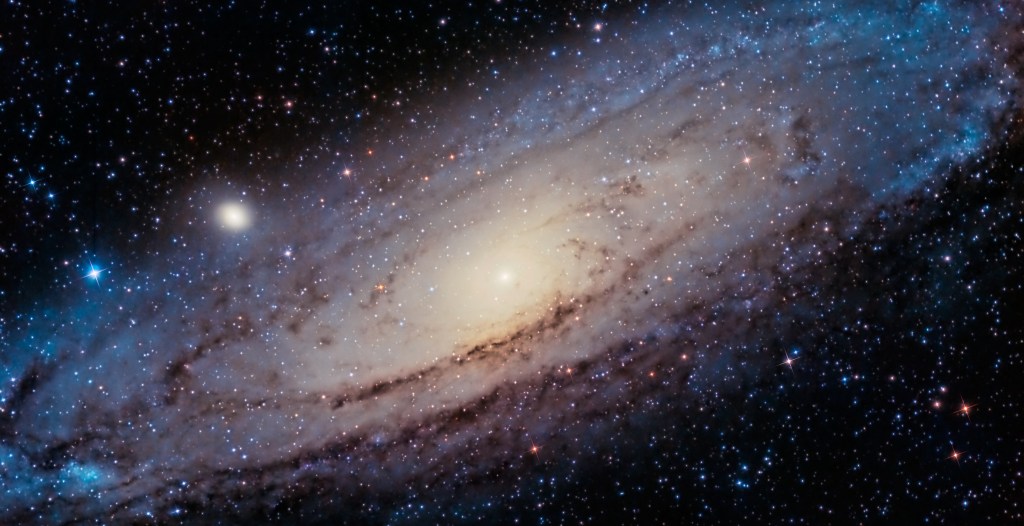
An international team of astronomers has made significant discoveries about the double nucleus of the elliptical galaxy NGC 4486B using the James Webb Space Telescope (JWST). The findings, published on December 16, 2023, on the arXiv preprint server, provide new insights into the characteristics and formation of this unique galactic structure.
Located approximately 50 million light-years away in the constellation Virgo, NGC 4486B is noteworthy for its unusual double nucleus, which has sparked interest among researchers. The JWST’s advanced capabilities allowed astronomers to investigate this galaxy in greater detail than ever before. The observations reveal that the two nuclei may have distinct properties, raising questions about their formation and evolution.
Significance of the Findings
The research is crucial for understanding the dynamics of elliptical galaxies, especially those with multiple nuclei. These structures are thought to form through complex interactions, such as mergers with smaller galaxies. The JWST’s observations suggest that the nuclei in NGC 4486B could be remnants of past galactic interactions, offering a glimpse into the galaxy’s history.
Furthermore, astronomers noted differences in the light emitted from each nucleus. This observation indicates that they may be composed of different stellar populations, emphasizing the complexity of their formation. Such findings could lead to a reevaluation of current models regarding the evolution of galaxies and their nuclei.
Future Implications for Astronomy
The insights gained from NGC 4486B will likely influence future research on other galaxies exhibiting similar structures. The JWST, launched in late 2021, continues to revolutionize our understanding of the universe by providing unprecedented views of distant celestial objects.
As astronomers analyze more data from the JWST, they anticipate uncovering further details about the nature of galactic nuclei. This ongoing research will contribute to a deeper understanding of galaxy formation and evolution, ultimately enhancing our knowledge of the universe.
The continued exploration of galaxies like NGC 4486B underscores the importance of advanced observational technology in astronomy. With each discovery, researchers are piecing together the vast puzzle of the cosmos, revealing the intricate dynamics that govern these immense structures.