Astronomers have unveiled significant insights into the origins of carbon and oxygen, essential elements for life, through their study of nearby stars. A research team led by Darío González Picos from Leiden University analyzed high-resolution stellar spectra, revealing crucial isotopic signatures in these elements. Their findings mark an important advancement in understanding how stars produce and disperse carbon and oxygen over their lifespans.
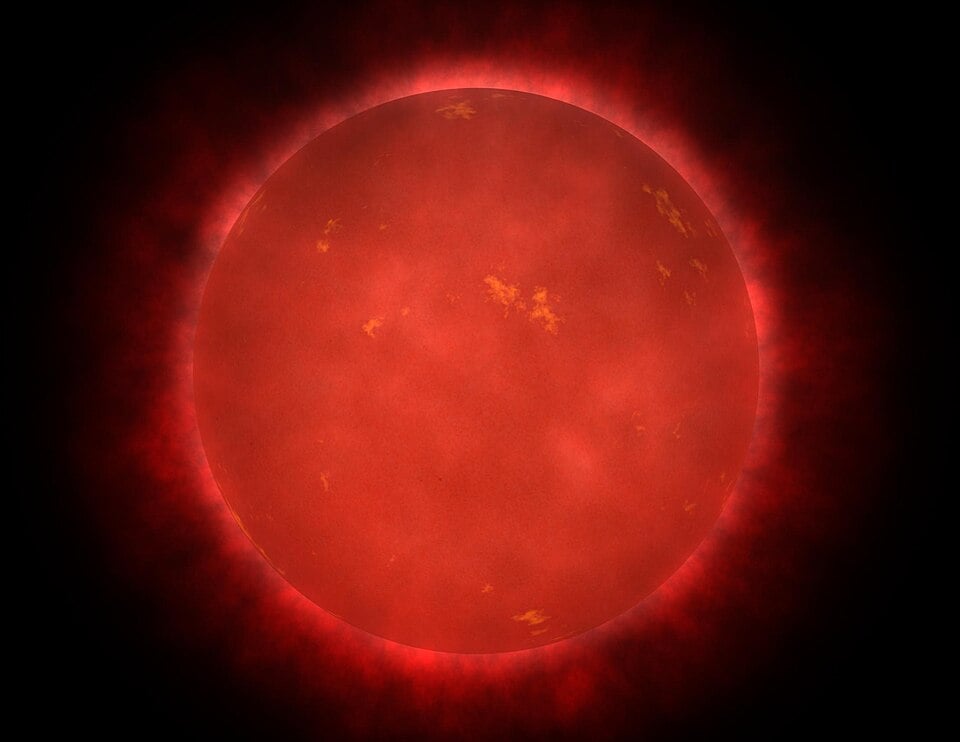
The research focused on 32 M dwarf-type stars, some of the most common stars in the Galaxy. These stars have long lifespans during their main sequence phase, the period when they fuse hydrogen in their cores. The atmospheres of these stars retain chemical signatures that illustrate their evolutionary history, providing valuable data about the processes that formed these elements.
The team discovered rare isotopes of carbon and oxygen within the stars, shedding light on their evolutionary paths. This research not only enhances our understanding of stellar evolution but also connects to the larger narrative of matter and element distribution in the Universe. Carbon and oxygen are fundamental components of life on Earth; thus, understanding their origins helps clarify our place in the cosmos.
González Picos emphasized the complexity of nuclear fusion, stating, “Nuclear fusion in stars is a complex process and is just the starting point of chemical evolution.” This stellar nucleosynthesis process allows stars to create heavier elements over time. For instance, our Sun currently fuses hydrogen into helium, a process that will continue for several billion years before it shifts to fusing helium into heavier elements like carbon and oxygen.
The research utilized data from the Canada France Hawai’i Telescope on Mauna Kea, which recorded stellar spectra originally intended for exoplanet discovery. The findings confirm models of galactic chemical evolution, indicating that stars with lower chemical enrichment exhibit fewer rare isotopes. As Sam de Regt noted, “This finding confirms what some models of galactic chemical evolution have predicted and now provides a new tool to rewind the chemical clock of the cosmos.”
This innovative approach to utilizing previously collected data showcases the versatility of astronomical research. Ignas Snellen, a member of the team, highlighted the significance of applying high-resolution spectra for this research, initially gathered for a different purpose.
The implications of this research extend beyond academic interest. It offers a deeper understanding of our origins, helping to unravel the fundamental processes that have shaped the Universe and our existence within it. As González Picos pointed out, “This cosmic detective story is ultimately about our own origins, helping us to understand our place in the long chain of astrophysical events and why our world looks the way it does.”
The study presents a new perspective on the evolutionary processes of stars and their role in the broader context of cosmic history, emphasizing the ongoing quest to understand the Universe and the origins of the elements critical for life.