An international team of researchers has unveiled findings suggesting that primordial magnetic fields could potentially reconcile the discrepancies in the universe’s expansion rate, known as the Hubble tension. This gap exists between measurements taken by the Hubble Space Telescope and those derived from the cosmic microwave background (CMB).
The study, published in 2023, employed advanced simulations to explore the magnetic forces present in the early universe. These forces, according to the researchers, could account for the differing rates of expansion observed today. This discrepancy has puzzled astronomers and cosmologists for years, leading to ongoing debates regarding the fundamental understanding of cosmic physics.
Understanding the Hubble Tension
The Hubble tension refers to the difference in the calculated expansion rate of the universe. Measurements from the Hubble Space Telescope suggest an expansion rate of approximately 73 kilometers per second per megaparsec. In contrast, observations of the CMB estimate a lower rate of about 67 kilometers per second per megaparsec. This inconsistency raises significant questions about the underlying physics governing the universe’s evolution.
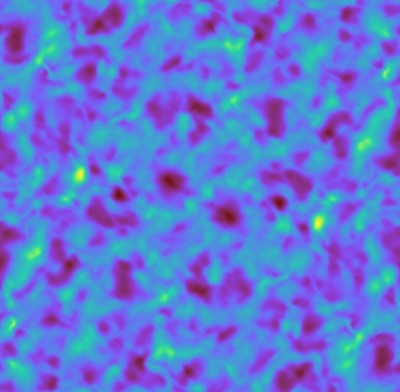
The research team, consisting of physicists from various institutions, utilized sophisticated computer models to simulate the conditions of the early universe. Their findings indicate that magnetic fields, which are thought to have existed shortly after the Big Bang, could influence the dynamics of cosmic expansion. The study’s lead author emphasized that understanding these magnetic forces could lead to a more comprehensive explanation of the universe’s behavior.
Implications for Cosmology
The potential implications of this research extend beyond simply resolving the Hubble tension. By incorporating primordial magnetic fields into cosmological models, scientists may gain deeper insights into other cosmic mysteries, including the formation of galaxies and the large-scale structure of the universe.
The research highlights the importance of interdisciplinary collaboration in addressing complex scientific questions. The team combined expertise from astronomy, physics, and computational modeling to arrive at their conclusions. This collaborative approach is crucial as the scientific community seeks to enhance our understanding of fundamental cosmic processes.
As further studies are conducted to validate these findings, researchers are hopeful that they will pave the way for a new era in cosmology. The integration of magnetic forces into existing models could significantly alter our comprehension of the universe and its expansive history.
In conclusion, the study presents a compelling case for the role of primordial magnetic fields in resolving the Hubble tension and potentially answering other significant questions in cosmology. As investigations continue, the scientific community eagerly anticipates further developments in this exciting field of research.