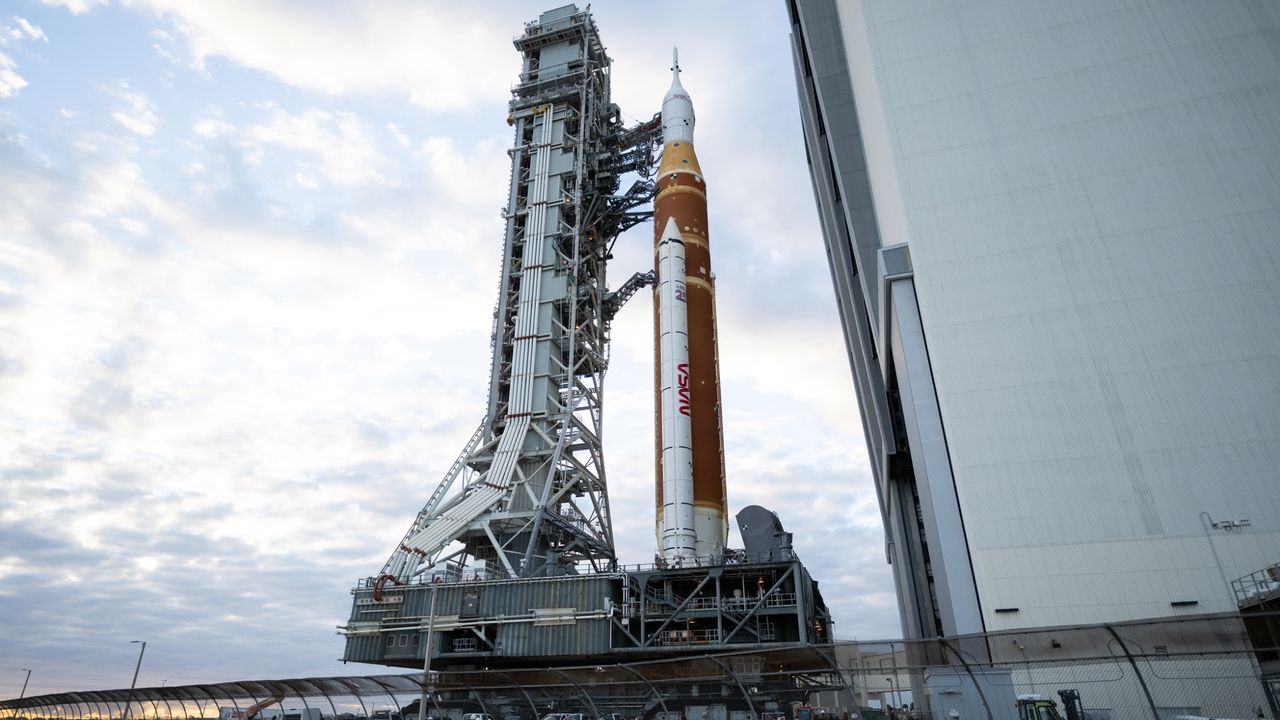
NASA has initiated a pivotal phase in its Artemis program by moving the Artemis 2 rocket to the launch pad, marking a significant step toward sending humans back to the moon. The Space Launch System (SLS) rocket departed the Vehicle Assembly Building (VAB) at Kennedy Space Center in Cape Canaveral, Florida, on January 17, 2024. This historic mission aims for a launch window that could open as soon as early February.
The SLS began its journey at 07:04 EST (12:04 GMT), making a slow, deliberate trek of approximately 4 miles (6.4 kilometers) to Launch Complex-39B (LC-39B). Engineers have dedicated over a year and a half to stack the Artemis 2 SLS for its inaugural rollout as a fully assembled launch vehicle. Standing at a towering 322 feet (98 meters) and weighing around 2,870 tons (2,600 metric tons) when fully fueled, the rocket is supported by two solid rocket boosters and four RS-25 engines, producing a combined thrust of 8.8 million pounds at liftoff.
The transportation of such a massive vehicle is not hurried; it will proceed at a pace of less than 1 mph (1.6 kph), with the entire journey expected to take between eight to ten hours. After arriving at the launch pad, NASA will conduct critical systems integrations and vehicle checks in preparation for a wet dress rehearsal, scheduled for February 2. If everything goes smoothly, the earliest possible launch date for Artemis 2 is set for February 6.
The Artemis 2 mission will carry a crew of four astronauts: NASA’s Reid Wiseman, Victor Glover, and Christina Koch, alongside Jeremy Hansen from the Canadian Space Agency. This mission will last approximately ten days, during which the crew will conduct a flyby of the moon without entering its orbit. Instead, they will follow a “free-return trajectory,” which ensures their safe return to Earth regardless of any issues that may arise during the mission.
NASA’s Artemis program aims not only to return humans to the moon but also to establish a sustainable presence, particularly in the moon’s south polar region. Artemis 2 is the second mission in this ambitious program, following the uncrewed Artemis 1 launch in November 2022. That mission faced several challenges, including cryogenic hydrogen leaks and adverse weather conditions, leading to multiple returns to the VAB for maintenance. NASA officials are optimistic that Artemis 2 will avoid similar setbacks and are confident in the rocket’s readiness.
Once launched, the SLS will propel the Orion spacecraft into Earth’s orbit, where the crew will perform essential systems checks before executing a translunar injection burn. This maneuver is crucial for setting the spacecraft on course for the moon. Following the burn, Orion will detach from the interim cryogenic propulsion stage to conduct proximity maneuvers on its way to lunar space.
The Artemis 2 mission serves as a significant proving ground for Orion’s life support systems, akin to how Artemis 1 validated the spacecraft’s core design. While NASA aims for a lunar landing with the subsequent Artemis 3 mission, its timeline is contingent on the success of Artemis 2. Any unforeseen complications during the upcoming mission could cause further delays, pushing back the anticipated launch date for Artemis 3, which is currently projected for 2027.
The Artemis 2 crew has been preparing diligently at Kennedy Space Center, participating in launch-day rehearsals to ensure they are ready for their historic mission. Their presence during the rocket’s rollout today underscored the excitement and anticipation surrounding this next giant leap for humanity.