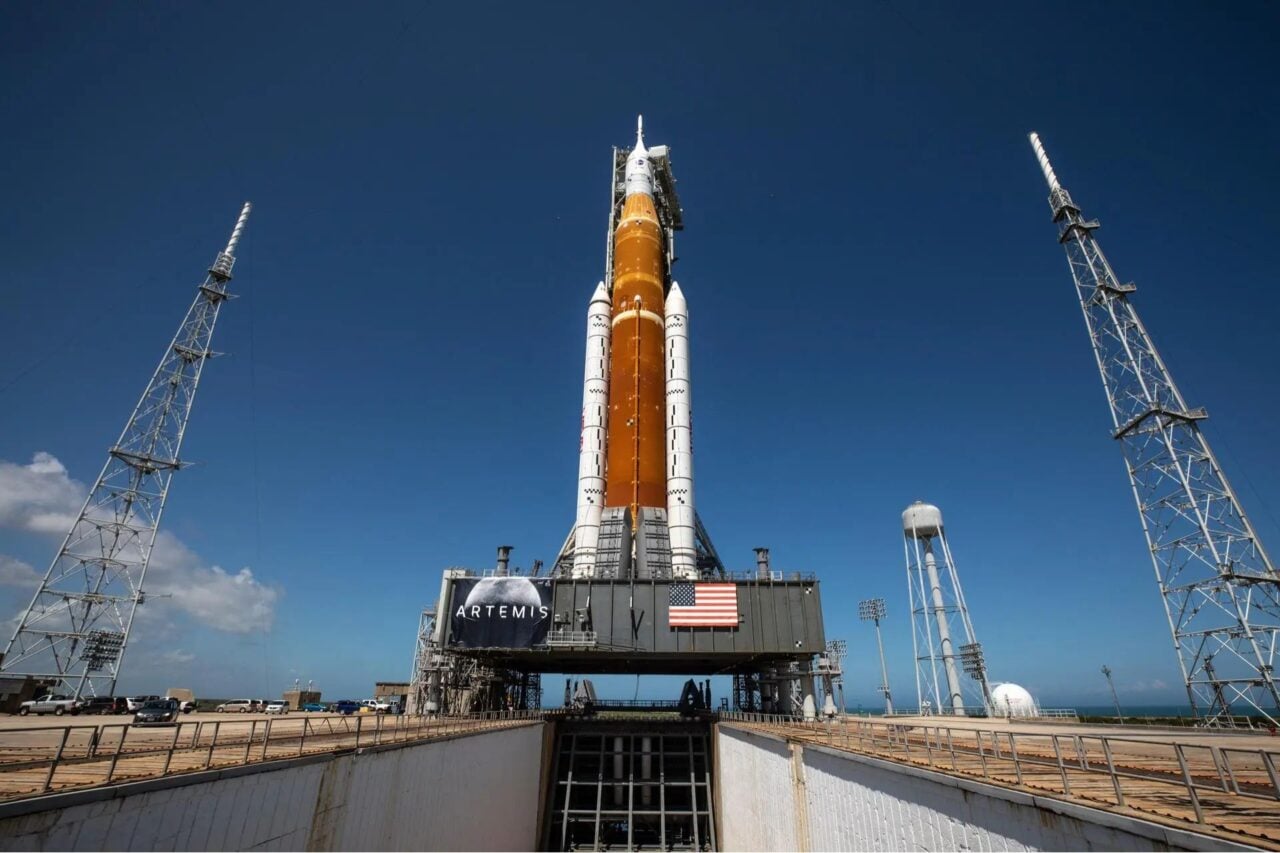
NASA is poised to take a significant step forward in its lunar exploration program with the upcoming rollout of the Artemis 2 Moon rocket. Scheduled for January 17, 2024, the agency plans to transport the Space Launch System (SLS) rocket and the Orion spacecraft from the Vehicle Assembly Building (VAB) to Launch Pad 39B at Kennedy Space Center. This mission aims to send a crew of four astronauts on a journey around the Moon, marking a critical milestone in humanity’s return to deep space.
The rollout is set to begin at no earlier than 7 a.m. ET and will cover a distance of approximately four miles, expected to take between eight to ten hours. Charlie Blackwell-Thompson, launch director for NASA’s Exploration Ground Systems Program, expressed excitement during a briefing, stating, “About an hour after we get that first motion, you’ll begin to see this beautiful vehicle cross over the threshold of the VAB and come outside for the world to have a look.”
Live Coverage of the Rollout Event
NASA will provide live coverage of the rollout starting at 7 a.m. ET, with a media event scheduled for 9 a.m. ET featuring NASA Administrator Jared Isaacman and the Artemis 2 crew. This event will also be streamed on NASA’s YouTube channel, allowing the public to witness this historic moment.
Once the SLS crosses the VAB threshold, engineers will take approximately 45 minutes to retract the mobile launcher’s crew access arm before commencing the slow journey to the launch pad at a speed of just under 1 mile per hour (1.6 km/hr). Upon arrival, teams will connect the rocket to ground support equipment and conduct essential checks. They will also power up all integrated systems for the first time to ensure that the flight hardware is prepared for the mission.
The Artemis 2 crew includes NASA astronauts Reid Wiseman, Victor Glover, Christina Koch, and Canadian Space Agency astronaut Jeremy Hansen. Following the rollout, they will perform a final walkdown of the emergency egress system at the launch pad, ensuring preparedness for any contingencies.
Upcoming Tests and Launch Timeline
If everything proceeds as planned, NASA will conduct a wet dress rehearsal on February 2, 2024. During this critical test, both the SLS and Orion will be powered on, and ground crews will load the rocket with propellant. The rehearsal will simulate a launch countdown without igniting the rocket’s boosters, focusing instead on safely draining propellant.
NASA currently targets a launch date of February 6, 2024. However, given the tight schedule, Blackwell-Thompson acknowledged the potential for complications. “We need to get through wet dress,” she stated. If Artemis 2 is not ready for launch on that date, there are additional opportunities on February 7, 8, 10, and 11. Further launch windows are available in March and April, with the possibility of opportunities extending into subsequent months.
The Artemis 2 mission represents the first crewed flight of NASA’s lunar exploration program, serving as a vital precursor to the anticipated Artemis 3 Moon landing. As the United States aims to maintain its leadership in space exploration, NASA faces pressure to expedite this mission, which has experienced delays over recent years.
The Artemis 2 crew will embark on a journey further into space than any astronauts have traveled before, providing insights into regions of the Moon that have yet to be seen by human eyes. This mission not only aims to test vital systems and procedures but also to reaffirm humanity’s capability to explore deep space once more. With the world watching, the Artemis 2 mission is set to be a defining moment in the history of space exploration.